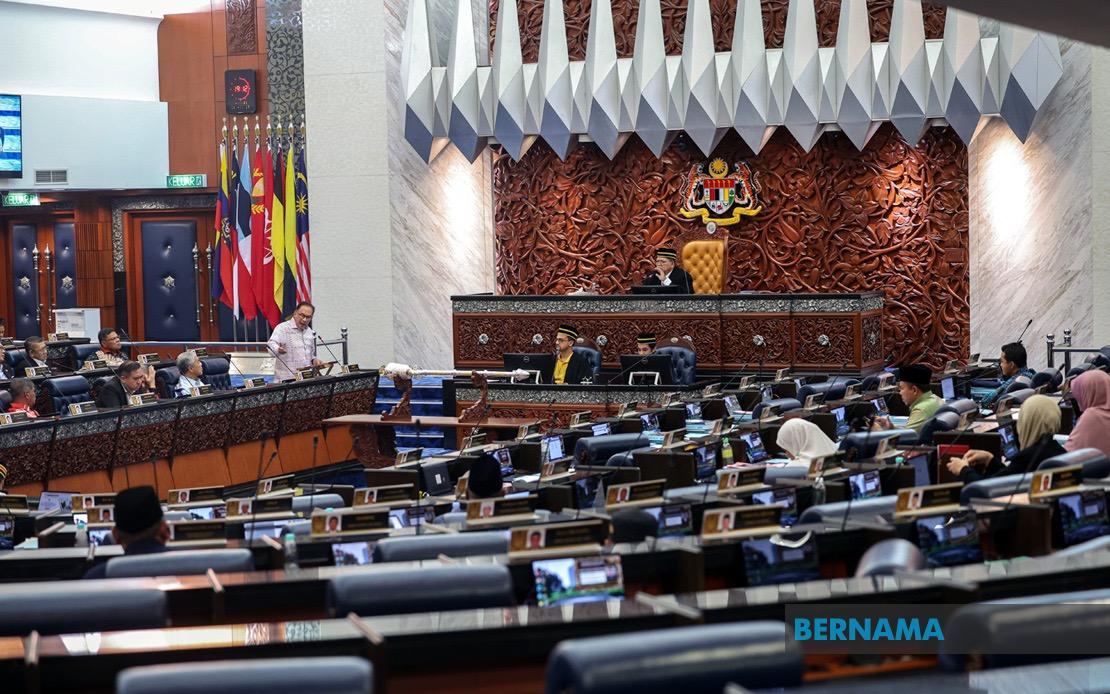
Malaysia's parliament has endorsed a revised framework for enforcing employment vacancy reporting requirements, marking a significant step toward strengthening the nation's labour market infrastructure. The Dewan Rakyat voted to approve amendments to the Employment Insurance System (Amendment) Bill 2025 on June 30, introducing a tiered penalty structure designed to encourage employer compliance while acknowledging the operational constraints many businesses face. The legislative move reflects months of stakeholder consultation and represents an attempt to balance enforcement objectives with practical workplace realities across Malaysian sectors.
The penalty structure approved establishes escalating financial consequences for non-compliance. Employers who fail to notify the Social Security Organisation (PERKESO) of job vacancies now face a fine of up to RM1,000 for their first violation, RM3,000 for a second breach, and up to RM5,000 for any subsequent offence. This graduated approach differs markedly from the government's original proposal, which had suggested a maximum penalty of RM10,000. The decision to reduce the ceiling fine demonstrates the legislature's responsiveness to business community concerns and reflects a recognition that overly punitive measures could create unintended compliance barriers, particularly for small and medium enterprises that may lack dedicated human resources infrastructure.
Deputy Human Resources Minister Datuk Khairul Firdaus Akbar Khan characterised the amendments as prioritising education and systematic compliance over purely punitive enforcement. Rather than immediately imposing financial penalties, the revised framework emphasises a progressive approach wherein employers receive compliance notices allowing them reasonable time to correct reporting failures before facing any compound fine. This methodology reflects a carrot-and-stick philosophy—encouraging voluntary compliance through clear communication while preserving enforcement tools for persistent violators. The government has signalled its intention to continue providing guidance sessions to help employers understand and meet their statutory obligations, effectively positioning PERKESO as a supportive institution rather than purely a regulatory body.
The parliamentary debate, which involved contributions from 13 MPs representing both government and opposition parties, highlighted significant concerns about practical implementation. Multiple legislators emphasised that any reporting system must prioritise user accessibility and simplicity, recognising that complex bureaucratic requirements could inadvertently discourage compliance rather than promote it. The data collection objective underlying these vacancy reporting requirements—creating a centralised pool of employment information that can facilitate better job matching and support evidence-based labour market policy—will only be achieved if employers find the reporting process sufficiently straightforward to warrant participation.
Azahari Hasan, representing Padang Rengas under Perikatan Nasional, underscored the connection between efficient vacancy reporting and broader labour market outcomes. When employers systematically report job openings to PERKESO, the organisation gains visibility into actual labour demand patterns, enabling more accurate unemployment assessments and supporting the design of targeted skills development programmes. This intelligence-gathering function represents one of the Employment Insurance System's core strategic purposes, extending far beyond simple administrative record-keeping. Without reliable vacancy data, government agencies cannot effectively anticipate sectoral skill shortages or direct workforce development initiatives toward areas of genuine employer demand.
Nurul Amin Hamid, MP for Padang Terap, raised an important equity concern regarding rural business awareness. While progressive penalty structures may appeal to policymakers as balanced measures, their effectiveness depends substantially on whether businesses throughout Malaysia—particularly smaller enterprises in less urbanised areas—actually understand their obligations under the legislation. The transition from the original RM10,000 maximum penalty to the new RM5,000 ceiling represents a meaningful reduction, yet rural employers facing potential fines may still experience this as onerous, particularly if they lack formal HR departments capable of tracking regulatory requirements. This highlights the necessity for PERKESO to conduct sustained, regionally targeted awareness campaigns extending well beyond parliament's approval of amendments.
Syerleena Abdul Rashid, representing Bukit Bendera, connected the vacancy reporting requirement to broader transparency and fairness principles within Malaysia's employment landscape. By ensuring that job advertisements flow through government portals and PERKESO's systems, the mechanism aims to create more equitable access to employment opportunities across demographic groups. Without such centralised channels, job market information becomes fragmented, potentially advantaging candidates with personal networks while disadvantaging those relying on formal job search mechanisms. The transparency objective underlying these amendments reflects recognition that employment markets function more equitably when information asymmetries are reduced and opportunities are broadly publicised rather than distributed through informal channels.
The path to parliament's approval involved substantial refinement of the government's initial legislative proposal. PERKESO conducted extensive engagement sessions with employers across multiple sectors, gathering practical feedback on the reporting mechanisms' feasibility and the penalty levels' appropriateness. This consultative process yielded tangible legislative revisions—the maximum fine reduction from RM10,000 to RM5,000 and the establishment of progressive penalties beginning at RM1,000 rather than higher figures. Such responsiveness to stakeholder input, while occasionally perceived as legislative compromise, actually strengthens enforcement prospects by reducing business sector resistance and enhancing perceptions of fairness among regulated entities.
The Employment Insurance System represents a cornerstone of Malaysia's social protection architecture, particularly relevant given increasing emphasis on labour market formalisation and worker security. Accurate vacancy reporting feeds directly into PERKESO's capacity to match unemployed individuals with appropriate opportunities, potentially reducing jobless periods and supporting smoother transitions between employment. For policymakers and labour economists, reliable vacancy data proves essential for understanding structural unemployment patterns, identifying emerging skill mismatches, and evaluating whether workforce development initiatives successfully address genuine employer needs. The amendments approved June 30 therefore carry significance extending beyond employer compliance—they constitute infrastructure investments supporting labour market efficiency across the nation.
Implementation of these amendments will substantially depend on PERKESO's capacity to deliver the promised simplified reporting mechanisms and to conduct sustained employer engagement. The government's commitment to issuing compliance notices before imposing penalties suggests an enforcement posture that prioritises corrective partnership over punitive adversarialism. This approach may prove more effective in building widespread reporting compliance than aggressive penalty-focused enforcement, particularly among small enterprises where administrative capacity remains limited. The coming months will reveal whether the balance struck by parliament—between meaningful penalties and practical feasibility—successfully drives the systematic vacancy reporting coverage that labour market efficiency requires.

