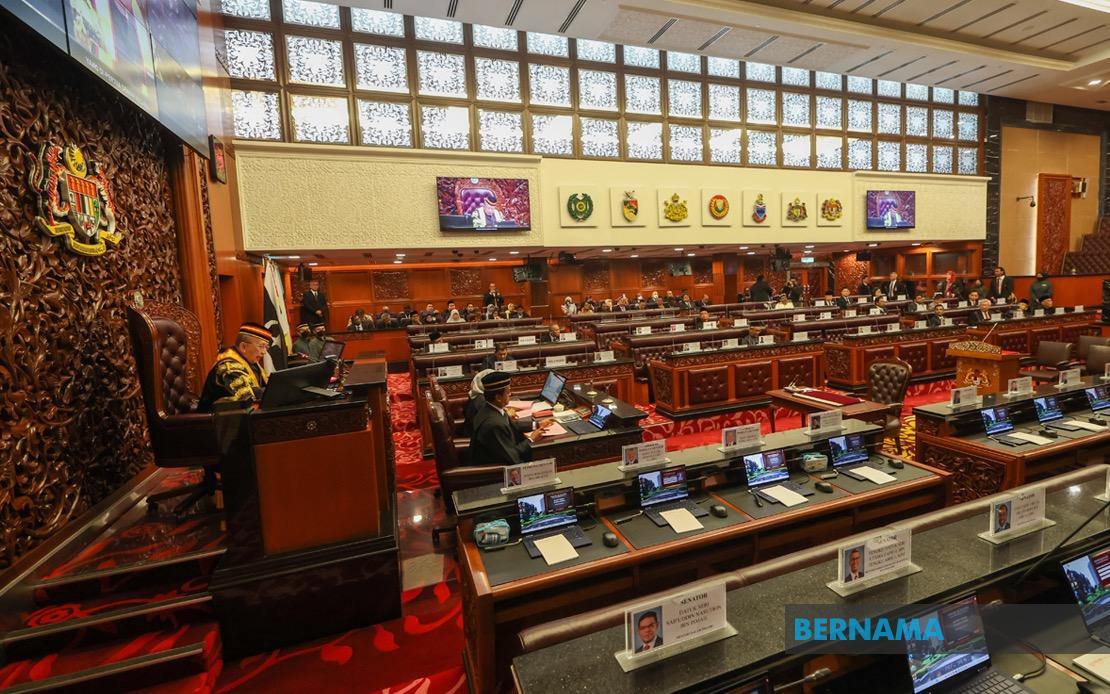
Malaysia's upper house concluded its second parliamentary sitting of the year with the passage of two significant pieces of legislation aimed at modernizing the nation's governance and statistical infrastructure. The Dewan Negara's ten-day session, which began on July 20, approved the National Trust Fund (KWAN) Bill 2026 and the Statistics Bill 2026, marking another step in the government's broader reform agenda centred on strengthening institutional frameworks and economic competitiveness.
The National Trust Fund Bill, introduced by Deputy Finance Minister Liew Chin Tong, represents an effort to establish clearer operational boundaries around one of Malaysia's largest sovereign wealth vehicles. By imposing stricter discipline on fund withdrawals, the legislation seeks to enhance governance standards and ensure more prudent stewardship of national assets. This comes amid broader government initiatives to stabilize the nation's fiscal position and demonstrate credible financial management to international investors and rating agencies increasingly scrutinizing emerging market governance.
Parallel to the KWAN Bill, the Statistics Bill 2026 tabled by Deputy Economy Minister Datuk Mohd Shahar Abdullah constitutes a long-overdue modernization of Malaysia's national statistical framework. The new legal architecture will create a more comprehensive institutional foundation for collecting, validating and disseminating economic and social data—capabilities essential for evidence-based policymaking in an increasingly complex regional economy. For Malaysian businesses and investors relying on reliable economic indicators, this legislative upgrade carries tangible practical implications for market forecasting and strategic planning.
Throughout the sitting, parliament addressed geopolitical headwinds and their domestic implications. Following tensions in West Asia, the government outlined a multi-pronged response designed to insulate Malaysia from external economic shocks. These measures encompassed securing critical supply chains, managing inflationary pressures, supporting vulnerable industries and buttressing overall economic resilience through strategic interventions. The emphasis reflected policymakers' determination to maintain stability even as regional instability threatens global trade flows and energy markets.
Energy security emerged as a particularly pressing concern during the parliamentary discussions. The government detailed plans for assessing the feasibility of establishing a strategic petroleum reserve, a significant undertaking requiring careful evaluation of fiscal costs, operational logistics and institutional arrangements. Complementing this longer-term initiative, Malaysia recently concluded a twenty-year fuel supply agreement with Russia encompassing petrol, diesel, crude oil and gas—a diversification strategy aligned with the government's National Energy Transition Roadmap and designed to reduce reliance on traditional suppliers while maintaining economic competitiveness in an uncertain global energy landscape.
Investment flows remained another focal point of the parliamentary sitting. Japanese investments in Malaysia's electrical and electronics sector reached RM10.5 billion across 46 projects between 2021 and 2025, generating approximately 9,009 jobs and reinforcing the country's position as a regional hub for advanced manufacturing. These figures underscore Malaysia's enduring appeal to quality foreign investors despite regional competition from Vietnam, Thailand and Indonesia, though maintaining this competitive advantage requires continued institutional reliability and infrastructure development.
The government's competitiveness trajectory featured prominently in discussions, with Malaysia tracking toward membership among the world's twelve most competitive economies by the conclusion of the 13th Malaysia Plan. This ambitious target, supported by improving rankings in the 2026 World Competitiveness Index, reflects decade-long efforts to enhance productivity, institutional quality and innovation capacity. However, achieving and sustaining such positioning demands persistent attention to education quality, digital infrastructure and regulatory coherence—areas where regional peers continue investing substantially.
Fiscal reform and expenditure discipline generated considerable parliamentary attention. The Finance Ministry reported that the federal fiscal deficit had contracted for the fifth consecutive year, a notable achievement validating the government's economic reform programme. Furthermore, expenditure controls implemented during the first half of the year generated nearly RM5 billion in savings without compromising essential public services, demonstrating that fiscal consolidation and service delivery need not operate as opposing forces when coupled with efficient resource allocation and technological innovation.
Bank Negara Malaysia's establishment of a new Performance Measurement Framework for Development Financial Institutions represents another institutional refinement with far-reaching implications. Beginning July 1, 2027, this framework will assess development banks on criteria encompassing developmental mandate fulfillment, real-world impact, governance standards and operational efficiency. For Malaysia's ambitious development agenda—including supporting small and medium enterprises, facilitating regional integration and funding green infrastructure—this enhanced accountability framework should theoretically enhance capital deployment effectiveness.
The electric vehicle ecosystem discussion revealed the government's preference for market-driven growth without price controls on public charging infrastructure. As of May 31, Malaysia had installed 6,416 public EV chargers nationwide, positioning the country competitively within Southeast Asia for electric mobility adoption. This private sector-led approach contrasts with state-controlled models elsewhere but requires sustained investment coordination between government, utilities and commercial operators to prevent infrastructure gaps that could hinder widespread EV adoption among price-sensitive Malaysian consumers.
The parliamentary sitting's comprehensive agenda—spanning governance modernization, fiscal sustainability, energy strategy, investment facilitation and economic competitiveness—reflects an administration navigating complex regional dynamics while pursuing incremental institutional strengthening. Whether these legislative and policy initiatives translate into tangible improvements in living standards and business environment quality will largely determine public confidence in the government's reform trajectory during the remaining years of the 13th Malaysia Plan.
With the Dewan Negara's second sitting concluded, parliament will reconvene for future sessions addressing additional legislative requirements and policy oversight. The accumulated decisions and frameworks established during this sitting will shape Malaysia's economic trajectory and institutional quality during a period when regional competition for investment, talent and influence continues intensifying across Southeast Asia.

