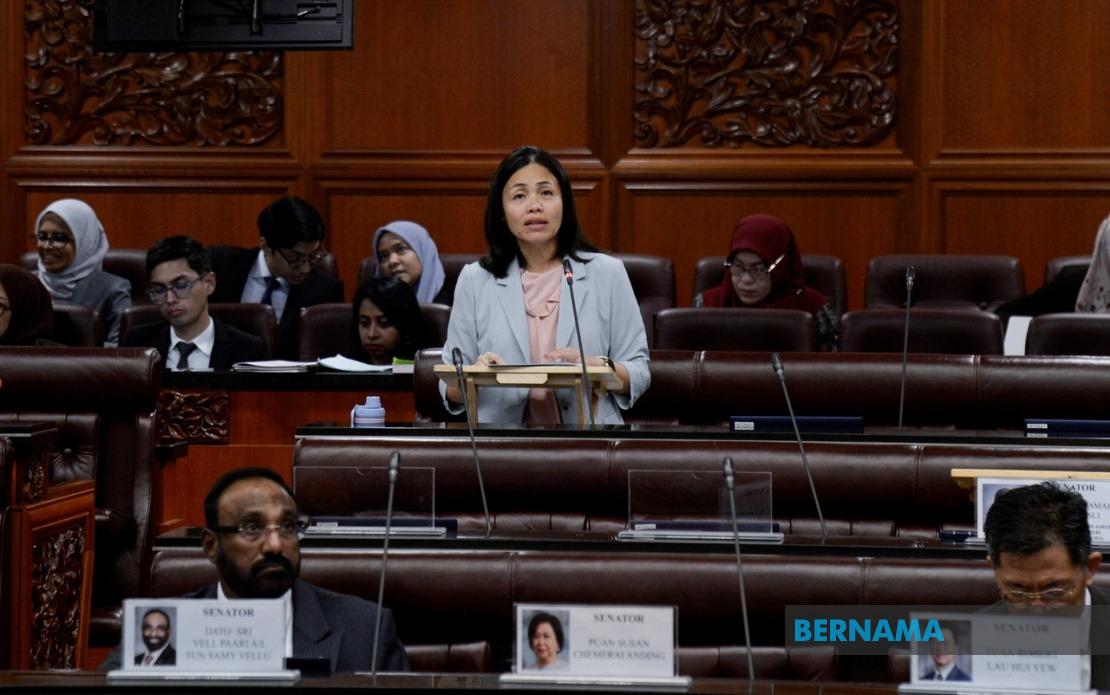
Malaysia's upper chamber has endorsed sweeping reforms to the Communications and Multimedia Commission (Amendment) Bill 2026, marking a significant step toward fortifying the country's digital regulatory framework. The Dewan Negara's approval by majority vote on August 3 follows an earlier passage through the Dewan Rakyat on July 15, establishing new governance standards that reflect Malaysia's evolving approach to digital oversight in an increasingly complex media landscape.
Deputy Minister of Communications Teo Nie Ching highlighted the tangible outcomes of MCMC's intensified enforcement operations, drawing particular attention to the agency's success in combating online gambling content proliferation. The regulator has removed more than 222,000 gambling-related digital materials in the first seven months of 2026 alone, underscoring an aggressive escalation in protective measures. This achievement becomes more remarkable when viewed against the trajectory of previous years—the agency took down merely two pieces of gambling content in 2022, a figure that exploded to 18,814 removals in 2023, 189,484 in 2024, and 289,486 across the whole of 2025. The exponential growth pattern demonstrates both the mounting scale of online gambling threats and MCMC's evolving technical capability to identify and eliminate such content across digital platforms.
Beyond content removal, the regulatory body has achieved substantial success in dismantling the infrastructure supporting illegal gambling operations. Between 2022 and July 31 of this year, MCMC collaborated with enforcement partners to block access to approximately 6,982 gambling websites, representing a comprehensive approach that targets both content distribution and the underlying platforms facilitating illegal activity. This two-pronged strategy reflects a mature understanding that effective digital regulation requires simultaneous action against both visible content and the technical systems that enable its propagation across networks.
The division of enforcement responsibilities between MCMC and law enforcement agencies reflects the complementary nature of contemporary digital regulation. While gambling activities themselves fall under the jurisdiction of the Royal Malaysia Police—rooted in Malaysia's established criminal framework—MCMC operates in a supporting capacity, leveraging its technical expertise to provide digital forensic analysis and executing access restrictions based on formal requests from police and other enforcement agencies. This collaborative model recognizes that modern crimes transcend traditional organizational boundaries, requiring intelligence-sharing and coordinated action across multiple state bodies.
The amendment's most politically significant provision concerns governance independence and the depoliticization of MCMC leadership. The reformed legislation explicitly prohibits serving politicians from serving as commission chairman, eliminating the possibility of Parliament members or state assemblymen occupying the position. This structural change addresses longstanding concerns that political patronage could compromise the regulator's impartiality and professional judgment. Deputy Minister Teo emphasized that the amendment aims to constrain ministerial discretion in commission appointments, establishing merit-based selection criteria that prioritize qualifications over political loyalty. Such measures reflect international best practices in regulatory governance, acknowledging that independent agencies function most effectively when insulated from electoral pressures and political cycles.
Senator Datuk Abdul Halim Suleiman articulated the broader strategic rationale for the amendments, situating telecommunications infrastructure within Malaysia's critical national interests. The communications and multimedia sector has transcended its earlier characterization as merely an economic sector; it now constitutes strategic infrastructure upon which governmental functions, commercial activity, and social cohesion depend. This reframing carries profound implications for how Malaysia conceptualizes digital regulation, suggesting that communication networks deserve the same protective attention traditionally reserved for power grids, water systems, and transportation networks. The legislative evolution reflects a belated but necessary recognition that digital infrastructure underpins modern statecraft.
However, Senator Datuk Abdul Halim cautioned that legislative authority alone proves insufficient for effective regulation. The amendment's success hinges fundamentally on MCMC's capacity to exercise its expanded functions with professionalism, transparency, and genuine effectiveness. This observation highlights the persistent gap between formal institutional design and practical implementation—many regulatory frameworks fail not because they lack legal authority but because the agencies charged with their enforcement lack sufficient resources, expertise, or political protection to function robustly. Malaysia's recent experience with regulatory capture in various sectors suggests that statutory independence remains vulnerable to subtle forms of political influence if agencies lack adequate funding and leadership autonomy.
Senator Muhammad Hasbie Muda extended this analysis by stressing that reform extends beyond expanding MCMC's formal powers and authority. Instead, he argued for primacy of competence and merit in commission appointments, suggesting that each regulatory power must be wielded with consistent transparency and genuine accountability to the Malaysian public. This perspective challenges Malaysian policymakers to resist the temptation to view institutional reform as a checklist exercise—passing legislation without ensuring that the individuals appointed to lead regulatory bodies possess genuine expertise and commitment to public interest. The efficacy of the MCMC amendment ultimately depends on who assumes leadership positions within the reformed institution.
The bill itself encompasses 17 distinct provisions, with particular emphasis on amendments to Section 16 of Act 589, clarifying MCMC's expanded responsibilities in developing, regulating, and maintaining digital infrastructure and platform standards. This clarification responds to years of jurisdictional ambiguity concerning whether MCMC possessed adequate authority to establish binding standards for digital systems. As Malaysia's digital economy matures and digital platform operators exercise increasing influence over public discourse and commercial activity, the regulatory need to establish clear technical and operational standards becomes more acute.
For Malaysian businesses and citizens, these reforms signal a more structured approach to digital regulation characterized by greater transparency in leadership selection and more consistent enforcement of gaming restrictions. Technology companies operating in Malaysia will face clearer expectations regarding content moderation and compliance obligations, reducing regulatory ambiguity. Citizens benefit from clearer pathways for challenging problematic content and greater assurance that MCMC leadership decisions reflect merit rather than political expedience. However, the amendments' practical impact remains dependent on implementation, funding adequacy, and the caliber of personnel appointed under the reformed governance structure. Malaysia's regulatory reform trajectory suggests recognition of digital infrastructure's strategic importance, though sustained commitment to professionalism and independence will determine whether the legislative changes produce meaningful improvements in digital governance and protection.

