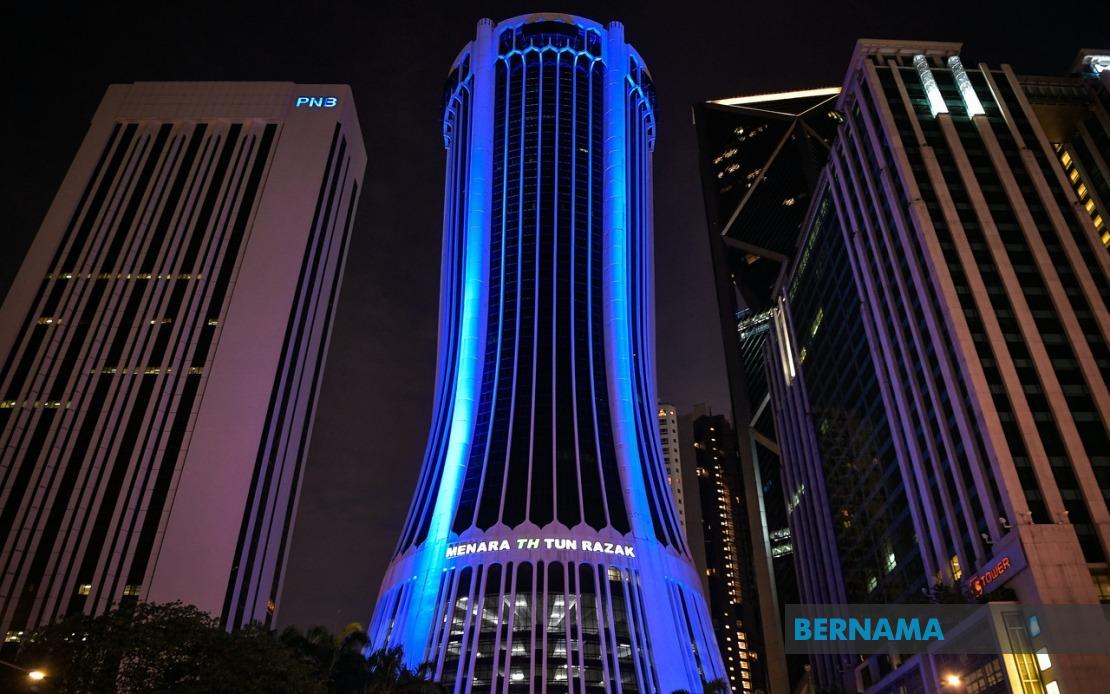
The release of the Royal Commission of Inquiry report examining Tabung Haji's governance and operational practices has not shaken the resolve of Muslim Malaysians who view the institution through a lens far deeper than that of conventional finance. For most adherents of Islam in the country, Tabung Haji transcends its function as a savings vehicle, representing instead a sacred custodian entrusted with facilitating one of the faith's most profound obligations.
This resilience in public confidence reflects a fundamental distinction between how Malaysians regard Tabung Haji and how they might perceive other financial institutions facing scrutiny. The organisation occupies a unique psychological and spiritual space within Malaysian Muslim society, anchored to centuries of Islamic tradition rather than merely to quarterly returns or competitive interest rates. The RCI findings, while prompting necessary discussions about accountability and operational reform, have not fundamentally altered this foundational relationship between depositors and their trusted intermediary.
Atiqah Shah Hadi, a 40-year-old tailor who has maintained her Tabung Haji account since childhood when her father first opened it on her behalf, exemplifies this steadfast commitment. She recently verified her status in the hajj queue and learned that her projected opportunity to perform the pilgrimage falls around 2033. Rather than interpreting the RCI report as grounds for withdrawing her accumulated savings, she views it as confirmation of why continued contributions to her account remain essential. The decade-long waiting period underscores the institution's role not merely as a depository but as a bridge spanning years of anticipation and preparation.
Muhammad Haikal Abdul Halim, a 35-year-old civil servant, similarly demonstrates the prevailing attitude among working professionals with families. Despite his awareness of the controversies surrounding Tabung Haji's management, he has entertained no thoughts of liquidating his existing balance. Instead, he intends to institute regular monthly salary deductions channelled directly into his Tabung Haji account, calculating that his current position on the waiting list positions him for hajj in 2032. His decision to extend this commitment by establishing accounts for his three young children—aged seven, four, and three—reflects a multigenerational perspective on Tabung Haji as a family institution rather than a discretionary investment.
Academic perspectives underscore the institutional requirements necessary to preserve this public confidence during a period of scrutiny and reform. Dr Saizal Pinjaman, director of the Centre for Economic Development and Policy at Universiti Malaysia Sabah, identifies two pillars upon which Tabung Haji's legitimacy must rest: the absolute security of depositors' accumulated savings and the organisation's long-term viability as a financial and operational entity. Transparency in financial reporting emerges as non-negotiable, with all profit declarations requiring comprehensive independent auditing that acknowledges investment losses, asset impairments, and broader economic realities.
Beyond transparent accounting, Tabung Haji faces an obligation to maintain substantial financial reserves capable of weathering market volatility and economic downturns. This conservative approach to dividend distribution—ensuring profits are only dispersed when genuine surpluses justify payment without compromising the institution's capital base—represents a departure from conventional financial practices prioritising shareholder returns. Instead, it reflects a fiduciary model where the institution's survival and solidity supersede short-term profitability.
Dr Saizal further emphasises that Tabung Haji must provide consistent, detailed disclosure regarding the actual cost of hajj assistance it bears or has incurred. This transparency extends beyond financial statements to encompass the practical expenditures associated with facilitating pilgrimage operations, including logistics, accommodation, guidance, and spiritual administration. When depositors understand precisely how their contributions translate into hajj support infrastructure, confidence in the institution's proper stewardship strengthens accordingly.
Dr Noor Nirwandy Mat Noordin, a senior lecturer at UiTM's Centre for Media and Information Warfare Studies, projects a more optimistic trajectory for Tabung Haji's rehabilitation and continued prominence. He notes that the institution has already demonstrated resilience in recovering from previous crises, emerging with enhanced operational capabilities and international recognition. Recent years have seen Tabung Haji gain acknowledgement among global hajj management organisations for its professional standards and pilgrim-centric services, positioning it as a model within the international Islamic tourism landscape.
This international standing carries particular significance for Malaysia's regional influence and soft power projection. As Southeast Asia's largest Muslim-majority nation and a respected voice within the Organisation of Islamic Cooperation, Malaysia's approach to hajj facilitation reflects broader commitments to religious stewardship and financial prudence. When Tabung Haji functions effectively and maintains public trust, it enhances Malaysia's credibility within the Islamic world and among Muslim diaspora communities globally.
The path forward for Tabung Haji requires balancing institutional reform with the preservation of sacred trust. The RCI report presumably articulates specific deficiencies requiring correction, yet the institution's fundamental mission—enabling ordinary Malaysians to fulfil a central Islamic obligation—remains unchanged and uncontroversial. Implementation of governance improvements, enhanced oversight mechanisms, and operational efficiencies need not erode the spiritual compact between depositors and their custodian.
Moreover, the multigenerational nature of Tabung Haji's relationship with Malaysian Muslim families introduces a temporal dimension absent from conventional financial institutions. Parents and grandparents who contributed decades earlier entrust the organisation with their legacies; current working-age depositors prepare their own futures; and young children inherit accounts established in anticipation of their eventual pilgrimage. This intergenerational continuity creates a resilience rooted in familial commitment rather than purely rational economic calculation.
As Tabung Haji navigates the aftermath of the RCI inquiry, the challenge lies not in rebuilding confidence that remains fundamentally intact but in channelling that confidence toward supporting necessary institutional improvements. Depositors like Atiqah and Muhammad Haikal demonstrate that Malaysians are willing to maintain faith in the institution while welcoming reforms that strengthen its operations and clarify its financial stewardship. This willingness to distinguish between necessary accountability and foundational trust offers Tabung Haji the latitude to implement changes while retaining the mandate it has exercised for generations.

