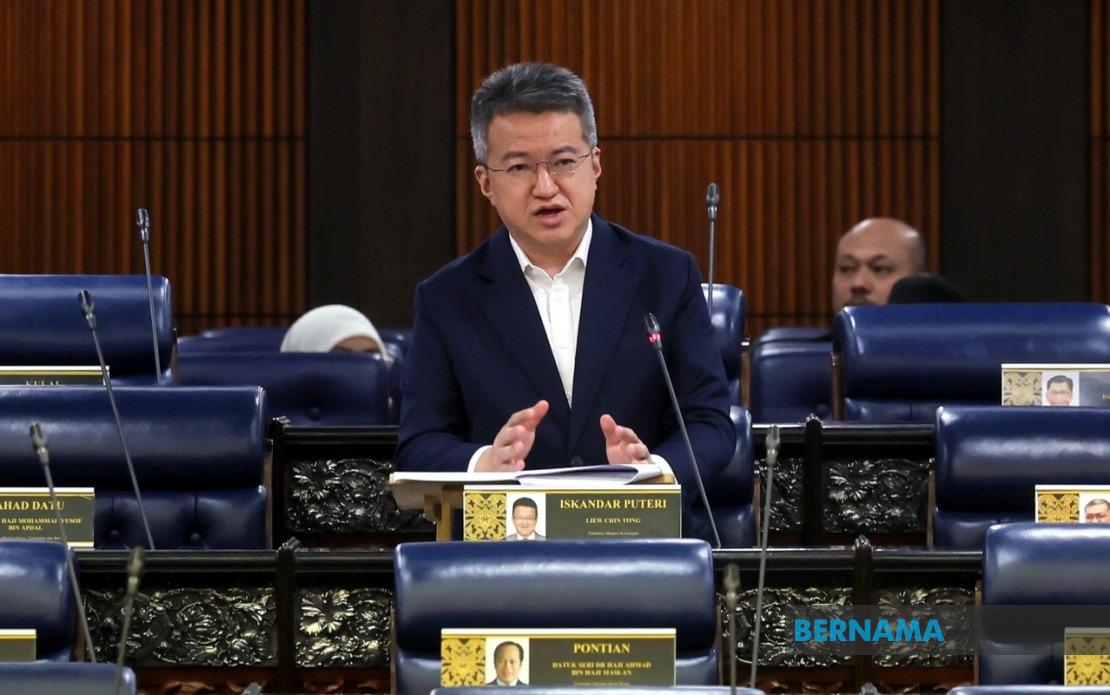
Deputy Finance Minister Liew Chin Tong has categorically dismissed allegations that fugitive businessman Low Taek Jho, commonly referred to as Jho Low, slipped into Malaysia last year as part of a Chinese delegation to broker negotiations surrounding the sprawling 1Malaysia Development Berhad scandal. Speaking during parliamentary Question Time in the Dewan Rakyat, Liew offered no elaboration beyond his terse denial, responding to a supplementary query raised by Syed Saddiq Syed Abdul Rahman of MUDA-Muar, who had cited media reports of the purported clandestine gathering.
The opposition parliamentarian's question had initially referenced press coverage suggesting Jho Low participated in a confidential meeting on Malaysian soil in late 2024, ostensibly to hammer out terms for a comprehensive 1MDB repayment arrangement that would involve the Ministry of Finance. Such reports, if accurate, would have marked a striking development in a scandal that has consumed Malaysian politics and governance for nearly a decade, casting long shadows over the nation's international standing and institutional credibility.
Liew's response anchored itself instead in the government's sustained push to recoup misappropriated 1MDB wealth through multiple legal channels. He outlined how authorities have pursued both criminal and civil remedies, with particular emphasis on cases against former Prime Minister Datuk Seri Najib Tun Razak, whose culpability in the scheme remains central to public understanding of the fund's collapse. The parliamentary setting afforded Liew an opportunity to recount recent judicial outcomes that underscore the administration's determination to hold wrongdoers accountable, despite the fact that key figures like Jho Low remain at large.
The High Court's December 26, 2025 verdict against Najib constituted a watershed moment in Malaysia's anti-corruption architecture. The bench found him guilty on 25 separate charges encompassing money laundering and the abuse of executive power to solicit bribes connected to 1MDB, culminating in a 15-year prison sentence and an RM11.38 billion financial penalty. This substantial fine underscores the quantum of personal enrichment the former premier allegedly secured, though questions persist about how much of that sum might ultimately be recovered given the complexities of asset tracing across multiple jurisdictions.
Parallel civil litigation targeting Datin Seri Rosmah Mansor, Najib's spouse, seeks to recover US$380 million in damages—equivalent to roughly RM1.56 billion—tied to allegations that 1MDB monies financed luxury acquisitions including designer handbags and high-end jewellery. Such cases, while addressing individual culpability, represent only a fraction of the total financial hemorrhaging the fund experienced. They also illustrate how the scandal penetrated Malaysia's highest political circles, compromising trust in governance at a moment when the nation sought to position itself as a regional investment hub and democracy.
Jho Low himself remains the principal target of aggressive asset recovery action, with the government pursuing civil claims valued at US$3.78 billion—approximately RM15.4 billion in local currency. Characterising him as the alleged mastermind orchestrating the 1MDB misappropriation, Liew's statement reflected official determination to pursue the fugitive businessman through every available legal mechanism, even as his continued absence from Malaysian territory complicates enforcement. International cooperation, extradition efforts, and Interpol coordination feature prominently in these efforts, though success has proven elusive given Jho Low's apparent ability to relocate and avoid apprehension.
The 1MDB catastrophe has inflicted damage across four distinct dimensions, according to Liew's parliamentary testimony. Direct financial losses represent the most immediately quantifiable harm, comprising funds directly stolen or misallocated from the sovereign wealth fund's accounts. Opportunity costs constitute a second category, encompassing the developmental initiatives and investments Malaysia forgone because capital was diverted elsewhere. A third category encompasses irrecoverable losses—monies that have been spent, hidden, or transferred in ways that render recovery impossible regardless of legal victory. Finally, the reputational damage to Malaysia internationally stands as perhaps the most intangible yet consequential loss, as global investors and partners questioned the nation's institutional safeguards and governance standards.
The controversy surrounding potential secret negotiations with Jho Low reflects the continued sensitivity surrounding 1MDB settlement possibilities within Malaysian society and international circles. Any suggestion that the fugitive businessman might broker a settlement or achieve some form of reconciliation provokes fierce public reaction, given widespread perception that he orchestrated one of the century's most brazen sovereign wealth fund thefts. The timing of these allegations in July 2025, years after 1MDB's initial implosion in 2015, demonstrates how the scandal continues to generate speculation and concern about whether full accountability and recovery remain achievable.
For Malaysian observers tracking the 1MDB aftermath, Liew's parliamentary denial offers reassurance that the government maintains vigilance against potential backroom arrangements that might compromise justice or public interest. The sustained pursuit of criminal and civil cases, combined with official denials of secret settlements, projects an image of institutional resolve. Yet the lingering presence of fugitive figures and the partial nature of asset recovery efforts to date underscore the formidable challenges Malaysia's legal system faces in fully addressing the scandal's dimensions, even as the country slowly rebuilds its international economic credibility.

