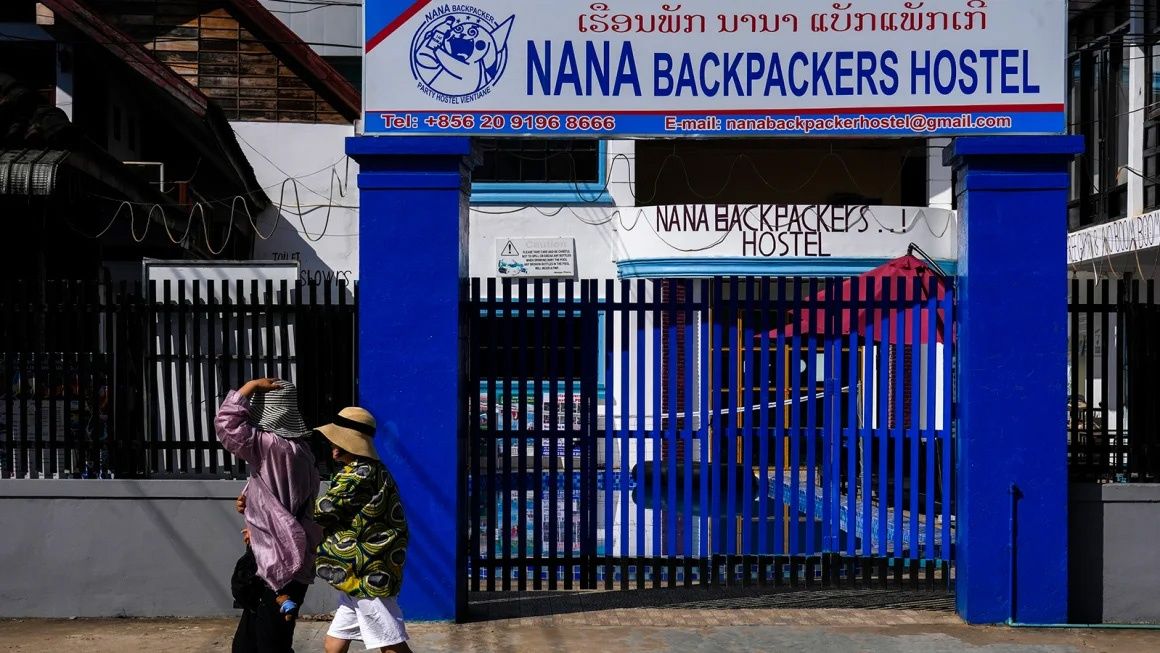
Laos has moved to prosecute a distillery owner over the November 2024 methanol poisoning tragedy at a Vang Vieng hostel that claimed six foreign lives, but the charges have sparked international outrage for their perceived inadequacy. Denmark's foreign ministry announced on Friday that a Lao court has filed charges of selling food harmful to health and operating an illegal business—offences that carry penalties ranging from three months to four years imprisonment plus fines. The case centres on the deaths of two Danish nationals, Anne-Sofie Orkild Coyman, 20, and Freja Vennervald Sorensen, 21, alongside Australian teenagers Bianca Jones and Holly Morton-Bowles, both 19; British lawyer Simone White, 28; and American James Louis Hutson, 57.
Danish Foreign Minister Lars Løkke Rasmussen expressed profound disappointment that authorities had not pursued more serious allegations commensurate with the human toll. While acknowledging that meeting the evidentiary threshold for negligent homicide charges can prove legally complex, he underscored the difficulty for grieving families in accepting what he characterised as disproportionately lenient prosecution. The ministry's statement noted that the case will remain formally open for fifteen years, leaving the door theoretically open for authorities to escalate charges if additional evidence emerges to support more serious allegations. However, such legal procedural safeguards offer little comfort to families seeking accountability for what they view as preventable deaths.
The announcement triggered swift and emotional responses from the victims' relatives, who gathered in a news conference to pre-empt and protest the charges they anticipated. Bianca Jones's mother, Michelle, conveyed the raw anguish of parents who watched their children pursue ordinary travel experiences—a rite of passage for countless young people—only to have their lives cut short. She expressed bewilderment and devastation at the outcome, struggling to reconcile the apparent dismissal of her daughter's life with such minimal legal consequences for the distillery proprietor. The family statements underscored a perception that Lao authorities were treating the tragedy with insufficient gravity, potentially signalling to other backpackers that tourist safety carries limited weight in the destination.
Australia's government joined Denmark in condemning the charges as manifestly inadequate. Foreign Minister Penny Wong declared herself deeply frustrated and bitterly disappointed by the decision not to pursue negligent homicide or similarly serious allegations. Prime Minister Anthony Albanese's administration moved swiftly to dispatch an envoy to Vientiane to formally object to the prosecution strategy and reinforce expectations for a thorough investigation meeting international standards of justice. Australian officials also summoned Laos's ambassador to Canberra, demonstrating the diplomatic pressure being applied at multiple levels. This escalation reflects broader regional and international concerns about accountability in a jurisdiction where foreign tourists represent a significant economic constituency.
The technical details of the case reveal a tragedy with potentially preventable elements. The six victims had stayed at the Nana Backpacker Hostel, where they consumed complimentary shots of Laotian vodka before venturing to other nightlife venues. When the Australian teenagers failed to check out as scheduled, hostel staff discovered them gravely ill in their accommodation. Their condition deteriorated rapidly, necessitating emergency evacuation to hospitals across the border in Thailand, where they subsequently succumbed to methanol poisoning. The sequence of events suggests systemic failures in quality control, regulatory oversight, and possibly deliberate adulteration of alcoholic beverages sold to tourists.
Methanol poisoning represents a persistent public health crisis that extends far beyond Laos or even Southeast Asia. Doctors Without Borders data documents the highest incident rates in Indonesia, India, and Russia, though the problem surfaces wherever legitimate alcohol proves expensive or difficult to obtain. Unscrupulous vendors sometimes deliberately adulterate mixed drinks with methanol—a toxic industrial solvent far cheaper than ethanol—to increase profit margins. Alternatively, methanol contaminates beverages through inadequate distillation processes in illicit home-brew operations that inadvertently supply bars and informal drinking establishments. For local populations in low-income nations, methanol poisoning disproportionately claims lives among economically vulnerable groups with limited access to medical countermeasures or poison control services.
The case exposes particular vulnerabilities facing foreign backpackers navigating unfamiliar drinking cultures and establishments operating outside formal regulatory frameworks. Vang Vieng has cultivated an international reputation as a backpacker hub offering adventure tourism and vibrant nightlife, attracting predominantly young travellers from wealthy nations seeking affordable adventure and hedonistic experiences. This demographic profile renders the destination economically dependent on international tourist flows, yet the methanol tragedy and inadequate prosecutorial response have begun damaging that competitive advantage. Shaun Bowles, father of victim Holly Morton-Bowles, warned that the apparent dismissal of tourists' lives and the apparent cover-up would predictably deter prospective visitors, potentially costing the region significant income.
Parents of the Danish victims reported experiencing systematic obstruction and information deprivation since the initial tragedy. According to Danish public broadcaster DR, Freja Vennervald Sorensen's parents stated that no autopsy was performed on their daughter despite the suspicious circumstances of her death. The official death certificate mystifyingly attributed her demise to cardiac arrest—a natural cause unrelated to methanol poisoning—suggesting possible deliberate misclassification by authorities seeking to minimise the incident's apparent magnitude. These families emphasised that the young women had exercised reasonable travel precautions throughout their journey, yet possessed no awareness that methanol poisoning represented a realistic risk in a hostel setting. Their advocacy now focuses on raising global consciousness about this hazard affecting not merely tourists but entire communities in jurisdictions where enforcement mechanisms remain weak.
Laos's authoritarian political structure and information control practices substantially constrain transparency and accountability mechanisms that might otherwise drive prosecutorial rigour. The communist one-party state exercises tight dominion over official communications, and its foreign ministry declined AP's request to cover the formal charge announcement, permitting access exclusively to state-aligned local media and diplomatic missions of concerned nations. This opacity reflects institutional patterns in which official narratives prioritise economic and diplomatic relationships over comprehensive factual disclosure or independent scrutiny. Vang Vieng's significance as a tourist revenue generator may unconsciously—or deliberately—influence prosecutorial calculations, as aggressive charges against hospitality sector operators could invite investor withdrawal and reputation damage within an already fragile economy.
The diplomatic friction generated by these charges carries implications beyond the immediate criminal matter. Denmark, Australia, and Britain have all signalled resolve to monitor the investigation and demand outcomes reflecting the tragedy's seriousness. Their collective pressure, coordinated through embassy networks and high-level ministerial statements, establishes expectations that will shape how Lao authorities calibrate future prosecutions involving foreign nationals. For Malaysian and Southeast Asian observers, the case exemplifies the vulnerability of regional nations' legal systems to external scrutiny when tourist deaths occur under circumstances suggesting negligence or systemic failure. It underscores persistent challenges in harmonising legal standards, evidentiary practices, and prosecutorial independence across the region's heterogeneous political and institutional landscape.
The practical outcome remains uncertain. While the case formally remains open for fifteen years, the initial charges focusing on minor business violations suggest authorities may lack either evidence or political will to pursue more serious allegations. The presence of embassy vehicles departing the Vientiane security ministry on Friday afternoon indicated diplomatic engagement behind closed doors, yet official statements reveal no movement toward enhanced charges or expanded investigation. For the families, the fight for accountability appears destined to extend through prolonged legal processes in an unfamiliar system, compounded by distance, language barriers, and institutional constraints limiting their agency. Their experience illustrates how even citizens of wealthy democracies confront profound challenges securing justice through foreign judicial mechanisms when corporate negligence or official indifference contributes to preventable loss of life.

