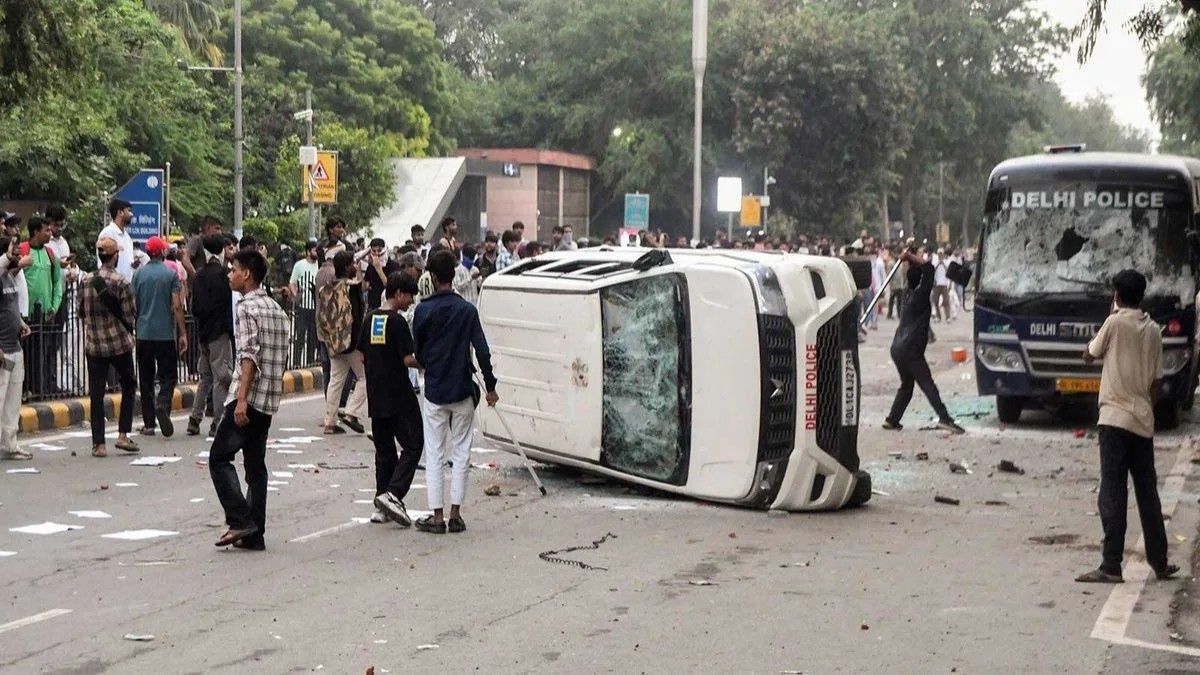
The Delhi Police have initiated a significant legal response to unrest triggered by the Cockroach Janta Party's "Sansad Chalo" demonstration, registering 10 First Information Reports across multiple police stations in the New Delhi district as authorities continue investigating Monday's confrontations. The filing of these cases marks an escalation in the official handling of the protest movement, which centred on demands for Union Education Minister Dharmendra Pradhan's resignation following allegations of examination irregularities affecting students nationwide.
Authorities moved swiftly to counter what they characterised as misinformation circulating through social media platforms. The Deputy Commissioner of Police for New Delhi issued a statement on X denying that Tuesday saw renewed incidents of stone-pelting or police action at Jantar Mantar, where demonstrators had maintained a continuous sit-in following the previous day's confrontations. The police described videos making such claims as "false and misleading" and appealed to the public to obtain information exclusively from official channels rather than unverified content shared online.
The criminal cases have been distributed across several key police stations, with Parliament Street station handling four FIRs, Connaught Place station processing three, and individual cases registered at Mandir Marg, Barakhamba Road and Kartavya Path stations. This geographic spread reflects the intensity and scale of Monday's disturbances, which saw clashes emerge as the demonstration progressed toward the Parliament complex. The diversity of charges suggests prosecutors are treating the situation with considerable seriousness, invoking multiple legal frameworks to address different aspects of the alleged misconduct.
Investigators have cast a wide net in their examination of the incidents, with one FIR specifically addressing allegations that protesters mounted an apparently life-threatening assault on a member of the Rapid Action Force during Monday's march. A separate case concerns the unauthorized operation of a drone throughout the New Delhi district during parliamentary proceedings, raising security concerns that extend beyond the immediate protest dynamics. Beyond these specific incidents, police have also filed charges addressing alleged conspiracy, obstruction of government functions, assaults targeting law enforcement, and destruction of state property.
The legal framework underpinning the FIRs demonstrates the comprehensive nature of the police response. Cases invoke provisions from the Bharatiya Nyaya Sanhita, India's recently reformed criminal code, alongside the Arms Act and the Prevention of Damage to Public Property Act, providing prosecutors with multiple avenues through which to pursue charges. This layered approach suggests the authorities view the events as involving coordinated action rather than isolated incidents of public disorder.
Police characterisations of Monday's demonstration emphasise what officials describe as "unruly, aggressive and violent behaviour" exhibited by participants despite warnings and prohibitory orders previously established in the region. The narrative construction by law enforcement casts the protesters as having deliberately ignored governmental directives and escalated confrontations despite repeated appeals for restraint. However, demonstrators and their representatives offer competing accounts, with protest organisers alleging that security personnel employed excessive force against civilians, including women attendees.
The investigation phase remains active and expansive, with forensic teams examining more than 250 video recordings to identify individuals involved and construct a comprehensive understanding of events. This massive analytical effort reflects the volume of documentation generated by both official sources and bystanders during the confrontations. Investigators are specifically scrutinising whether the violence followed a preconceived strategy rather than emerging spontaneously from crowd dynamics, a distinction carrying significant implications for prosecutorial strategy and potential sentencing outcomes.
The Cockroach Janta Party's leadership demonstrates no inclination toward capitulation, with party spokesperson Ashutosh Ranka declaring that demonstrations would persist indefinitely until their core demand—Pradhan's resignation—is satisfied. This hardened stance ensures that tensions will likely remain elevated throughout the investigation period. Ranka simultaneously levelled countervailing allegations that security forces inflicted injuries upon numerous protesters, students and volunteers, while drawing particular attention to complaints that female demonstrators faced mistreatment, naming Geetanjali J. Angmo, spouse of prominent activist Sonam Wangchuk, as among those allegedly subjected to inappropriate conduct.
The continuation of the sit-in at Jantar Mantar despite police removal of tents and the protest stage indicates organisers' commitment to maintaining visible pressure on the government. The heavy security presence maintained by Delhi Police and Rapid Action Force personnel throughout the venue underscores official determination to prevent any escalation of the confrontations observed during Monday's march. This sustained military-style deployment carries implications extending beyond immediate crowd control, signalling to demonstrators and the broader public the gravity with which authorities regard the situation.
For observers across South Asia, particularly in Malaysia and neighbouring regions, the Delhi confrontations illustrate the complex dynamics surrounding student-led advocacy campaigns targeting government educational policy decisions. The willingness of security forces to deploy in substantial numbers against civilians expressing political grievances reflects broader tensions between authorities' prerogatives to maintain order and citizens' constitutional rights to assembly and protest. The emphasis on examining conspiracy rather than treating violence as spontaneous crowd behaviour suggests prosecutors anticipate contentious trials that will examine the planning and coordination of demonstration activities.
The competing narratives emerging from police and protest organisers regarding the severity and nature of injuries sustained during Monday's clashes remain unresolved. Official statements emphasise the alleged threats posed by demonstrators to security personnel, while advocacy groups highlight supposed mistreatment of women and students. These divergent accounts suggest that establishing factual clarity through judicial proceedings will prove essential, particularly regarding allegations of inappropriate conduct toward female participants whose voices often remain marginalised in official narratives of public disorder.
As investigations continue and legal proceedings commence, the political implications extend beyond the immediate demands regarding an education minister's tenure. The episode raises questions about the mechanisms through which citizens can effectively challenge policies perceived as failing students and educational integrity. The government's response through criminal prosecution rather than policy engagement or ministerial accountability demonstrates the authorities' preferred conflict resolution methodology, potentially establishing precedents for how subsequent demonstrations will be addressed.

