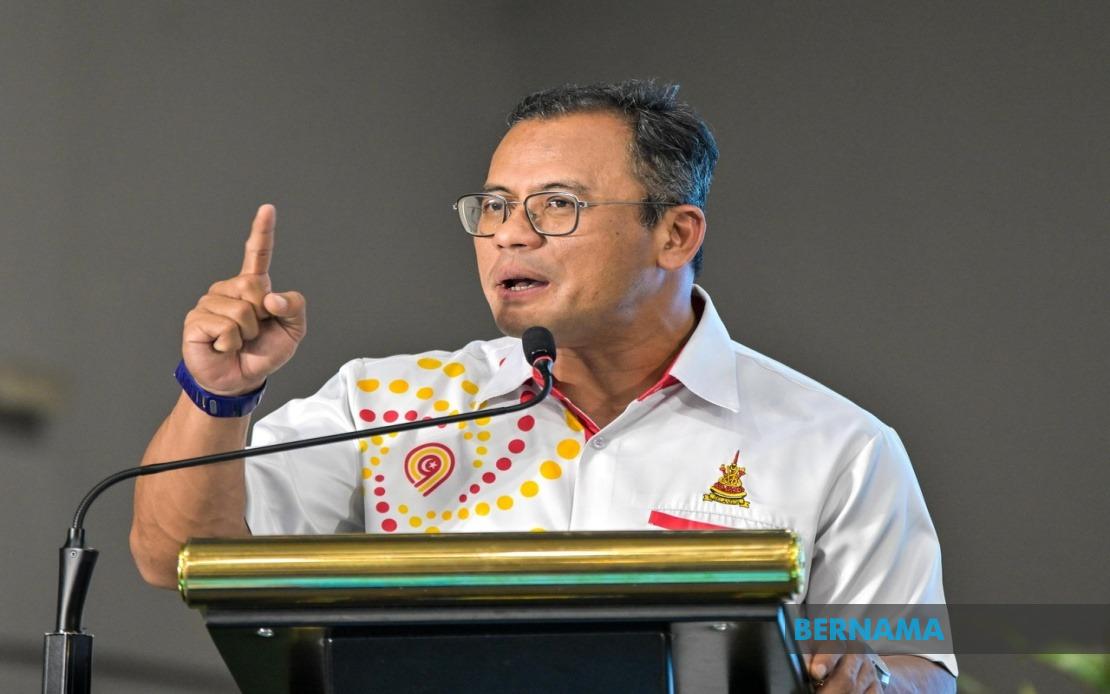
Selangor Menteri Besar Datuk Seri Amirudin Shari has underscored the critical need for Malaysians to grasp the deeper meaning of Rukun Negara, warning that superficial familiarity with the document leaves the nation vulnerable to identity politics and social fragmentation. Speaking after inaugurating the MADANI Kita Bersama Komuniti Ampang Jaya programme in Kuala Lumpur on August 29, Amirudin outlined how a comprehensive grasp of the national foundation principles can fortify communal bonds in an increasingly polarised society.
The distinction between knowing and understanding represents a fundamental challenge facing Malaysia's efforts to preserve racial harmony, according to the Selangor leader. Many citizens can recite the five pillars of Rukun Negara from memory, yet this mechanical repetition often masks ignorance of the philosophical underpinnings and unifying objectives that animate each principle. Amirudin warned that this gap between surface knowledge and genuine comprehension creates dangerous space for opportunistic actors to weaponise religious and political differences against the broader public interest.
Examining the practical implications of this disconnect, Amirudin highlighted how the principle concerning belief in God illustrates this problem. While the religious dimension is immediately apparent, most Malaysians fail to recognise how this principle, when properly contextualised, demands mutual respect across different faith traditions and explicitly reinforces interfaith coexistence. The principle thus becomes not a source of sectarian division but a charter for religious pluralism—a transformation possible only through genuine understanding rather than hollow recitation.
The Menteri Besar articulated a vision where comprehensive engagement with Rukun Negara's stated objectives could inoculate society against the corrosive effects of divisive identity politics. He contended that when citizens internalise the document's commitment to unity among Malaysians of diverse racial backgrounds, they develop intellectual and moral defences against those who attempt to instrumentalise ethnicity or religion for narrow political gain. This preventative approach treats comprehension as a form of civic resilience.
Amirudin also addressed recent criticism from various quarters regarding the government's decision to incorporate the Rukun Negara preamble and its objectives during official recitations and readings. Some observers had characterised this initiative as an attempt to alter the document's original framework, raising concerns about potential constitutional impropriety. The Menteri Besar firmly rejected such interpretations, framing the move instead as a deliberate effort to resurrect awareness of principles and purposes that have receded from public consciousness over decades.
The inclusion of contextual materials serves, in his view, not to amend Rukun Negara but to restore its complete meaning to contemporary national discourse. By reintroducing the foundational objectives alongside the five principles, officials aim to reconnect Malaysians with the document's underlying vision of national cohesion. Amirudin emphasised that the primacy of unity among people from different racial communities stands at the centre of these objectives, a priority that becomes obscured when citizens encounter only the bare principles divorced from explanatory context.
For Malaysian policymakers and civil society, this intervention reflects broader anxieties about the erosion of shared national identity in an era of intensifying communal polarisation. As regional political dynamics grow increasingly fractious, with parties across the spectrum employing inflammatory rhetoric around ethnicity and faith, the government appears to view Rukun Negara renewal as a strategic response. By emphasising comprehensive understanding over rote knowledge, officials signal that defending national unity requires active intellectual engagement rather than passive acceptance.
The timing of this emphasis proves particularly significant given Malaysia's complex demographic composition and history of communal tensions. Unlike more homogeneous nations that can rely on ethnic or religious commonality to bind citizens, Malaysia must continuously reinforce its constitutional compact of racial accommodation. Rukun Negara, adopted in 1970 following the tragic 1969 riots, represents the nation's foundational agreement on these terms. Its principles emerged from hard-won recognition that shared national purpose transcends particularistic identities.
Amirudin's intervention reflects a broader concern within the Malaysian establishment that citizens increasingly treat Rukun Negara as historical artefact rather than living framework for national coexistence. Educational curricula may include the five principles, yet insufficient emphasis falls upon their integrative function or their historical necessity. This erosion of active commitment to Rukun Negara's vision coincides with the rise of political movements that privilege narrow community interests over national solidarity.
The gathering in Ampang Jaya, attended by Deputy National Unity Minister Yuneswaran Ramaraj alongside several state assemblymen, underscored the multipartisan nature of this initiative. Such broad participation suggests recognition across Malaysia's political spectrum that foundational national principles require periodic reinforcement to remain relevant to contemporary generations. The MADANI Kita Bersama Komuniti programme itself represents an attempt to ground these abstract principles in grassroots community engagement.
Looking forward, the challenge for Malaysian leadership lies in translating rhetorical commitment to Rukun Negara comprehension into substantive institutional and educational change. Without systematic efforts to integrate deeper understanding of these principles into school curricula, civil service training, and political discourse, mere exhortations by senior officials risk remaining aspirational rather than transformative. The nation's social cohesion ultimately depends not on what leaders proclaim but on what citizens internalise about their shared foundations for living together.

