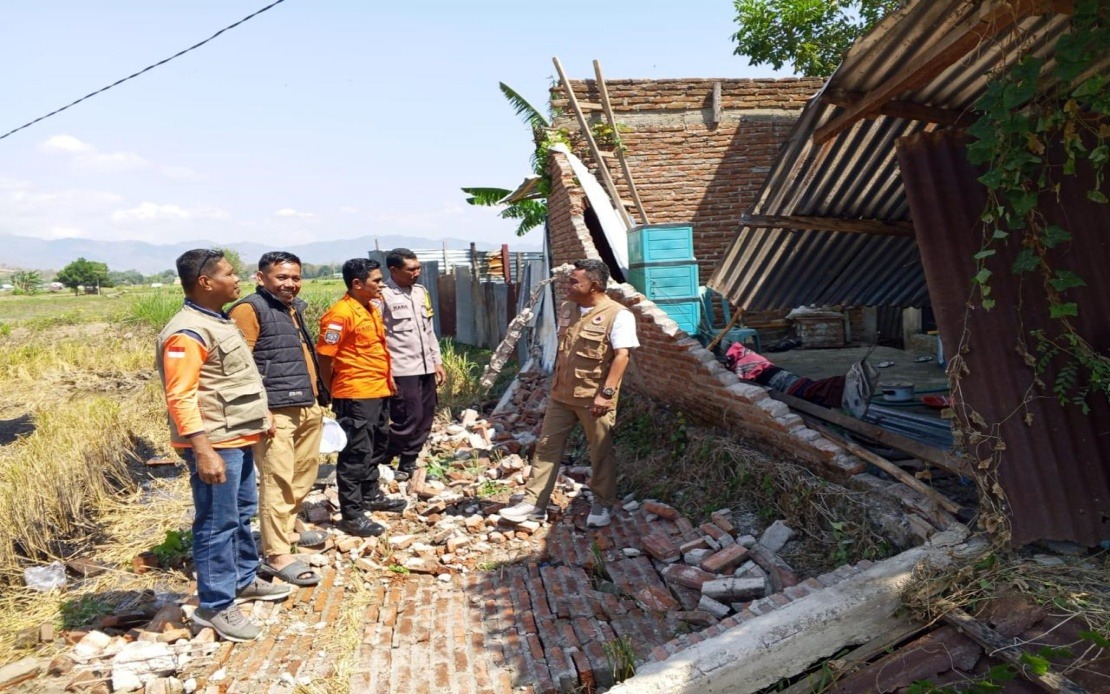
A devastating magnitude 7.7 earthquake that struck Indonesia's Flores Island in East Nusa Tenggara on Saturday morning has claimed at least 38 lives, with rescue personnel from multiple agencies working frantically to extract survivors from collapsed structures and reach isolated communities. The disaster struck at 4:58 am local time with its epicentre located approximately 30 kilometres offshore from Mbay at a depth of 15 kilometres beneath the seabed, unleashing powerful seismic waves that rippled through the island's eastern regions.
National Disaster Management Agency chief Suharyanto provided updates indicating that beyond the confirmed fatalities, two individuals remain hospitalised with serious injuries while 11 others sustained minor wounds. Approximately 2,000 residents have already evacuated affected zones independently, though many more await official assistance or remain unaccounted for in areas that rescue teams have yet to access. The scale of displacement underscores the earthquake's violent impact across populated settlements and surrounding communities.
The initial tremor triggered a tsunami warning that gripped coastal residents with additional anxiety for nearly three hours until authorities lifted the alert at 7:31 am, after careful monitoring of sea-level patterns confirmed no substantial additional rise beyond normal tidal variations. This warning, while ultimately precautionary, demonstrated the region's vulnerability to multiple hazards and the need for comprehensive disaster response protocols that address both terrestrial and maritime threats simultaneously.
The earthquake's destructive force manifested across diverse infrastructure categories. Dozens of residential structures collapsed or sustained severe damage, forcing families to seek emergency shelter. Several community health centres suffered damage that may impede medical services precisely when patient numbers surge due to earthquake-related injuries. Critically, multiple sections of the road network became impassable due to landslides triggered by the quake, severely hampering rescue vehicle access to remote villages and isolated populations requiring urgent assistance.
Transportation and communication hubs experienced substantial disruption, with airport terminal buildings sustaining notable damage despite runways remaining operational for emergency relief flights. Two port facilities also suffered impacts, though their operational status remained partially functional. These transportation bottlenecks compound logistical challenges, as rescue equipment, medical supplies, and personnel face routing difficulties that slow their deployment to priority zones.
Suharyanto emphasised that search and rescue operations constituted the immediate priority, with personnel from the National Search and Rescue Agency (Basarnas), Indonesia's armed forces, and police units deployed strategically throughout the affected zone. The coordination between these agencies reflects Indonesia's established disaster response framework, though initial estimates acknowledged that casualty figures and damage assessments would evolve significantly over coming days as rescue teams gained better access to previously unreachable areas.
The Public Works Ministry mobilised equipment and personnel specifically tasked with clearing landslide debris blocking critical roadways, recognising that transportation restoration would directly enable faster humanitarian response. Simultaneously, authorities recognised the urgent requirement to restore functional communication networks to coordinate rescue efforts and allow survivors to contact relatives. These parallel initiatives address both immediate survival needs and the longer-term recovery infrastructure essential for sustaining response operations.
Airborne assets deployed to the region included two helicopters and one fixed-wing aircraft, expanding the reach of evacuation and supply delivery beyond ground-based constraints. These aircraft proved invaluable for accessing mountainous terrain or isolated settlements unreachable by road, transporting injured persons to medical facilities in larger population centres, and delivering concentrated supplies to communities cut off by landslide barriers.
Humanitarian logistics ramped up quickly, with distribution networks channelling food, potable water, portable water purification supplies, emergency tents, electrical generators, and other survival essentials to displaced populations. The volume of supplies required to sustain 2,000 evacuees plus additional unknown numbers still requiring rescue demonstrates the immense logistical undertaking that earthquake responses demand. These supply lines must remain continuous even as rescue operations proceed, as survivors require immediate sustenance and shelter regardless of recovery progress.
For Southeast Asian observers, particularly Malaysians familiar with seismic and tsunami risks in neighbouring regions, the Flores earthquake exemplifies the region's persistent geological vulnerability. Indonesia straddles the Pacific Ring of Fire, positioning it among world's most seismically active zones. The magnitude and shallow depth of this Flores event—similar to tremors that have previously caused regional devastation—serve as stark reminders that modern infrastructure and preparedness systems remain perpetually challenged by nature's raw power.
The unfolding disaster also illustrates how quickly earthquake impacts cascade through interconnected systems. A single seismic event damaged residential housing, health facilities, roads, ports, and airports simultaneously, overwhelming response capacity and forcing difficult prioritisation decisions. Malaysian disaster management authorities and the broader Southeast Asian community observe these events closely, recognising patterns that inform their own preparedness and response protocols.
As rescue operations continue into subsequent days, the actual death toll and damage figures will likely expand significantly. First-day assessments in major disasters traditionally undercount fatalities and property damage substantially, with revised figures sometimes doubling or tripling as rescue teams penetrate previously inaccessible zones and identify additional casualties. The coming week will prove critical for determining whether survivor rescue rates match or exceed typical disaster outcomes, potentially influenced by response speed and resource adequacy now mobilised across Flores.

