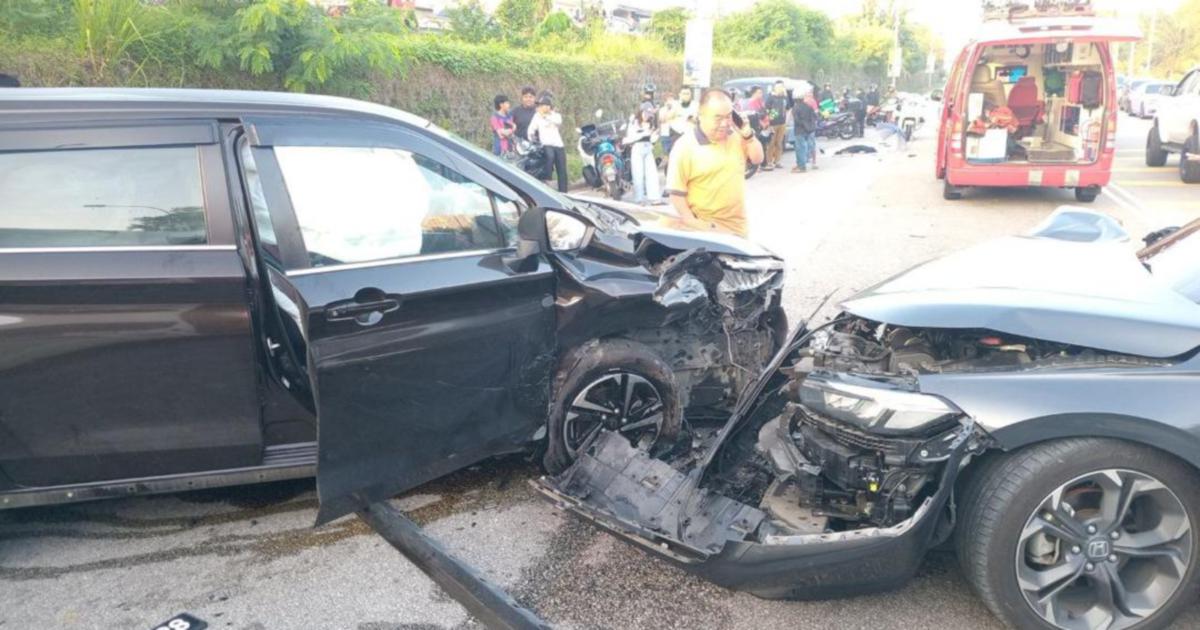
A tragic accident unfolded on the streets of Johor Baru this morning when a four-vehicle collision resulted in the death of a factory operator. The woman was thrown from a van during the impact and subsequently crushed beneath the overturned vehicle on Jalan Permas Utara. The incident, which occurred in broad daylight, has prompted authorities to initiate a thorough investigation into the circumstances surrounding the crash.
The fatal collision involves multiple vehicles, complicating the factors that may have contributed to the sequence of events. Such multi-vehicle pile-ups on busy thoroughfares present particular investigative challenges, as police must carefully reconstruct the exact sequence of movements, speeds, and positioning of each vehicle involved. Officers will need to interview all surviving occupants and witnesses to piece together a comprehensive timeline of what transpired in the moments leading up to the collision.
Among those present at the scene were a father and three children who were riding in one of the vehicles involved in the crash. The presence of young passengers adds another dimension to this incident, raising questions about the safety circumstances during the event. Authorities will be particularly focused on determining whether all vehicle occupants were properly restrained and whether the collision forces were distributed in ways that affected passengers differently based on their seating positions and ages.
The fact that the fatal victim was ejected from the van suggests potentially severe impact forces that overcame typical vehicle safety features. Modern vehicle design incorporates numerous safety mechanisms—from seatbelts to airbags—that are engineered to keep occupants within the vehicle during crashes. The fact that this woman was thrown from the van indicates either extraordinary circumstances, potential non-compliance with safety protocols, or possibly a vehicle malfunction. Investigators will examine these possibilities closely.
The location of the incident, Jalan Permas Utara in Johor Baru, is a significant commercial and residential corridor in Peninsular Malaysia's southernmost state. Traffic patterns and road conditions on this stretch will be relevant factors in the investigation. Police will want to establish whether visibility was adequate, whether road surface conditions played any role, and whether traffic density or flow patterns contributed to the severity of the collision.
Investigators will examine multiple potential causes ranging from mechanical failure to driver error to road conditions. Determining fault in multi-vehicle collisions requires meticulous analysis of physical evidence at the scene, including vehicle damage patterns, skid marks, and debris scatter. Digital evidence from vehicles equipped with dashcams or modern safety systems may also prove valuable. Witness statements, particularly from occupants of nearby vehicles, can help establish the sequence of events and identify which vehicle initiated the chain reaction.
The overturning of the van appears to have been particularly consequential in this tragedy. Rollover accidents carry heightened severity due to the tremendous forces involved and the compromised protection they offer to occupants. Roof crush protection in modern vehicles is designed to prevent cabin intrusion, but the violent nature of such accidents still poses extreme risks, particularly if occupants are not properly restrained or if they are partially ejected.
For families in Johor and across Malaysia, this incident serves as a sobering reminder of the dangers present on our roadways. Even in broad daylight on familiar routes, unpredictable events can unfold with tragic consequences. The involvement of a father and children underscores how accidents impact not just individual victims but entire families, often leaving lasting emotional and psychological scars alongside any physical injuries sustained by survivors.
The Royal Malaysia Police's commitment to conducting a thorough investigation reflects the seriousness with which authorities treat traffic fatalities. Such investigations may take weeks to complete and often involve collaboration between traffic specialists, forensic experts, and potentially external automotive engineers if vehicle defect is suspected. The findings may eventually contribute to public safety awareness campaigns or inform recommendations for road safety improvements on the affected thoroughfare.
This incident also highlights the critical importance of consistent safety practices on Malaysian roads. Regardless of journey distance or familiarity with a route, properly securing all vehicle occupants with seatbelts, ensuring age-appropriate child safety seats for young passengers, and maintaining vehicles in proper working order remain fundamental risk-reduction measures. Driver fatigue, speed, and attention levels also warrant consideration in multi-vehicle accidents, as split-second decisions often determine whether minor incidents escalate into catastrophic events.
As the investigation proceeds, authorities will gradually piece together the narrative of how four vehicles came to collide on Jalan Permas Utara, resulting in a fatal outcome. The findings may eventually be presented as case studies in road safety discussions or used to refine traffic management on this route. For now, this remains an ongoing investigation into a tragedy that has claimed one life and likely affected numerous others who witnessed or were involved in the collision.

