Kuala Lumpur City Hall (DBKL) has announced a package of three reforms designed to ease the regulatory burden on businesses operating within Malaysia's capital. The initiative represents a deliberate shift toward reducing bureaucratic friction and creating a more responsive environment for traders across the city. The measures reflect growing recognition that overly complex permitting systems and extended closure periods can strain business viability, particularly for small and medium enterprises that form the backbone of Kuala Lumpur's commercial ecosystem.
The most immediately visible change concerns the standardised pricing structure for outdoor dining furniture on five-foot ways—the covered walkways that line many Malaysian streets. Under the new framework, permits for tables and chairs will be set at RM30 per month per set, a fixed tariff designed to eliminate ambiguity and encourage street-level commerce. This represents a significant administrative simplification compared to potentially variable or unclear historical pricing practices. The standardisation applies universally across different trader categories and premises types, ensuring equitable treatment regardless of business scale or background.
Applications for these outdoor seating permits will be processed through DBKL branch offices aligned with parliamentary constituencies, with decisions based on location suitability and five-foot way width. The authority has explicitly safeguarded pedestrian movement, wheelchair accessibility, and emergency service routes to balance commercial expansion with public safety and inclusivity. This calibrated approach acknowledges that vibrant streetscapes require both thriving businesses and unobstructed public thoroughfares—a balance particularly important in dense urban areas where space competition is intense.
The second reform targets minor renovation and maintenance work. Traders seeking permits for low-risk alterations such as tile or ceiling replacement that do not affect building structure need only complete a basic form and notify DBKL. Previously, such work may have required more involved approval processes or longer waiting periods. The simplified pathway allows DBKL branch offices to issue permits directly without unnecessary delays, accelerating timelines for premises upkeep while maintaining compliance with safety standards. This distinction between structural and non-structural work recognises that not all construction activities present equivalent risk profiles, enabling more proportionate regulatory responses.
The third component addresses a persistent pain point for food and beverage operators: the reopening timeline following hygiene-related closures. Premises that have been shut down due to sanitary violations may now seek approval to resume operations within 24 hours of completing cleaning activities, rather than potentially lengthy suspension periods. This represents a meaningful reduction in business interruption and revenue loss, though with critical safeguards. Reopening remains conditional on DBKL inspection and verification that all hygiene and food safety standards have been thoroughly met, preventing premature resumption that could endanger public health.
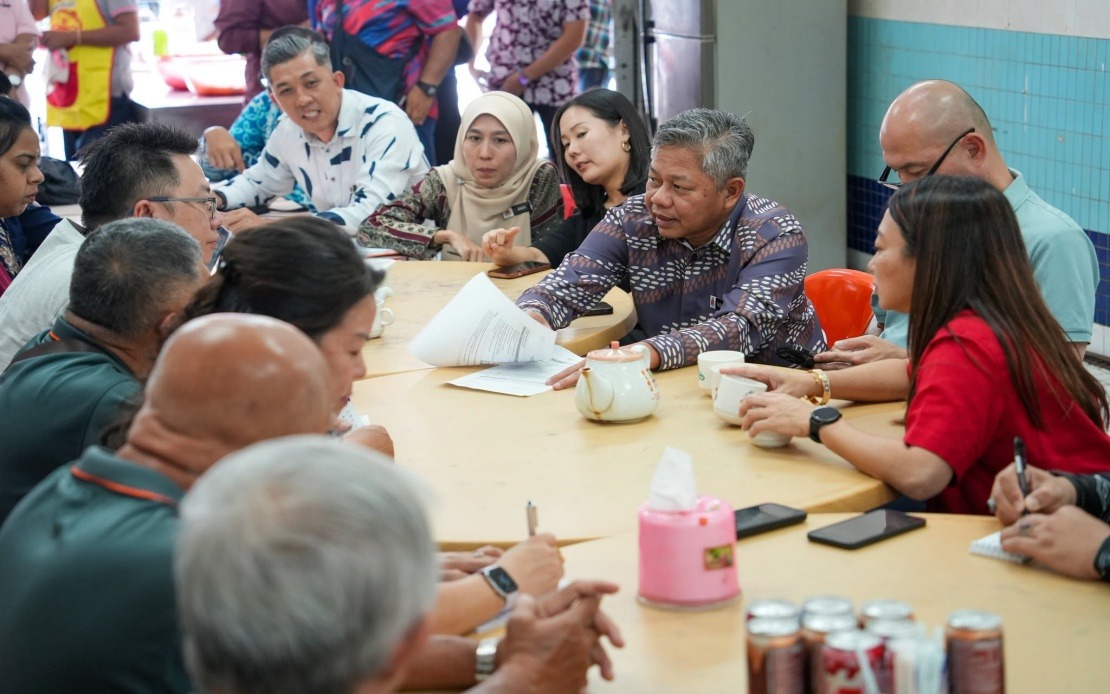
The reforms emerged from direct engagement between business representative associations and government stakeholders. A consultation involving Hannah Yeoh, Minister in the Prime Minister's Department for Federal Territories, and Kuala Lumpur mayor Datuk Seri Fadlun Mak Ujud, together with the Selangor and Kuala Lumpur Chinese Coffee Shop and Tea Shops Owners' Association, informed the framework. A separate discussion session with the Malaysian Muslim Restaurant Owners' Association (PRESMA) last April specifically addressed concerns among food business operators regarding closure and reopening procedures. This stakeholder-driven approach suggests the measures reflect genuine operational challenges identified by traders themselves rather than impositions from above.
DBKL's emphasis on standardisation across all branch offices addresses a common complaint in Malaysian municipal administration: inconsistent implementation of rules and discretionary variation in decision-making. By establishing clear, uniform processes and requirements, the authority aims to reduce scope for interpretive differences between officers and constituencies. This institutional consistency benefits both traders, who gain predictability, and administrators, who operate within transparent frameworks. For a city managing hundreds of thousands of businesses, standardisation is essential infrastructure for equitable governance.
The initiative explicitly commits to maintaining safety, hygiene, accessibility, and public interest protections throughout the process simplifications. Rather than abandoning standards to accelerate approvals, DBKL has restructured processes to remove redundancy while preserving substantive safeguards. This distinction matters significantly for public confidence, particularly in food safety, where relaxed oversight could invite health risks. The approach suggests a maturation in regulatory thinking—recognising that efficiency and protection are not inherently opposing values but can be integrated through smarter design.
For Malaysian traders and entrepreneurs, these changes carry real economic significance. Fixed permit fees reduce uncertainty in business planning, simplified approval timelines free up working capital that might otherwise be tied up during application periods, and faster reopening after violations mitigates the catastrophic revenue impacts of closure. The cumulative effect is a marginally friendlier operating environment for the thousands of small food stalls, coffee shops, and trading establishments that characterise Kuala Lumpur's informal and semi-formal economy.
Regionally, these administrative reforms reflect a broader trend across Southeast Asia toward recognising that regulatory modernisation can support rather than undermine development objectives. Cities like Bangkok, Jakarta, and Singapore have similarly experimented with permit streamlining and risk-based enforcement. Kuala Lumpur's moves align with this trajectory while addressing the specific concerns of its trader communities, suggesting that practical, evidence-based policymaking is gaining ground over heavy-handed bureaucratic control.
The success of these measures will ultimately depend on consistent implementation at the branch level, particularly given DBKL's historical challenges with service delivery consistency. Training branch staff to apply the new standards uniformly, monitoring compliance, and remaining responsive to trader feedback during the rollout phase will determine whether the reforms achieve their intended impact. If executed effectively, the package could serve as a model for other Malaysian municipal authorities grappling with similar pressures to balance regulation with business encouragement.

