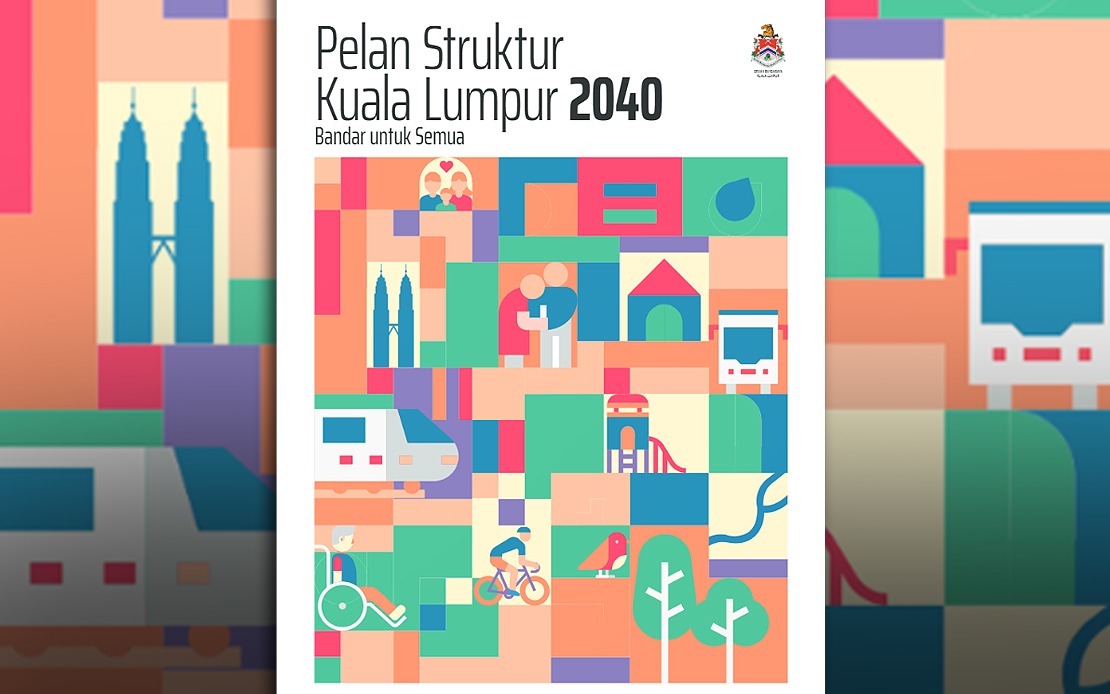
Kuala Lumpur City Hall (DBKL) has moved the submission deadline for amendments to the Kuala Lumpur Local Plan 2040 (PTKL2040) to 5 pm on August 7, recognizing that stakeholders need more time to prepare comprehensive proposals. The extension, announced on July 6, underscores the complexity involved in formally requesting modifications to the city's long-term urban planning framework, which guides development priorities and land-use policies across the federal territory through 2040.
The decision reflects DBKL's effort to ensure a thorough and well-documented application process. Registered landowners, property developers, and other interested parties can now use the additional window to compile their submissions more carefully. Each application must include a Letter of Intent that articulates the rationale behind the requested change, accompanied by precise location maps or site plans and current land title documentation. This comprehensive documentation requirement serves to filter applications and establish a clear audit trail for planning decisions.
The amendment mechanism sits within the formal planning architecture established under Section 17 of the Federal Territory (Planning) Act 1982, commonly referred to as Act 267. This legislative framework allows the local authority to consider modifications to the plan's provisions when presented with substantive justifications and evidence. By maintaining a structured process with defined deadlines and documentation standards, DBKL aims to balance openness to stakeholder input with administrative efficiency and strategic coherence.
For applicants whose proposals require a Local Plan Amendment Proposal Report (known locally as LCPPT), DBKL has stipulated that a Registered Town Planner must be engaged to prepare the document. The scope and complexity of each application will determine whether this professional requirement applies. This gatekeeping mechanism ensures that larger or more intricate amendment requests receive expert scrutiny before reaching the decision-making stage, reducing the likelihood of poorly conceived or technically flawed proposals advancing through the system.
The procedural flexibility built into DBKL's approach recognizes that different types of amendment requests carry different levels of technical demand. A small plot rezoning may require minimal documentation, while a proposal to significantly alter commercial zoning across multiple precincts would necessitate extensive impact analysis. By requiring professional input only where the complexity warrants it, the authority maintains proportionality while ensuring rigorous evaluation of substantial proposals.
Submissions can be delivered in two ways: directly to the City Planning Department (JPRB) director on Level 9 of Menara DBKL 1 on Jalan Raja Laut, or electronically via email. This dual submission pathway accommodates both technology-inclined applicants and those who prefer traditional in-person delivery. The multi-channel approach also reduces the risk that applicants will miss the deadline due to technical difficulties or access constraints.
DBKL has made the Application Checklist and the comprehensive Kuala Lumpur LCPPT Manual freely available through the Kuala Lumpur Development Plan website. These resources guide applicants on what documents to prepare and what standards their proposals should meet. By publishing these materials in advance, DBKL reduces information asymmetry and enables even first-time applicants to understand the expectations governing the amendment process.
The extended deadline carries strategic significance for Malaysia's property development industry, particularly those firms holding substantial land parcels in Kuala Lumpur or with long-term project pipelines dependent on favorable zoning or land-use classifications. Developers facing market headwinds or changing business models can use this window to explore whether formal plan amendments might unlock additional value or expand feasible uses for their holdings. However, the stringent documentation requirements and professional involvement mandates mean that frivolous or speculative applications are unlikely to survive preliminary screening.
The timing of this extension also matters within the broader Malaysian planning context. Kuala Lumpur's Local Plan serves as a reference point for municipal governance and regional development coordination. Changes to the KL plan can have ripple effects across the Klang Valley, influencing adjacent municipal authorities' own planning decisions and the competitive dynamics among different jurisdictions seeking investment. Transparency and deliberativeness in the amendment process therefore carries importance beyond the federal territory itself.
For regional observers, DBKL's structured approach to plan amendments reflects international best practices in adaptive urban planning. Rather than treating development plans as immutable blueprints, forward-thinking municipalities recognize that circumstances change—technological disruption, demographic shifts, economic restructuring—and that rigid adherence to outdated plans often produces dysfunctional outcomes. Yet without principled processes for evaluation and amendment, plans become either ignored or subject to ad-hoc political pressure. DBKL's framework attempts to thread this needle by establishing clear criteria and professional standards while remaining responsive to legitimate requests for change.
As the August 7 deadline approaches, stakeholders contemplating applications should recognize that the extension provides time to strengthen rather than merely rush to submit marginal proposals. DBKL's emphasis on complete documentation and, where necessary, professional preparation suggests that applications meeting these standards will receive more serious consideration than those submitted in skeletal form. For developers and property owners with substantive cases for amendment, this deadline extension represents a genuine opportunity to reshape the regulatory landscape governing their assets.

