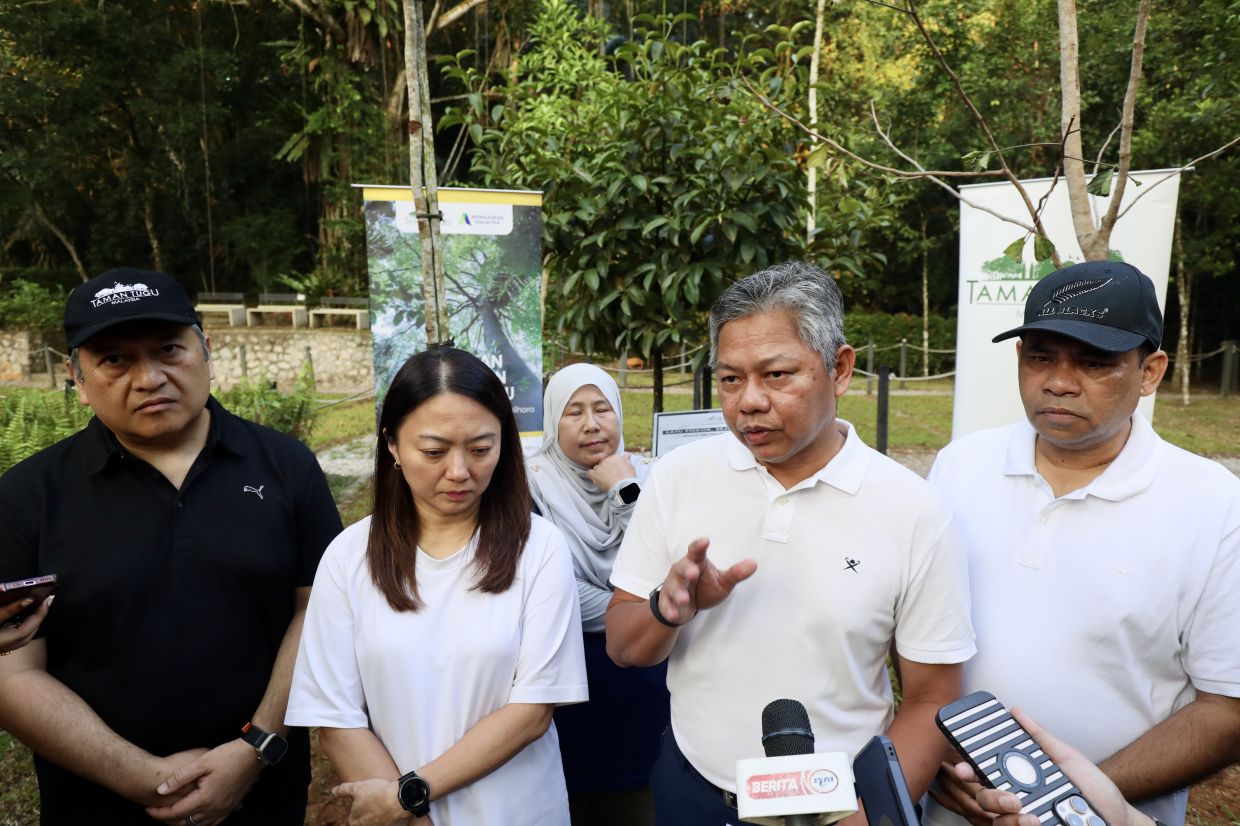
The Kuala Lumpur City Hall (DBKL) is moving forward with an ambitious technological initiative to safeguard residents and enhance urban safety by installing 200 sensors across the capital to continuously monitor tree health and detect those posing structural hazards. This advancement represents a shift in how Malaysia's largest city manages its urban forest, transitioning from periodic inspections to predictive, data-driven stewardship. Kuala Lumpur Mayor Datuk Seri Fadlun Mak Ujud unveiled the plan at Saturday's launch of the Taman Tugu Plot Adoption Programme, describing the sensor deployment as the logical next step following earlier success in cataloguing the city's arboreal assets.
The initiative builds on substantial groundwork completed earlier this year when DBKL, with funding from the Digital Ministry, successfully mapped approximately 25,000 trees throughout the city. That comprehensive survey enabled municipal officials to assess the overall vitality of Kuala Lumpur's urban canopy and prioritize which specimens required enhanced attention. The mapping exercise produced a detailed database that has become the foundation for the sensor installation strategy, allowing planners to identify locations where real-time monitoring would yield the greatest benefits for public safety and tree preservation.
The monitoring system operates with elegant simplicity: each of the 200 sensors will be positioned approximately 1.2 metres above ground on carefully selected trees, predominantly in mature stands scattered throughout established neighbourhoods. These devices will transmit continuous condition data to DBKL's control centre, creating an early warning network capable of detecting physiological stress, structural weakness, or environmental threats before they escalate into public dangers. The real-time feedback mechanism enables rapid response protocols, allowing municipal teams to intervene surgically rather than waiting for visible problems to emerge or for concerned residents to report fallen branches or hazardous limbs.
Notably, the city's approach emphasizes conservation rather than removal. Rather than felling trees that show signs of vulnerability, DBKL intends to implement supportive interventions such as strategic branch bracing or targeted pruning to eliminate hazardous growth patterns while preserving the specimen's overall integrity and contribution to Kuala Lumpur's urban ecosystem. This philosophy reflects evolving international best practices in arboriculture and acknowledges the multiple benefits that mature trees provide to cities, including stormwater management, air quality improvement, cooling effects, and psychological wellbeing. The strategy proves particularly significant in areas like Jalan Ampang, where long-established trees form the character-defining canopy of established residential districts.
Additional expansion plans complement the sensor deployment. DBKL has committed to planting 200 new trees as part of the broader greening agenda, though the municipality is actively seeking additional funding sources to ensure these plantings receive adequate establishment care and long-term maintenance. This combination of monitoring mature trees while simultaneously expanding the young tree population demonstrates a balanced approach addressing both immediate safety concerns and long-term urban forest succession. The investment reflects recognition that cities require decades to realize the full benefits of tree plantings, making current decisions consequential for future generations of residents.
The sensor initiative gained political endorsement from Hannah Yeoh, Minister in the Prime Minister's Department (Federal Territories), who articulated a broader vision for Kuala Lumpur's environmental future. Yeoh forcefully stated her opposition to any future erosion of the city's remaining green spaces for commercial development purposes, asserting that the capital has sufficient commercial infrastructure and should redirect planning emphasis toward environmental enhancement rather than further built expansion. Her public commitment carries weight within federal-level decision-making structures that ultimately shape development approvals in the Federal Territories.
Yeoh's ministry has committed RM50,000 toward tree planting and maintenance specifically at Taman Tugu, with DBKL matching that contribution for a combined investment of RM100,000 at the heritage park. This financial commitment underscores federal recognition that urban greening requires sustained, multi-agency resource allocation rather than one-time gestures. The matched funding model also demonstrates how federal and municipal authorities can collaborate productively on shared environmental objectives without duplicating efforts or creating bureaucratic friction.
The Taman Tugu Plot Adoption Programme itself represents an innovative governance model that distributes stewardship responsibilities across multiple stakeholder categories. Government agencies, private corporations seeking environmental credentials, registered community organizations, and individual citizens all participate in restoration and maintenance work across the park's allocated plots. Each 9-square-metre plot receives plantings of native Malaysian forest species, deliberately reconstructing the ecosystem composition that would naturally characterize the site, thereby enhancing ecological functionality beyond mere aesthetic greening.
This decentralized stewardship approach carries particular relevance for Southeast Asian cities grappling with rapid urbanization and competing land demands. By distributing maintenance responsibilities beyond municipal budgets and capacities, cities can achieve greater coverage and sustainability of green infrastructure. The plot adoption model also cultivates constituency investment in urban environmental management, transforming abstract municipal policies into personal commitments that generate political support for continued conservation efforts.
For Malaysian urban planners and environmental advocates, DBKL's dual initiatives—combining technological monitoring with ecosystem restoration—offer a replicable model for other cities. The sensor network approach can be scaled or modified to suit different urban contexts, while the community engagement components foster the social conditions necessary to sustain environmental programmes across changing political administrations. The project also highlights how digital infrastructure can serve environmental rather than merely commercial purposes, positioning technology as a tool for preservation rather than facilitation of extraction.
The broader implications extend beyond Kuala Lumpur's borders. As Southeast Asian cities compete for regional investment and talent, environmental amenity increasingly influences location decisions for educated workers and international companies. Cities demonstrating commitment to green space preservation and enhancement gain competitive advantage in attracting high-value activities. Conversely, cities perceived as sacrificing environmental quality for short-term development gains risk becoming less attractive long-term destinations, potentially undermining economic competitiveness despite initial development gains.
Looking forward, the success of DBKL's sensor initiative will likely generate interest among other Malaysian cities and regional urban centres seeking to balance safety, preservation, and growth. The monitoring system will produce data valuable for refining arboricultural practices and informing municipal policies elsewhere. Should the initiative demonstrate measurable improvements in public safety, tree survival rates, or environmental outcomes, it could catalyze similar investments across Malaysia's urban network, gradually transforming how cities value and manage their natural infrastructure.

