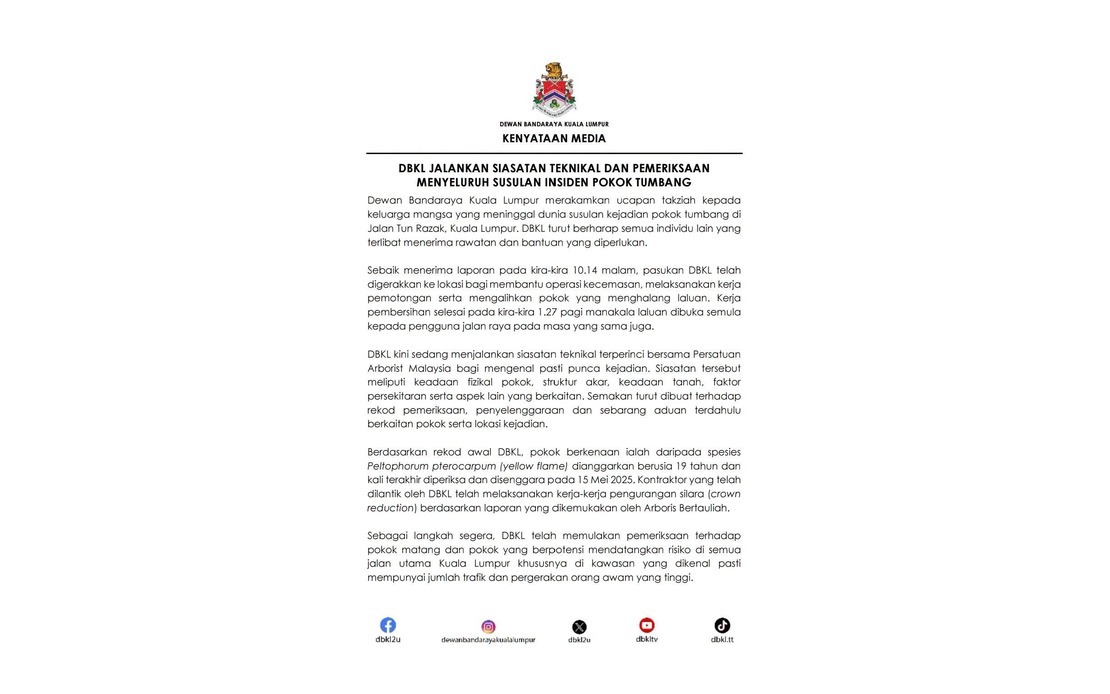
A fatal tree collapse on Jalan Tun Razak in Kuala Lumpur last night has prompted city authorities to launch a comprehensive technical investigation into what caused the 19-year-old Yellow Flame tree to fall. Kuala Lumpur City Hall (DBKL) confirmed that the incident claimed a man's life and activated emergency response protocols immediately after receiving notification at 10.14 pm. The road was successfully cleared and reopened by 1.27 am the following morning after removal teams worked to cut away debris and restore traffic flow.
The investigation being conducted jointly by DBKL and the Malaysian Society of Arborist encompasses a broad range of technical assessments designed to identify contributing factors to the structural failure. Specialists are examining the tree's physical condition, evaluating its root structure and the soil composition at the location, and analysing environmental conditions that may have influenced its stability. Investigators are also reviewing historical records including previous inspections, maintenance work performed, and any complaints documented about the tree or surrounding area. This multi-disciplinary approach aims to provide a complete picture of how such a significant failure occurred.
Records indicate that the Peltophorum pterocarpum specimen had undergone inspection and maintenance most recently on May 15, with crown reduction work previously carried out by an appointed contractor acting on recommendations from a certified arborist. The interval between this maintenance and the incident raises questions about how rapidly conditions may have deteriorated or whether external factors played an unexpected role. DBKL extended formal condolences to the victim's family and committed to providing support to all affected individuals while pledging full cooperation with police investigations and other relevant agencies.
The incident has catalysed a significant shift in Kuala Lumpur's approach to urban tree management. City authorities have initiated an immediate citywide inspection programme targeting mature trees and those assessed as presenting potential risks along all major thoroughfares throughout the capital. Initial focus areas include Jalan Ampang, Jalan Sultan Ismail, Jalan Raja Laut, Jalan Datuk Keramat, and additional sections of Jalan Tun Razak itself. The inspection programme is structured to be completed over ten weeks using eight dedicated teams that include five qualified arborists, representing a substantial mobilisation of resources to assess public safety risks.
Beyond immediate inspections, DBKL has outlined a medium-term preventive strategy that represents a significant technological advancement in how the city monitors tree health and stability. The authority is currently awaiting SIRIM approval to deploy 400 advanced tree sensors across high-risk locations throughout Kuala Lumpur. These sensors represent a major shift from traditional visual inspection methods toward real-time monitoring technology that can detect subtle changes in tree condition before they manifest in dangerous failures. The system will provide continuous readings on soil conditions, moisture levels, structural movement patterns, and the specific impacts of adverse weather events including heavy rainfall and flood conditions.
The phased installation of sensor technology is planned to commence at four strategically significant locations identified as priorities: Jalan Bangsar, Dataran Merdeka, Jalan Ampang, and Jalan Raja Chulan. These locations were selected based on their high-traffic volumes and concentration of mature tree specimens. The sensor network represents an innovative response to managing the inherent risks of maintaining large trees in an urban environment where public safety depends on early detection of structural problems. By providing arborists and maintenance teams with granular data on tree health metrics, the system should enable preventive action before critical failures occur.
The incident underscores broader challenges facing major Southeast Asian cities as they balance urban greenery objectives against public safety imperatives. Mature trees provide significant environmental and aesthetic benefits to cities, improving air quality, reducing urban heat effects, and enhancing livability. However, they also present structural risks, particularly in regions prone to heavy rainfall, strong winds, or soil instability. The Jalan Tun Razak incident highlights how even recently maintained trees can fail unexpectedly, suggesting that current inspection intervals and maintenance protocols may require reassessment.
For Malaysian readers and residents of Kuala Lumpur specifically, this incident and the subsequent response reveal both vulnerabilities and nascent improvements in urban tree management systems. The fatality serves as a sobering reminder of the potential consequences when arboricultural infrastructure fails in densely populated areas. Simultaneously, the rapid deployment of comprehensive inspections and investment in sensor technology demonstrates municipal commitment to preventing recurrence. Residents should expect increased visible activity from inspection teams on major roads over the coming weeks and months as DBKL executes its assessment programme.
The broader implications extend across Malaysia's other major cities, many of which maintain comparable urban tree populations along principal roads and in public spaces. The technical investigation findings from the Jalan Tun Razak incident will likely influence best practices adopted by municipal authorities in Petaling Jaya, Shah Alam, Johor Bahru, and other major urban centres. If the investigation identifies systemic issues with how trees are assessed or maintained, such findings could prompt regional policy adjustments affecting tree management protocols across the country.
Moving forward, the effectiveness of DBKL's response will be measured not merely by the speed of inspections but by whether the sensor deployment programme successfully identifies at-risk trees before failure occurs. The investment in technology and expanded inspection capacity reflects a data-driven approach to managing public safety risks in urban forestry. However, success ultimately depends on translating sensor data and inspection findings into timely remedial action. The incident has created political and public pressure for results, positioning tree safety as a visible municipal responsibility that residents will monitor closely.

