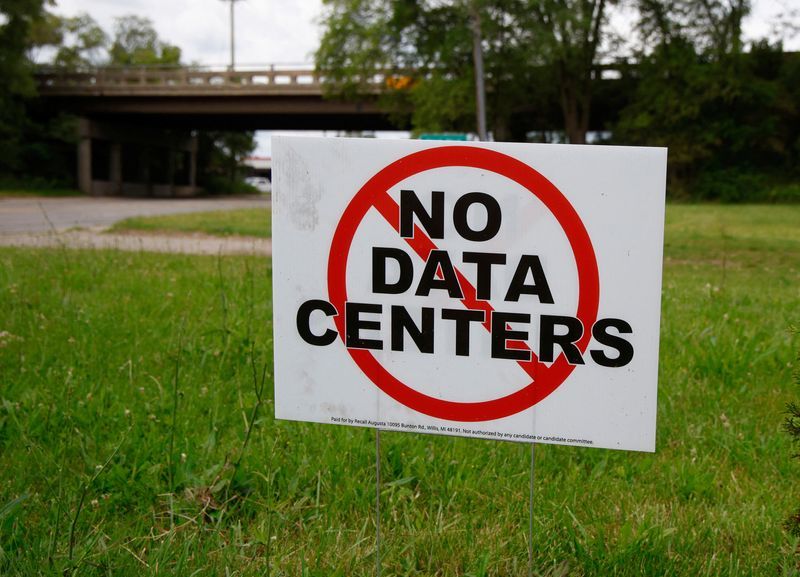
The backlash against America's accelerating data center construction reached a critical inflection point this month as opponents organised protests spanning at least 125 communities nationwide, signalling that dissatisfaction over artificial intelligence infrastructure has evolved from isolated local grievances into a coherent national movement. The July 18 protests represented the first coordinated effort to channel mounting frustration at the pace and scope of facility deployments, particularly those proposed by technology giants including Meta, Alphabet, Amazon, Microsoft and xAI, that have reshaped the political landscape in regions where they concentrate.
At the forefront of this grassroots uprising stands HumansFirst, an emerging advocacy organisation co-founded by Amy Kremer, a prominent former leader of the Tea Party movement that mobilised conservative voters in 2009. Kremer has deliberately drawn parallels between contemporary data center opposition and that earlier insurgency, characterising both as populist reactions against what participants view as unchecked institutional power. However, she emphasised that the current movement transcends traditional partisan boundaries, appealing to citizens frustrated by what HumansFirst frames as an "unaccountable" expansion of industrial infrastructure coupled with "unacceptable infringement on our liberty."
What distinguishes data center opposition from most contemporary political flashpoints is its unusual capacity to unite voters across ideological spectrums. Public opinion research from Reuters and Ipsos conducted in June revealed that merely one-third of Americans approve of the current velocity of data center development, whilst an even more striking 86 percent would oppose a facility siting in their immediate vicinity to support artificial intelligence operations. This erosion of support persists despite industry assurances and reflects deepening concerns about the cumulative environmental and infrastructural consequences of concentrated data center deployment.
Local and county governments have emerged as primary battlegrounds where this conflict crystallises, frequently because state and federal regulators have lagged behind the pace of private sector development. Numerous jurisdictions have witnessed data center projects advancing through approval processes characterised by opacity, with developers requiring local officials to sign non-disclosure agreements that shield details from public scrutiny. Such arrangements have antagonised residents and created governance challenges for elected representatives attempting to balance economic development incentives against constituent concerns about transparency and environmental stewardship.
The concerns animating protesters reflect genuine material anxieties about resource scarcity and energy demand. Water consumption represents perhaps the most visceral issue, particularly across the American Southwest and other water-stressed regions where precipitation is limited and competition for supplies remains fierce. A proposed data center in California's Imperial County, for instance, could consume 260 million gallons annually drawn from the already-strained Colorado River, a prospect that has galvanised local activists and national environmental advocates. Similarly, the unprecedented electrical demands associated with operating massive computing facilities have sparked concerns about elevated power bills for residential consumers and the adequacy of existing grid infrastructure.
Pollution and environmental degradation constitute additional grievances animating the movement. Protesters articulate anxieties about air quality, thermal discharge into waterways, and the broader ecological footprints of industrial-scale computational infrastructure. These concerns carry particular salience across regions already grappling with environmental contamination from historical industrial activity or agricultural operations, where data centers represent an additional layer of anthropogenic stress on already-vulnerable ecosystems.
Geographically, the protest distribution reflects the uneven dispersal of data center development across American territory. Texas, which has positioned itself as a favoured destination for data center investors through permissive regulatory frameworks and abundant electricity, mobilised the most demonstrations with 16 scheduled protests. Georgia, a competitive battleground state in national electoral contests, organised 11 protest events, whilst California, Florida and Pennsylvania each hosted seven, indicating that opposition transcends regional geography and encompasses traditional Republican strongholds, Democratic bastions, and swing states equally.
The organisers participating in Saturday's protests represent a cross-section of the American electorate animated by distinct but complementary motivations. Eva Cardona, a 31-year-old first-time activist from Texas, articulated concern about inadequately regulated artificial intelligence expansion and sought to channel her activism beyond conventional social media advocacy. Ivan DelSol, a 54-year-old progressive activist in California's Imperial County, framed data center water consumption as dystopian, highlighting the ethical tension between deploying freshwater resources for computational purposes whilst drought conditions persist across the West.
Kremer has explicitly rejected policy solutions such as the moratorium on new data center approvals implemented by New York State under Democratic governance, suggesting that the HumansFirst movement seeks procedural reforms rather than categorical prohibition. Organisers articulate demands for transparent development processes, enhanced environmental and resource protections, community benefits including unionised employment opportunities, and enforceable accountability mechanisms ensuring developers fulfil commitments. This framing attempts to position the movement as pragmatic rather than obstructionist, seeking regulatory rigour and equitable distribution of consequences rather than blanket opposition.
Politicians at state and national levels confront escalating pressure to respond to this mobilisation, recognising that data center expansion represents an emerging electoral liability. Kremer predicted that data center policy will assume significance in November's midterm contests and the 2028 presidential election, suggesting that candidates must articulate coherent positions addressing voter concerns about infrastructure siting, resource allocation, and corporate accountability. The issue's capacity to unite constituencies ordinarily arrayed along partisan lines renders it potentially consequential for electoral calculations.
The Data Center Coalition, representing industry interests, declined immediate comment on the nationwide protests, previously issuing generic assurances about responsible community engagement. Such responses appear insufficient to satisfy increasingly organised and vocal opposition movements. The industry's historical position that data center water consumption pales relative to agricultural irrigation or manufacturing operations carries diminishing persuasive force amongst residents directly experiencing constrained water availability or elevated energy costs attributed to facility construction.
The trajectory of data center opposition suggests that what commenced as dispersed local resistance has crystallised into a recognisable national political movement with distinct organisational infrastructure, articulated policy demands, and expanding political salience. Whether this momentum translates into legislative restrictions, regulatory reforms, or modified corporate siting strategies remains uncertain, but the demonstrated capacity to mobilise 125 simultaneous protests indicates that data center expansion faces unprecedented political headwinds that corporate and governmental actors cannot indefinitely dismiss or marginalise through opacity.

