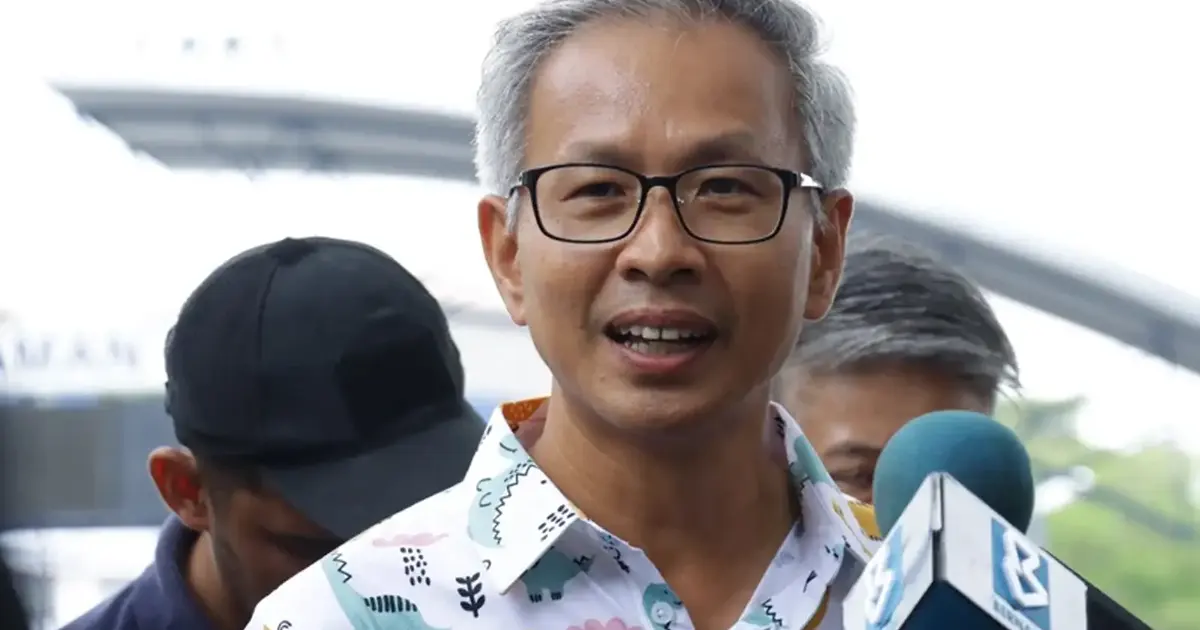
The police investigation into DAP politician Tony Pua shows no signs of imminent closure, according to Home Minister Saifuddin Nasution, who confirmed that authorities are still actively examining the matter. The ongoing scrutiny stems from a Facebook post by the Damansara MP that touched on sensitive topics relating to Malaysia's constitutional monarchy framework and the foundational principles of Rukun Negara, triggering substantial public backlash and formal complaints.
The sheer volume of police reports—totalling 140 separate complaints—underscores the degree to which Pua's social media comments struck a nerve among sections of the public. In Malaysia's politically charged environment, discussions involving the institution of the monarchy remain extraordinarily sensitive terrain. The constitutional position of the Yang di-Pertuan Agong and the institution itself enjoy constitutionally enshrined protections, with laws such as Article 10(4) of the Federal Constitution imposing restrictions on speech that criticises or questions the legitimacy of the monarchy. This legal framework reflects deep cultural and political significance accorded to the institution across Malaysian society.
Rukun Negara, the five-point national creed adopted following the racial riots of 1969, similarly occupies a revered position in Malaysia's national consciousness and constitutional order. The five pillars—belief in God, loyalty to King and country, upholding the Constitution, the rule of law, and courtesy and morality—form the stated ideological foundation of the nation. Any perceived challenge to these principles can be construed as threatening to national harmony and social cohesion, particularly in a context where communal sensitivities remain pronounced.
Pua's post generated immediate controversy within political circles and among civil society. The accumulation of 140 formal police reports suggests that the matter gained traction beyond initial circles, possibly amplified through social media sharing and political mobilisation. Such a large number of complaints creates substantial operational pressure on law enforcement agencies to be seen as responding decisively to public concerns. For Pua and the DAP, the extended investigation represents both a legal liability and a reputational challenge, particularly as the party seeks to maintain its positioning as a mainstream democratic force committed to constitutional governance.
The Home Minister's confirmation that investigations remain active provides little clarity on the timeline or likely outcome. In Malaysia's legal system, police investigations into sensitive political matters involving constitutional institutions can extend over considerable periods, reflecting the complexity of evaluating whether statements cross the threshold into sedition, contempt of court, or other criminal categories. The ambiguity of ongoing investigations can itself become a form of political pressure, keeping the subject under public scrutiny while authorities deliberate.
For the broader political landscape, the Pua investigation reflects ongoing tensions between free speech protections and institutional protections in Malaysian democracy. The DAP, as a predominantly Chinese-majority party that has historically championed stronger constitutional safeguards against executive overreach, finds itself in a delicate position. The party must balance defending democratic principles and individual freedom of expression against the need to respect constitutional frameworks and avoid being seen as disrespectful toward the institution of the monarchy.
The matter also carries implications for how Malaysian politicians navigate commentary on institutional reform or constitutional interpretation. If discussions of how the monarchy system functions or how national principles apply remain highly fraught and liable to generate mass complaints, this could have a chilling effect on public debate about constitutional matters more broadly. Such dynamics may discourage substantive parliamentary and public discourse on governance issues that parties across the spectrum might otherwise wish to address.
Internationally, Malaysia's approach to managing speech concerning constitutional institutions draws scrutiny from observers of democratic governance and press freedom. Rights organisations have increasingly questioned whether restrictions justified by appeals to respect for the monarchy can become instruments for suppressing legitimate political discourse. The Pua case will likely feature in forthcoming assessments of Malaysia's democratic health and commitment to open political debate.
Looking ahead, the resolution of this investigation will carry significance beyond the individual case. A decision to prosecute would signal that posts engaging with constitutional topics risk serious legal consequences, while closure without charges might suggest authorities view the matter as not meeting the threshold for criminal action. Either outcome will shape how Malaysian politicians, activists, and ordinary citizens engage with discussions of national institutions in the digital sphere.

