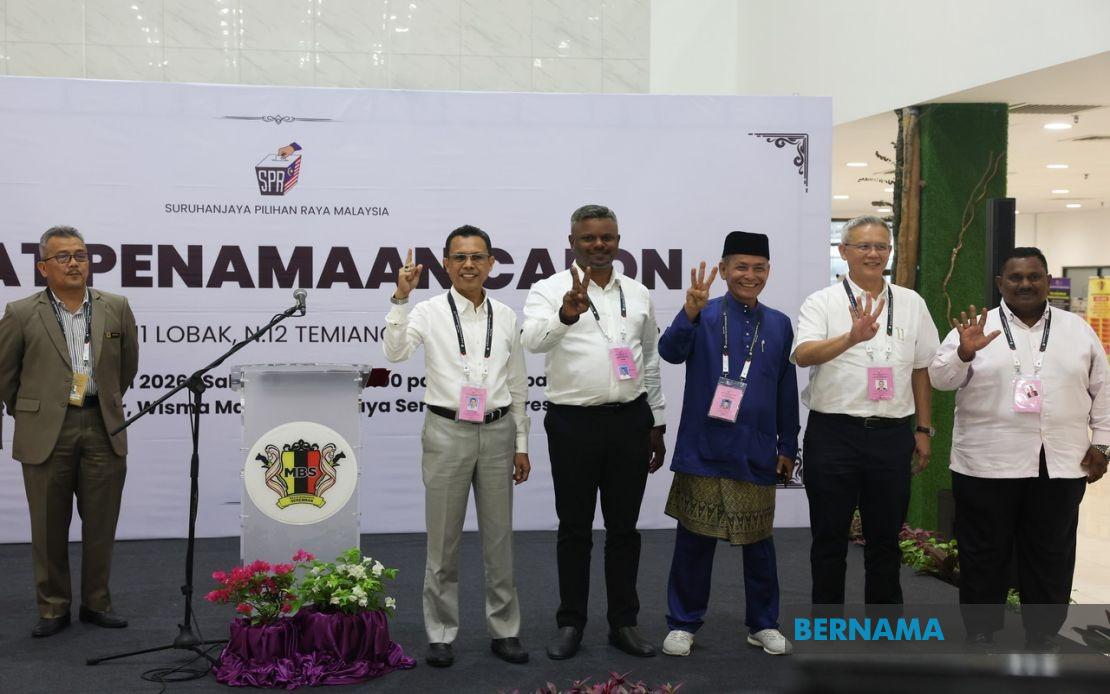
The Nilai state assembly seat has emerged as one of the most hotly contested battlegrounds in the upcoming 16th Negeri Sembilan state election, with five candidates vying for voter support in what analysts expect to be a fractious, multi-cornered campaign. Incumbent J. Arul Kumar, the DAP National vice chairman and assemblyman representing Pakatan Harapan, finds himself navigating a crowded field that tests the cohesion of the ruling coalition and exposes vulnerabilities in its political position within the state.
The crowded candidate list reflects the intensifying competition across Negeri Sembilan's 36 assembly seats. Arul Kumar must fend off rival bids from Zamani Ibrahim of Berjasa, Datuk Lai Chien Kong representing Barisan Nasional, Datuk V. Saravana Kumar from Bersatu, and independent hopeful Omar Mohd Isa. The nomination centre at Wisma Bandaraya Seremban confirmed these entries following the July 18 deadline, with returning officer Datuk Masri Baharuddin formally announcing the final roster. This five-way split between established parties and independent candidates introduces unpredictable elements that could reshape traditional voting patterns, particularly in a multiethnic constituency where no single bloc commands overwhelming support.
The fragmentation of candidates beyond the conventional two-coalition framework reflects growing political restlessness within Negeri Sembilan. Berjasa's participation through Zamani Ibrahim marks an attempt by the smaller coalition partner to establish independent legitimacy rather than piggyback entirely on established political machinery. Similarly, Bersatu's presence through Datuk V. Saravana Kumar signals that the party is mounting a serious challenge beyond its traditional strongholds, betting that dissatisfaction with incumbent performance could translate into electoral gains. For Arul Kumar, this multiplication of opponents complicates the straightforward incumbent-versus-challenger dynamics that favour experience and name recognition.
Elsewhere in the state, other constituencies are taking clearer shape ahead of the August 1 polling day. The Sikamat seat will feature a three-way contest, with Nor Azman Mohamad, the Menteri Besar's political secretary, carrying Pakatan Harapan's colours against Datuk Razali Abu Samah from Perikatan Nasional and Bersatu's Datuk Tun Faisal Ismail Aziz. An independent candidate, Bujang Abu, initially registered but withdrew before the nomination deadline, suggesting last-minute strategic calculations about vote-splitting risks. This pattern of late withdrawals and consolidation may repeat elsewhere, potentially reshaping the final competitive landscape.
In Lenggeng, the matchup appears more traditionally structured as a three-cornered affair. Pakatan Harapan has fielded Zarinna Abu Zarin to challenge the incumbent, Datuk Mohd Asna Amin from Barisan Nasional, with Bersatu's Zool Amali Hussin as the third contestant. The Lobak seat, by contrast, is shaping up as a direct bilateral confrontation between incumbent Chew Seh Yong of Pakatan Harapan and Dr P. Kumar from Perikatan Nasional, suggesting that in at least some constituencies, the broader multi-party landscape has consolidated into simpler two-party battles.
Temiang presents another three-cornered scenario, with Pakatan Harapan's Ho Weng Wah, a political secretary to the Transport Minister, squaring off against Datuk Leaw Kok Chan from Barisan Nasional and Bersatu's Fazly Hamid. The inclusion of federal appointees as state candidates—such as Ho's ministerial portfolio—underscores how national and state electoral dynamics intertwine in Malaysia's political system. In Ampangan, similarly, Muhammad Nazri Kassim, director of Yayasan Negeri Sembilan, contests for Pakatan Harapan against Datuk Dr Mohamad Rafie Malek from Perikatan Nasional and Noor'azah Harun representing Bersatu.
The broader Negeri Sembilan state election carries implications extending well beyond the peninsula's smallest state. The 36-seat assembly has been dissolved, and with early voting scheduled for July 28 and general polling on August 1, the state will offer one of the first substantive tests of voter sentiment following the May federal elections. How effectively Pakatan Harapan consolidates support in seats like Nilai—where the ruling coalition must defend ground against both traditional opposition and newer competitors—will signal whether the coalition retains sufficient momentum to govern effectively or faces erosion from multiple directions simultaneously.
For Arul Kumar specifically, the Nilai contest represents a genuine test of incumbent advantage against organised opposition. As DAP's National vice chairman, his profile extends beyond the state level, making his retention or loss symbolically significant for the party's standing in Negeri Sembilan. The five-way split, while fragmenting opposition votes, also means his base vote cannot be taken for granted; campaigns in such environments require mobilising core supporters while peeling away marginal voters from competitors. The result in Nilai could therefore provide early indicators of how effectively Pakatan Harapan's coalition machinery functions when faced with fragmented rather than bipolar competition.
The Election Commission's timeline—with early voting on July 28 and main polling on August 1—compresses the campaign window, potentially advantaging candidates with established machinery and visibility. In a five-cornered race where no single opponent emerges as the obvious challenger, Arul Kumar's task involves presenting himself as the only candidate capable of delivering for constituents, while simultaneously framing the contest not as five equal options but as fundamentally a choice between his record and alternatives.
Negeri Sembilan's electoral mechanics thus mirror broader challenges facing Malaysian politics as coalitions fragment and voters gain more choice options. Whether traditional patterns of straight-fight contests between BN and PH persist or whether the state follows a trajectory of increasingly complex, multi-cornered competitions will shape not just this election but strategic calculations for future contests. The Nilai seat, crowded though it is, may ultimately reveal much about the resilience and adaptability of incumbent coalitions in Malaysia's contemporary political environment.

