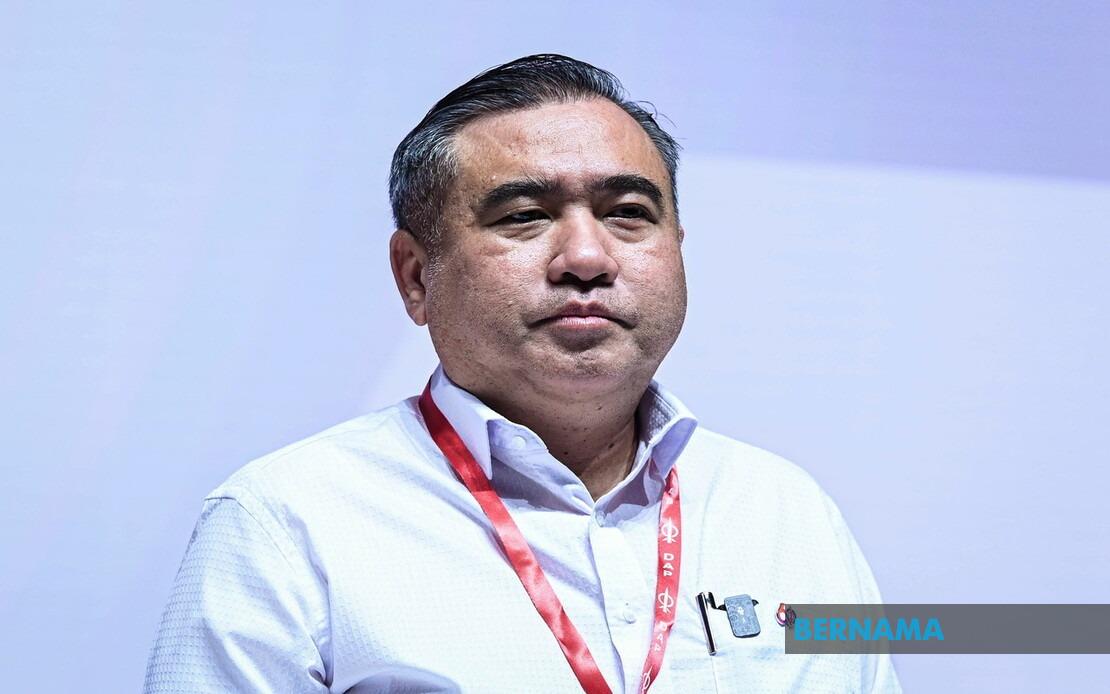
The Democratic Action Party has committed to channelling grassroots calls for more decisive and assertive government action through formal Cabinet channels, following this weekend's party conference at the Putrajaya International Convention Centre. Secretary-general Anthony Loke made the announcement at a press briefing, indicating that feedback collected from the party's delegate assembly would form a substantive mandate for DAP's continued participation in the Unity Government.
The decision to escalate these concerns through official government channels comes after what Loke characterised as an open and democratic debate at the 2026 DAP Party Conference, where members were expressly invited to articulate critical positions without constraint. This procedural openness reflects the party's attempt to balance internal dissent with coalition loyalty, allowing criticism to surface while ultimately maintaining the party's participation in the broader government structure.
The conference produced a clear if not overwhelming mandate for continued coalition membership. Of 2,106 ballots cast, 1,857 delegates voted to remain within the Unity Government, representing 88 per cent support, while 242 voted in favour of withdrawal and seven ballots were spoilt. The substantial minority opposition—12 per cent—carried sufficient weight that Loke explicitly acknowledged these dissenters during his press conference, signalling that the party leadership recognises the legitimacy of concerns about the government's pace and assertiveness on key reform initiatives.
Loke stressed that the party would operate within established democratic frameworks despite the internal tension. Rather than imposing party discipline against those who voted against continued coalition participation, the leadership decided to absorb the dissenting view as valid feedback. This approach reflects an understanding that forcing internal consensus through punitive measures would undermine the very democratic principles the party claims to champion, particularly given DAP's historical positioning as a champion of pluralism and civil liberties.
The critical commentary emerging from the delegate assembly focused on the government's perceived lack of decisiveness and assertiveness in pursuing reform objectives. While Loke did not elaborate extensively on specific areas of concern, the broad criticism suggests frustration among party members regarding the pace and depth of structural governance changes. This feedback will now be formally transmitted to Cabinet, creating an official record of DAP's grassroots concerns and potentially positioning the party to demand accelerated action on flagship reform initiatives.
Loke moved quickly to reframe the reform agenda as a shared enterprise rather than a DAP-driven impositions on the government. He characterised the various structural reforms—including the separation of the Attorney-General's and Public Prosecutor's roles, limiting prime ministerial tenure to two terms, and anti-corruption measures—as initiatives jointly agreed across the Pakatan Harapan coalition and the broader Unity Government structure. This framing attempts to neutralise opposition accusations that DAP is using its coalition position to pressure the government with a distinctly partisan agenda.
The assertion that these reforms constitute a shared government agenda rather than a specifically DAP platform carries particular significance within Malaysia's current political environment. Coalition partners and opposition groups have frequently suggested that reform initiatives originating from DAP primarily serve the party's political interests or ideological commitments rather than representing genuine cross-coalition consensus. By anchoring reform demands to manifesto commitments made during the previous election and to formal coalition agreements, Loke seeks to establish that these proposals possess legitimacy beyond any single party's partisan calculations.
The reference to manifesto-based commitments highlights a central tension within the current government: elected on promises of structural reform and institutional modernisation, the administration faces ongoing pressure to translate campaign rhetoric into concrete legislative and administrative action. The pace of implementation has clearly created frustration within DAP's grassroots membership, suggesting that voters and party activists expect faster, more visible progress on governance transformation than the government has thus far delivered.
Loke's commitment to formalise grassroots feedback through Cabinet channels represents an attempt to convert internal party dissent into constructive pressure for policy acceleration. Rather than allowing the critical 12 per cent of delegates to constitute a source of party instability or potential schism, the leadership framework harnesses this dissent as policy input, theoretically strengthening the case for more aggressive reform timelines to Cabinet colleagues from other coalition parties.
This dynamic also reflects broader tensions within Malaysia's Unity Government coalition. The Pakatan Harapan component, which includes DAP, has historically positioned itself as the reform-oriented element within the broader coalition that also includes the Malaysia Madani component and other partners with potentially different reform priorities. The visible frustration from DAP's grassroots suggests that even within the party's own membership, patience for incremental progress is thinning.
The handling of the dissenting vote and the commitment to protect dissenters from party repercussions also signals confidence within DAP's leadership that the party's participation in government remains strategically sound despite implementation challenges. Rather than viewing internal criticism as a threat to coalition stability, the party leadership treats it as a normal feature of democratic party management, one that can be accommodated without undermining the broader coalition project.
Moving forward, the formal transmission of delegate feedback to Cabinet will serve as a test of whether coalition partners are genuinely committed to the reform agenda that initially united them. If Cabinet responds positively to DAP's articulation of grassroots demands, the party can claim credit for advancing reform while maintaining coalition membership. If Cabinet response proves insufficient, DAP risks facing renewed internal pressure from members questioning the party's continued participation in a government perceived as insufficiently decisive or assertive on governance transformation.
The episode illuminates how coalition governance in Malaysia continues to operate through complex negotiations between constituent partners, with public party conferences serving as stages for both democratic affirmation and strategic positioning. DAP's ability to convert internal delegate concerns into formal Cabinet input could establish a template for how coalition member parties balance internal party democracy with external coalition obligations and overall government stability.

