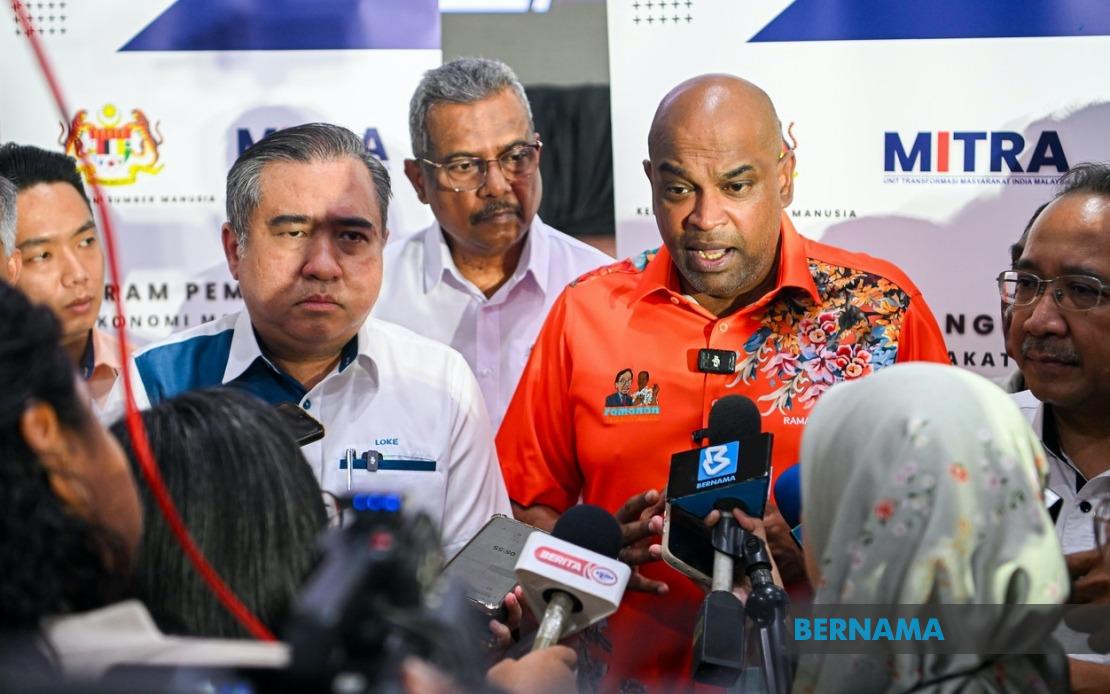
Anthony Loke, secretary-general of the Democratic Action Party, has firmly rejected allegations that the government operates under DAP's direction, characterizing such accusations as recycled political attacks aimed at delegitimizing the Pakatan Harapan coalition. Speaking in Seremban on July 7, the Transport Minister underscored that governance decisions at both federal and state levels emerge through collective deliberation and compromise among the coalition's constituent parties rather than at the behest of any single organisation.
The controversy surrounding DAP's influence within the ruling coalition has persisted since Pakatan Harapan's formation, despite the party's relatively modest parliamentary representation compared to coalition allies such as UMNO and PKR. Loke's statement reflects growing frustration among party leadership over what they view as repetitive attempts to undermine coalition cohesion by suggesting that governance lacks true internal democracy. His remarks indicate that DAP views these accusations not as substantive policy critiques but as deliberate efforts to sow discord within the ruling partnership.
Loke outlined the decision-making framework operating within the federal government, explaining that all component parties—including DAP, UMNO, and PKR—receive opportunity to present their positions before Prime Minister Datuk Seri Anwar Ibrahim renders final determinations. This structure theoretically ensures that minority coalition members retain meaningful input on policy direction, though critics have questioned whether such consultation translates into genuine influence or merely provides the appearance of democratic process. The Transport Minister's explanation suggests that while each party contributes to discussions, ultimate authority remains concentrated in the Prime Minister's office rather than distributed among coalition members.
The substance of Loke's defence reveals tensions inherent in Malaysia's coalition governance model. Unlike parliamentary systems where clear hierarchies of power are established through electoral mandates, Pakatan Harapan's structure requires ongoing negotiation between ideologically distinct partners—an arrangement that inevitably generates friction and creates openings for opponents to exploit divisions. By characterizing criticism of DAP influence as a "tired narrative," Loke attempts to dismiss such concerns as lacking originality while simultaneously avoiding detailed engagement with specific policy disagreements that might underlie broader anxieties about DAP's role.
The Seremban comments also addressed separate allegations regarding threats to Malay interests within Negeri Sembilan, another frequent line of attack against Pakatan Harapan's state administration. Loke pointed to the continued leadership of Menteri Besar Datuk Seri Aminuddin Harun, a Malay figure, as evidence that indigenous concerns remain protected under the coalition's stewardship. This response highlights how questions about DAP's influence become entangled with larger Malaysian anxieties surrounding the position of Malays and Islam in a diverse society—concerns that opposition parties have effectively weaponized despite significant continuity in actual governance approaches between successive administrations.
Negeri Sembilan's governance since Pakatan Harapan assumed control in 2018 illustrates the practical consequences of coalition rule at state level. The state's policies and programmes, according to Loke, have maintained protections for Malay-majority and Muslim communities while advancing broader developmental objectives. This framing suggests that rather than representing a departure from traditional power structures, Pakatan Harapan governance preserves established hierarchies whilst incorporating new partners into decision-making processes. Whether this continuity reassures or frustrates various constituencies depends significantly on pre-existing political loyalties and ideological commitments.
The broader political context illuminates why allegations of DAP control persist despite coalition denials. The party's visible presence in federal administration, combined with its more secular policy orientations and Chinese-majority membership base, makes it a convenient focal point for critics seeking to mobilise Malay-Muslim voters anxious about demographic and cultural changes. These anxieties transcend actual DAP influence; they reflect deeper uncertainties about Malaysia's national identity and the distribution of political power among its constituent communities. Opposition parties have skilfully channelled these concerns into electoral messaging, creating a political environment where evidence of DAP's restraint or measured influence often fails to counter entrenched perceptions.
Loke's assertion that room for discussion within the coalition remains ample attempts to reframe governance as fundamentally inclusive despite structural power imbalances. His comment that component parties "give our views" and "are not going to sit in silence" suggests that DAP operates as an active participant rather than a subordinate partner, yet this characterization simultaneously acknowledges that ultimate authority resides elsewhere—specifically with Prime Minister Anwar Ibrahim. For critics, this distinction between input and decision-making authority validates concerns that coalition partners exercise constrained influence dependent upon the Prime Minister's tolerance.
The political trajectory of Malaysian coalition governance suggests that questions surrounding DAP's role will likely persist regardless of repeated official denials. The party's visibility in certain policy portfolios, particularly those touching on religious affairs or social issues, generates disproportionate attention relative to its actual institutional power. This dynamic creates asymmetric political incentives: opposition parties gain little from accepting government assurances of balanced decision-making, whilst continuing to assert DAP dominance resonates with voters already predisposed toward such narratives.
For Malaysian and Southeast Asian observers, Loke's comments reflect ongoing tensions between official institutional structures and political perceptions that shape governance legitimacy. The gap between technical descriptions of how coalitions function and popular understandings of power distribution remains substantial enough to enable sustained political contestation. As Pakatan Harapan approaches the mid-point of its current government term, managing these perceptions whilst maintaining coalition cohesion has become as significant a challenge as substantive policy-making itself.

