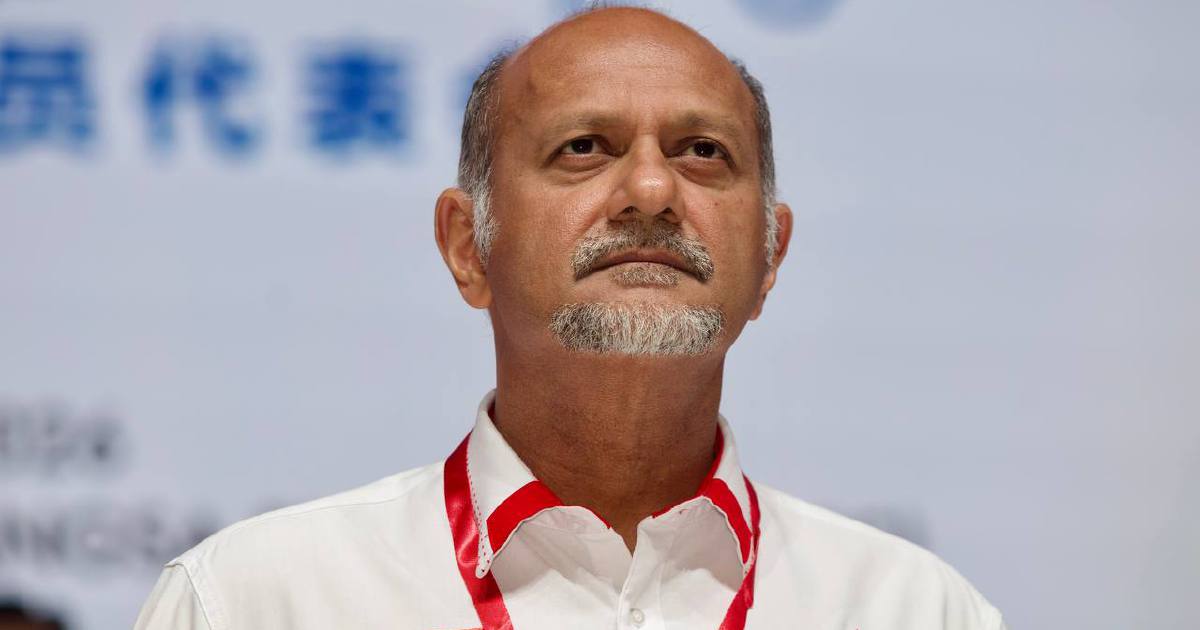
DAP national chairman Gobind Singh Deo has stepped up calls on Prime Minister Datuk Seri Anwar Ibrahim to accelerate the pace of institutional and economic reforms, signalling mounting pressure within the ruling coalition to deliver tangible results after roughly three and a half years in office. Speaking in Putrajaya, Deo's intervention reflects broader concerns within the Democratic Action Party that the government's reform agenda has not progressed with sufficient vigour, even as Malaysia faces mounting economic headwinds and persistent governance challenges that demand swift corrective action.
The timing of DAP's renewed push is significant, coming at a juncture when the unity government—formed in late 2022 following a fractious election—must consolidate its gains and demonstrate to an increasingly restless electorate that coalition politics can deliver meaningful change. The partnership between Pakatan Harapan, Barisan Nasional, and various regional allies has survived longer than many observers predicted, yet internal tensions have occasionally surfaced as constituent parties negotiate over policy priorities and ministerial portfolios. Deo's public statement reflects an attempt by DAP to ensure its reform agenda remains front and centre in government deliberations, rather than being subordinated to other coalition partners' interests.
Institutional reform has long been a flagship DAP commitment. The party has consistently advocated for strengthening independent institutions, enhancing transparency in government procurement, bolstering the judiciary's independence, and overhauling bureaucratic processes that have historically been prone to patronage and inefficiency. Without robust institutional checks and balances, DAP argues, economic reforms—however well-intentioned—risk being undermined by ingrained patterns of rent-seeking and cronyism that have plagued Malaysia's political economy for decades. The underlying concern is that incremental change will prove insufficient to address structural weaknesses that continue to erode investor confidence and constrain productivity growth.
On the economic front, Malaysia faces a complex array of challenges requiring decisive intervention. Gross domestic product growth has remained moderate by regional standards, employment figures mask persistent skills mismatches and wage stagnation in certain sectors, and the manufacturing sector faces intensifying competition from lower-cost competitors and the imperative to move up the value chain. Digital transformation, renewable energy transition, and human capital development represent critical priority areas, yet progress has been patchy. DAP's emphasis on institutional reform is closely linked to economic performance; the party contends that investing in education, research and development, and small and medium enterprise support will yield limited returns unless the institutional environment encourages merit-based advancement and fair competition.
The call also reflects DAP's sensitivity to voter sentiment, particularly among urban and middle-class constituencies that form its core support base. These voters backed the unity government partly out of fatigue with the previous administration's governance record, and partly from hope that a broader coalition would prove more capable of implementing coherent long-term strategies. Three and a half years represents a sufficiently long period for early promises to have translanted into visible institutional changes and measurable improvements in living standards. When they have not materialised at anticipated pace, frustration builds, creating electoral vulnerability for all coalition partners.
Anwar Ibrahim's government has undertaken various reform initiatives since taking office. These include measures to address corruption and misconduct, attempts to enhance civil service efficiency, and efforts to streamline regulatory procedures affecting business. However, progress has often been incremental and sometimes obscured by competing priorities and coalition management demands. Critical institutional changes—such as comprehensive civil service reform, a fundamental overhaul of the education system, or sustained anti-corruption drives—require sustained political will and, crucially, the ability to overcome resistance from entrenched interests that benefit from the status quo. This is where coalitional pressure, such as DAP's current intervention, becomes necessary.
The broader Southeast Asian context adds urgency to Malaysia's reform agenda. Regional competitors, particularly Vietnam and Thailand, have made significant strides in attracting foreign investment and moving up the manufacturing value chain. Singapore, though smaller, maintains structural advantages through institutional excellence and meritocratic governance. If Malaysia is to remain competitive and create quality employment opportunities for its expanding workforce, the combination of institutional credibility and economic dynamism becomes increasingly critical. DAP's intervention implicitly acknowledges that a comfortable regional position cannot be assumed indefinitely; sustained competitiveness requires deliberate, strategic action.
Within the coalition, DAP occupies an interesting position. As a Chinese-majority party within a multi-ethnic coalition that includes Malay-majority parties and indigenous representation, DAP must balance its particular constituency interests with broader coalition dynamics. Its emphasis on institutional reform and meritocratic principles resonates with its support base while also appealing to voters across communities who desire clean, efficient, and fair governance. By publicly calling for accelerated reforms, DAP signals to its supporters that it remains committed to its original principles, while simultaneously putting constructive pressure on coalition partners to maintain momentum on shared reform objectives.
The government is likely to respond to such pressure by emphasising the reforms already undertaken and pointing to ongoing initiatives. Officials may argue that the three-and-a-half-year timeframe remains relatively short for fundamental institutional change, which typically requires multiple electoral cycles to take root. However, they also recognise that allowing the perception of stagnation to take hold risks undermining coalition unity and eroding electoral support ahead of the next general election. The political incentive to demonstrate progress on both institutional and economic fronts thus aligns with DAP's substantive reform agenda, creating an opportunity for the coalition to intensify its efforts across multiple policy domains.

