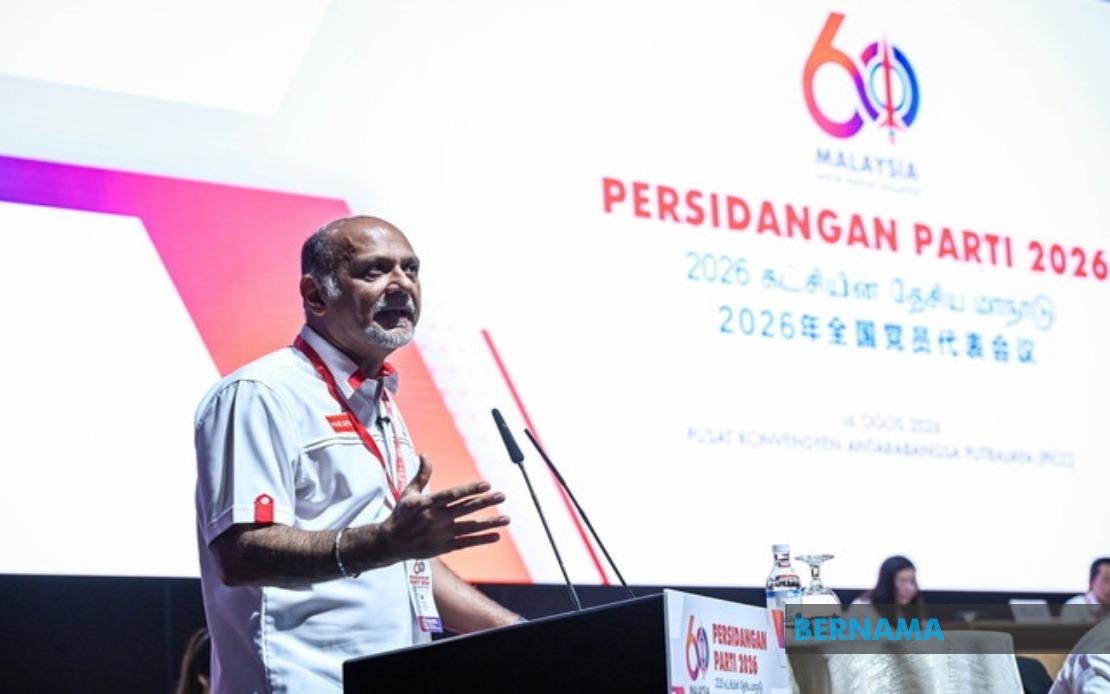
The Democratic Action Party must fundamentally reconsider its strategic direction in response to disappointing results from recent state elections, acknowledging that its relevance in Malaysia's shifting political environment depends on realistic goal-setting and coalition management. This assessment came from DAP national chairman Gobind Singh Deo at the party's 2026 conference held on August 16 at the Putrajaya International Convention Centre, where he emphasized that three and a half years within the Unity Government bloc has provided sufficient time to evaluate both successes and failures before determining the party's next moves.
Gobind's remarks signal a significant pivot in DAP's approach to governance, recognizing that participating in a multi-party coalition requires substantial compromise compared to pursuing partisan agendas. The party chairman stressed the importance of accepting the democratic verdict delivered through recent elections while using those results as a catalyst for strategic recalibration rather than defensiveness. His statement that "the results have prompted us to reconsider how we should move forward" reflects an acknowledgment that the electorate has delivered a message requiring substantive internal reflection rather than mere tactical adjustments.
At the core of DAP's revised thinking is a commitment to prioritizing reforms that command broad agreement among all coalition partners, abandoning the notion that a single party can unilaterally impose its manifesto commitments. This represents a mature recognition of coalition mathematics and the constraints of multi-party government, where ambitious agendas must be filtered through consensus-building mechanisms. Gobind articulated this clearly, stating that the party must identify "what can actually be agreed upon by all the parties and implemented," ensuring that meaningful institutional changes proceed rather than becoming gridlocked through disagreement.
To advance institutional reform within these coalition parameters, Gobind proposed convening a special parliamentary sitting dedicated to debating and approving amendments to critical legislation. The proposed agenda includes substantive overhauls to the Security Offences (Special Measures) Act 2012 (SOSMA), long criticized by civil liberties advocates, alongside amendments to the Peaceful Assembly Act 2012. Additionally, the package would address the institutional separation of the Attorney General's powers from those of the Public Prosecutor, and impose constitutional limits restricting the Prime Minister to two consecutive terms.
These reform proposals carry significant implications for Malaysia's governance framework. The proposed SOSMA amendments would represent one of the most substantial efforts to reform national security legislation since the law's enactment, addressing longstanding concerns about executive overreach in security matters. Decoupling the Attorney General from prosecutorial authority would fundamentally restructure the country's judicial independence architecture, removing a structural conflict of interest that has troubled constitutional scholars for decades. Term limits on the premiership would represent another watershed moment, preventing concentration of executive power and addressing a vulnerability that previous governments exploited to consolidate control.
Gobind framed these institutional initiatives as essential to demonstrating genuine government commitment to reform, transparency, and preventing power abuse. His emphasis on institutional architecture reflects DAP's traditional ideological commitment to democratic strengthening and rule-of-law principles, distinguishing the party's contribution within the coalition from purely transactional political positioning. The party sees institutional reform as establishing the credibility foundation necessary for the government's legitimacy and longevity, particularly critical given Malaysia's recent history of political instability and governance crises.
Beyond institutional matters, DAP's reassessment must address the immediate economic anxieties affecting ordinary Malaysians, according to Gobind. The party chairman acknowledged that government policy must more effectively grasp the genuine economic pressures confronting households and workers, moving beyond abstract policy frameworks toward tangible burden-relief measures. This emphasis on economic sensitivity reflects recognition that despite institutional achievements, governments ultimately stand or fall based on citizens' material circumstances and perceived responsiveness to daily struggles.
Gobind connected this economic focus to broader political stability requirements, arguing that Malaysia requires sustained institutional predictability to attract foreign direct investment and generate employment opportunities. This perspective bridges economic nationalism with pragmatic openness to capital inflows, positioning DAP as cognizant of Malaysia's development stage and competitive positioning within Southeast Asia's investment landscape. The argument carries particular resonance in Malaysian context, where concerns about capital flight and regional competition for manufacturing investment have intensified amid global economic volatility.
The conference itself will determine DAP's trajectory when delegates conduct a secret ballot on whether the party should remain within the government bloc through the conclusion of the 16th Parliament term. This formal procedural mechanism transforms Gobind's strategic guidance into a binding organizational decision, with 4,264 delegates from 1,704 eligible branches determining the outcome. The vote represents more than internal party mechanics; it signals either continued commitment to coalition governance despite electoral setbacks, or withdrawal toward opposition positioning and potential realignment.
Occurring alongside DAP's 60th anniversary commemorations, the 2026 conference proceedings carry historical weight and symbolic significance. The party's six-decade trajectory encompasses transformation from a predominantly Chinese opposition force to a mainstream coalition participant governing multiple states and holding ministerial positions nationally. This evolution toward political maturity and institutional responsibility informs contemporary debates about whether compromises inherent in coalition participation serve the party's long-term positioning or erode its distinctive appeal.
For Malaysia's broader political ecosystem, DAP's reassessment carries consequential implications extending beyond the party itself. A major ruling coalition component engaging in serious strategic recalibration signals either healthy democratic feedback mechanisms or concerning fragility within the government arrangement. Southeast Asian democratic observers will scrutinize whether DAP's evolution toward coalition realism and institutionalism represents sustainable multiparty governance, or reflects preliminary fissures within the Unity Government that may eventually resurface as destabilizing forces. The party's decisions at this conference will substantially influence Malaysian politics' trajectory through the remainder of the parliamentary term.

