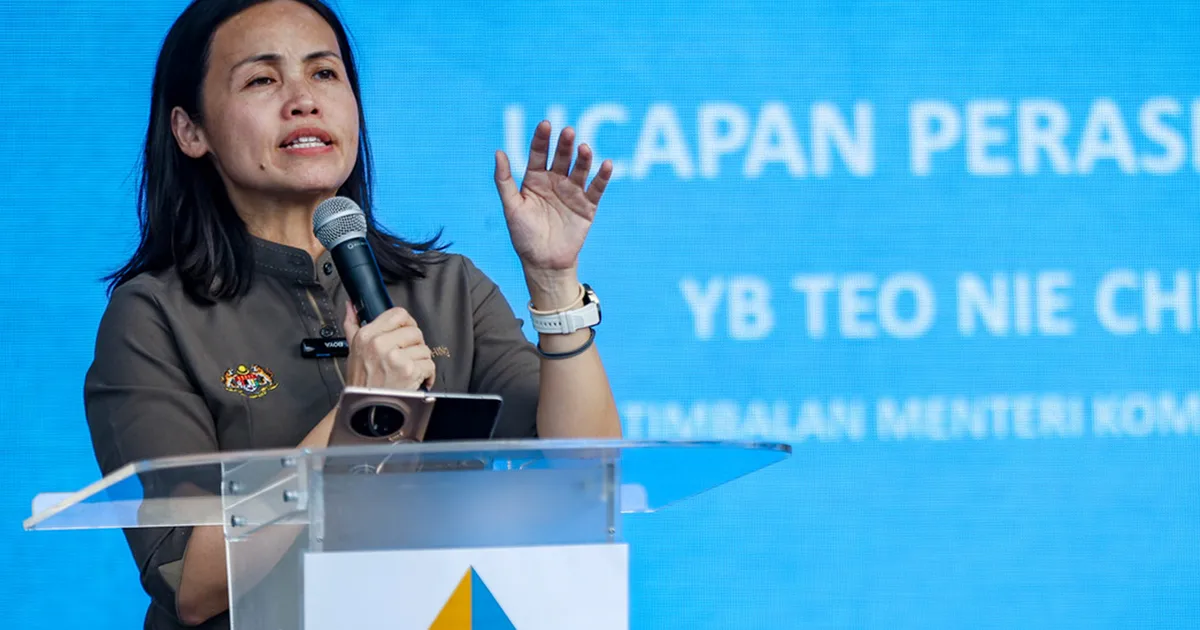
A prominent DAP politician serving as deputy minister has raised fresh concerns about a coordinated attack campaign on social media, alleging that multiple accounts were deliberately created to spread defamatory content about her. The official, who holds a leadership position within the Democratic Action Party, contends that the false allegations—specifically linking her to gang-related matters—represent a deliberate effort by detractors rather than isolated incidents of online criticism.
The deputy minister's complaint highlights an increasingly common tactic in Malaysian politics, where opponents deploy newly minted social media profiles to amplify negative narratives with apparent impunity. By creating fresh accounts rather than using established profiles, the perpetrators may hope to obscure their identities and evade accountability while casting a wider net of accusation across multiple platforms simultaneously. This strategy allows attackers to generate the impression of grassroots opposition when the activity is, in fact, orchestrated and inorganic.
The allegations directed at the DAP figure pertain to gang-related associations—a serious charge that, if believed by the public, could significantly damage her political credibility and standing within her party. In the Malaysian context, where gang violence and organized crime remain genuine public concerns, such accusations carry particular weight and can rapidly gain traction in online discourse, regardless of their factual foundation. The deputy minister's decision to publicly identify this campaign suggests she views the threat as serious enough to warrant public rebuttal.
This incident reflects broader challenges facing Malaysian politicians across all parties in managing their online reputations during an era of distributed social media harassment. The ease with which individuals can create accounts using minimal identifying information means that traditional methods of holding online actors accountable become considerably more difficult. Political figures may find their attempts to respond to false allegations complicated by the ephemeral nature of social media accounts, which can be rapidly deleted or abandoned once they have served their purpose.
The DAP deputy minister's naming of this tactic also points to a strategic awareness among Malaysian political operatives regarding the potential impact of coordinated social media operations. Rather than dismissing online attacks as mere noise, seasoned politicians now recognize that large-scale accusation campaigns, even when based on falsehoods, can shape public perception and influence political outcomes. This recognition reflects the maturation of digital politics in Malaysia and the central role that social media now plays in political competition.
Within DAP circles, the allegation of coordinated social media attacks may carry particular significance given the party's historic positioning as a defender of civil liberties and transparency. A deputy minister from the party faces an added burden in responding to such allegations—any response must navigate between defending herself personally while simultaneously defending the democratic principles and online integrity that DAP has long championed. The party's reputation for intellectual rigor and evidence-based argumentation means that its politicians face heightened expectations to substantiate their claims with concrete details.
The timing of such social media campaigns often coincides with periods of heightened political activity or when a targeted politician is gaining prominence or public attention. Detractors may calculate that a coordinated barrage of allegations during such moments can effectively dilute a political figure's positive messaging and dominate public discourse around her. In Malaysian politics, where media narratives can shift rapidly and public attention spans remain limited, the strategic value of such campaigns lies partly in their disruptive effect on a politician's ability to communicate her own agenda.
For Malaysian readers and observers of regional politics, this incident underscores the vulnerability of public figures to systematic online disinformation campaigns. Unlike traditional media, where editorial standards and journalistic norms provide some filtering function, social media platforms operate with minimal gatekeeping and maximum velocity. A false allegation posted across multiple accounts within minutes can reach thousands of users before any fact-checking or official rebuttal becomes possible. This structural advantage for accusers over accused represents a fundamental imbalance in modern political communication.
The deputy minister's public response also signals to other Malaysian politicians that naming coordinated attack campaigns may be an effective defensive strategy. By identifying the tactic explicitly—drawing attention to the artificial nature of the accounts and the deliberate timing of the allegations—she attempts to inoculate both her supporters and undecided observers against accepting the false claims at face value. This approach depends on audiences being sophisticated enough to recognize the difference between organic criticism and manufactured outrage, a calculation that may or may not prove accurate in practice.
Moving forward, the incident raises questions about whether social media platforms operating in Malaysia bear any responsibility for policing coordinated inauthentic behavior on their services. While international platforms have made efforts to identify and remove networks of fake accounts, enforcement remains inconsistent and often reactive rather than preventive. For Malaysian stakeholders concerned with election integrity and fair political competition, the ease with which coordinated attack campaigns can be launched suggests the need for more robust platform governance and clearer community standards around political discourse.

