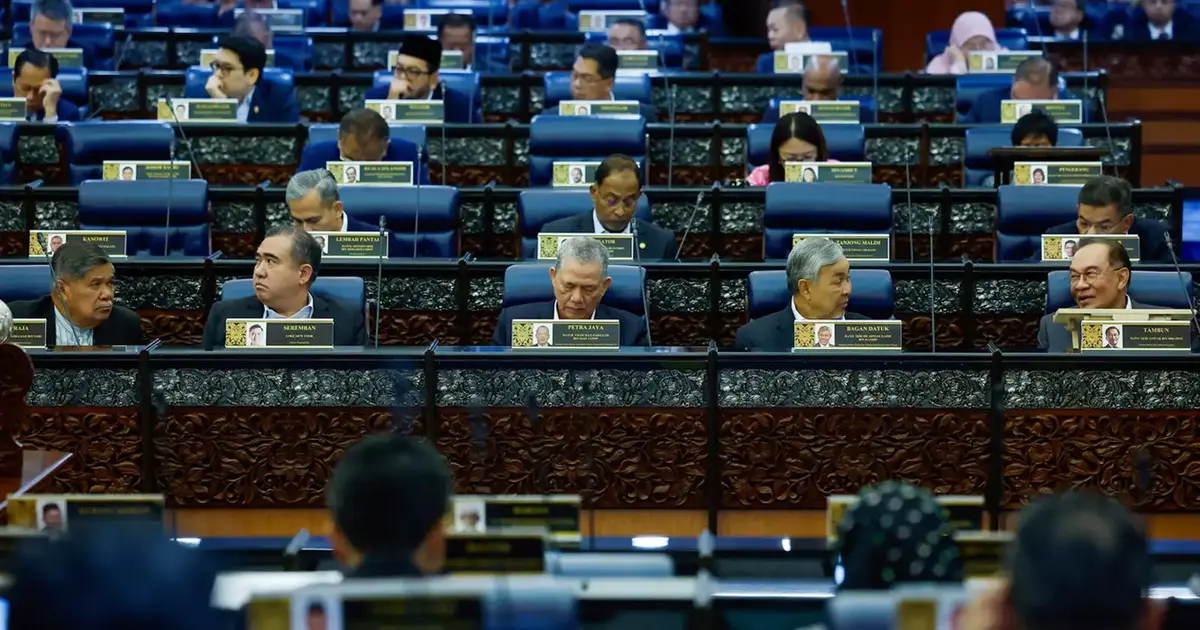
Malaysia's political coalition received reassurance on Monday that the Democratic Action Party's potential departure from the cabinet need not destabilise the government or necessitate the dissolution of Parliament. Saifuddin Shafi Muhammad, the deputy secretary-general of the People's Justice Party (PKR), offered this interpretation during discussions about the ongoing tensions within the ruling bloc, indicating that the government maintains sufficient confidence to weather such a transition.
The statement comes amid simmering disagreements between coalition partners, particularly surrounding ministerial representation and policy direction. By clarifying that DAP members of Parliament would continue extending support to the government from the broader legislative bloc even without holding cabinet portfolios, Saifuddin sought to ease concerns about governmental stability. This distinction between holding ministerial office and maintaining parliamentary support proves crucial to understanding Malaysia's contemporary coalition politics, where the mathematics of legislative backing remain paramount to governmental survival.
The Democratic Action Party, the second-largest partner in the Pakatan Harapan alliance, has long occupied multiple ministerial positions since the coalition came to power in 2022. These posts span several crucial portfolios, including finance, transport, and local government. Any reshuffle would inevitably carry symbolic significance regarding the party's influence within the ruling arrangement. However, Saifuddin's remarks suggest that the PKR-led administration has calculated that maintaining DAP's parliamentary votes takes priority over preserving the full scope of the party's cabinet representation.
This position reflects pragmatic coalition management during an inherently fragile period of Malaysian governance. Since the formation of the current administration, the ruling bloc has consistently operated with narrow majorities, forcing leadership to navigate complex internal negotiations and occasional defections from smaller parties. The composition of Parliament means that losing any significant chunk of legislative support could prove catastrophic, potentially forcing a government reshuffle or calling for fresh elections. By contrast, reorganising the cabinet, while politically messy, remains a manageable operation that can be conducted within existing constitutional frameworks.
The implicit acknowledgment of DAP's essential role underscores the party's weight in the coalition equation. With approximately 40 seats in the 222-member Dewan Rakyat, the Democratic Action Party commands sufficient numbers to materially affect the government's survival prospects. Any arrangement must therefore account for this leverage, which the party inevitably possesses regardless of whether its politicians hold ministerial positions. Saifuddin's framing essentially codifies this reality, presenting a face-saving formula that allows political negotiations to proceed without existential threats to the administration itself.
Contextually, this emerges as Malaysian political leaders grapple with perennial questions about ministerial composition and the distribution of power among coalition partners. The DAP, primarily representing urban, primarily non-Malay constituencies, has consistently sought meaningful representation in decision-making structures. Simultaneously, other partners, particularly those with stronger rural or Malay support bases, resist what they perceive as disproportionate influence by the party. These tensions periodically surface in public disputes and private negotiations over portfolios, budgets, and policy implementation.
The separation of parliamentary support from cabinet participation also reflects broader patterns in Westminster-influenced systems operating across Southeast Asia. While ideally these roles intertwine, circumstances sometimes demand flexibility. Coalition governments throughout the region have occasionally maintained minority partners in support roles without cabinet representation, though such arrangements typically represent compromises rather than preferred configurations. The DAP's hypothetical willingness to accept such terms, if indeed it emerges as necessary, would constitute a significant concession to the coalition's requirements.
ForMALAYSian readers monitoring political developments, this clarification carries implications extending beyond immediate headline concerns. It signals that despite visible disagreements, the ruling coalition retains sufficient internal discipline and shared interest in avoiding fresh elections to manage major transitions without catastrophic outcomes. Neither the government nor DAP appears eager to precipitate a parliamentary crisis that would unleash enormous uncertainties. The party's continued support, even from the backbenches, keeps the government intact whilst allowing negotiations over cabinet composition to proceed as political theatre rather than existential drama.
Regionally, Malaysia's coalition dynamics attract attention from other Southeast Asian nations managing their own multi-party arrangements. Thailand, Indonesia, and the Philippines all operate complicated systems involving diverse political partners with divergent interests. Malaysia's demonstration of managing cabinet reshuffles without triggering governmental collapse offers instructive precedent for how coalition partners can navigate disagreements whilst maintaining governmental stability. The mechanism Saifuddin described essentially formalises a pressure valve that allows tensions to release without explosive consequences.
Looking forward, the practical implications depend heavily on whether DAP leadership ultimately accepts such an arrangement or instead presses for expanded ministerial roles. Current indications suggest internal negotiations continue, with no immediate resolution apparent. However, the PKR official's statement establishes boundaries within which those discussions can proceed, offering participants a roadmap for potential settlements that preserve both governmental continuity and individual party interests. This framework, whether temporary or enduring, reflects Malaysian coalition politics at its most pragmatic—acknowledging constraints whilst maintaining just sufficient flexibility to navigate ongoing disputes without systemic breakdown.

