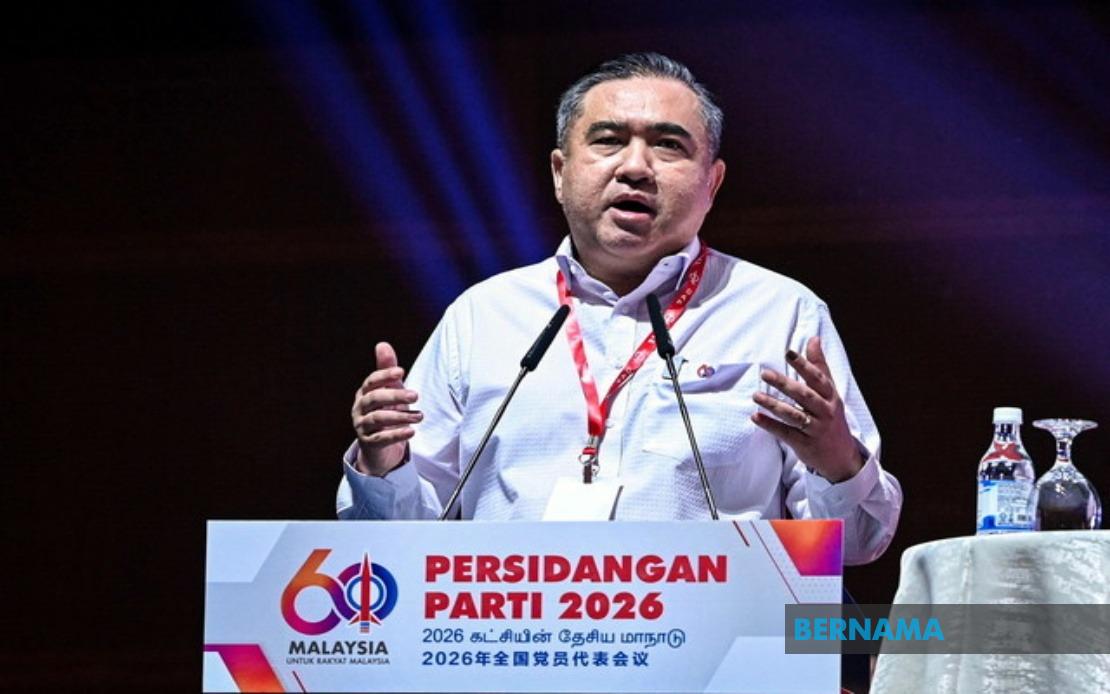
The Democratic Action Party has secured an overwhelming mandate to remain within the federal coalition government through the remainder of the 15th Parliament's constitutional term. The decision, reached through a special motion at the party's 2026 conference in Putrajaya on August 16, represents a significant endorsement of DAP's continued partnership in the unity administration that has governed Malaysia since 2023. The voting outcome provides a measure of political certainty at a time when coalition stability remains central to the government's legislative agenda and policy implementation.
DAP secretary-general Anthony Loke brought the motion before approximately 4,264 eligible delegates representing 1,704 party branches nationwide gathered at the Putrajaya International Convention Centre. The delegates participated in a secret ballot process rather than the traditional voice vote or show of hands, a procedural choice designed to enhance transparency and integrity in recording individual positions. The deliberate use of secret balloting suggests the party leadership sought to ensure members could express genuine preferences without public pressure or social dynamics influencing their decisions.
The voting breakdown reflects substantial consensus within DAP ranks. Of 2,106 ballot papers issued, 1,857 delegates voted to maintain government participation, while 242 opposed continued membership and seven ballots were spoilt. The 88.2 per cent support among those present demonstrates decisive backing for the party's strategic positioning, though the minority opposition of roughly 11 per cent indicates some internal debate persists regarding the coalition arrangement. This significant affirmative margin provides DAP leadership with clear legitimacy to continue coalition negotiations and policy coordination through the parliamentary term.
DAP's ministerial representation across government departments underscores the party's substantive role within the coalition architecture. The party holds five full Cabinet portfolios, with Anthony Loke serving as Transport Minister, Steven Sim overseeing Entrepreneur and Cooperatives Development, Gobind Singh Deo managing the Digital portfolio, Nga Kor Ming leading Housing and Local Government, and Hannah Yeoh representing the Prime Minister's Department and Federal Territories. This distribution places DAP members at decision-making levels affecting infrastructure development, economic diversification, digital transformation, and urban governance—areas directly impacting Malaysian citizens' daily lives and economic opportunities.
Beyond Cabinet-level appointments, seven DAP members occupy deputy ministerial positions spanning critical government functions. Teo Nie Ching oversees Communications while Chan Foong Hin manages Agriculture and Food Security, portfolios addressing information dissemination and food systems affecting ordinary Malaysians. Wong Kah Woh's Education role and Liew Chin Tong's Finance position represent influence over human capital development and fiscal policy respectively. The Finance deputy ministry particularly holds significance given its proximity to budget allocation decisions and economic planning. Additional deputy ministers cover the Prime Minister's Department's institutional reform agenda, women and community development, and youth engagement—collectively demonstrating DAP's penetration across governance domains.
The timing of this conference decision carries implications for broader coalition dynamics. By securing internal party approval prior to the mid-point of the parliamentary term, DAP removes uncertainty surrounding the government's composition and signals that potential coalition tensions have been internally resolved rather than displaced outward. This provides coalition partners—particularly Barisan Nasional components and other unity government participants—with clarity regarding DAP's continued engagement and reduces speculation about alternative political alignments that might emerge during subsequent parliamentary sessions.
For Malaysian voters and stakeholders, the commitment duration extends to Parliament's scheduled dissolution in 2028, providing a defined timeframe for evaluating coalition government performance. This clarity permits businesses to assess regulatory consistency, civil society organizations to plan advocacy strategies, and voters to consider electoral calculations with reasonable confidence about the governing coalition's operational continuity. In Malaysian political contexts where coalition stability has historically proven elusive, extended clarity around government composition represents a notable development.
The conference outcome also reflects internal DAP consensus-building on coalition strategy. The party's political leadership, including Loke and other senior figures, evidently framed continued coalition participation as aligned with party interests and member aspirations, successfully persuading the overwhelming delegate majority that benefits of ministerial office and policy influence outweighed alternative positions. This internal alignment suggests DAP views coalition participation as advancing its policy agenda and constituent interests rather than as purely strategic necessity or compromise position.
Regionally, DAP's coalition commitment carries significance for broader Southeast Asian political stability. Malaysia's unity government has been viewed across the region as a potential model for managing political pluralism and coalition governance. DAP's continued participation and internal party ratification of that role demonstrates how significant non-hegemonic parties can sustain commitments to broader coalitions, balancing factional interests with coalition-wide governance requirements. This may carry observational value for other Southeast Asian polities managing complex multi-party systems.
Looking forward, the delegate mandate provides DAP with operational authority to negotiate policy positions and departmental agendas through 2028 without referencing internal party division over coalition membership itself. Senior DAP ministers and deputies can invest political capital in their respective portfolios without concern that coalition participation will become an internal party battleground during subsequent conferences. This extends the time horizon for DAP's strategic planning and policy implementation within assigned ministerial responsibilities.
However, the 11 per cent minority opposition, though relatively small, indicates latent internal critique that party leadership will need to monitor and address through tangible policy deliverables and constituent service. If economic conditions deteriorate, coalition policy decisions prove unpopular with DAP constituencies, or governance performance falls short of expectations, that minority sentiment could expand during future party deliberations. The delegate vote therefore represents authorization for current strategy rather than permanent endorsement regardless of future circumstances.
The comprehensive deputy ministerial representation across government functions also positions DAP to influence policy implementation cascading through respective departments. Deputy ministers typically supervise day-to-day administrative functions, parliamentary correspondence, and initial policy drafting—domains where committed individuals can shape implementation details and constituent responsiveness. This structural positioning extends DAP's practical governance influence beyond Cabinet-level prestige, enabling party members to affect specific departmental cultures and administrative priorities affecting Malaysian citizens' government interactions.

