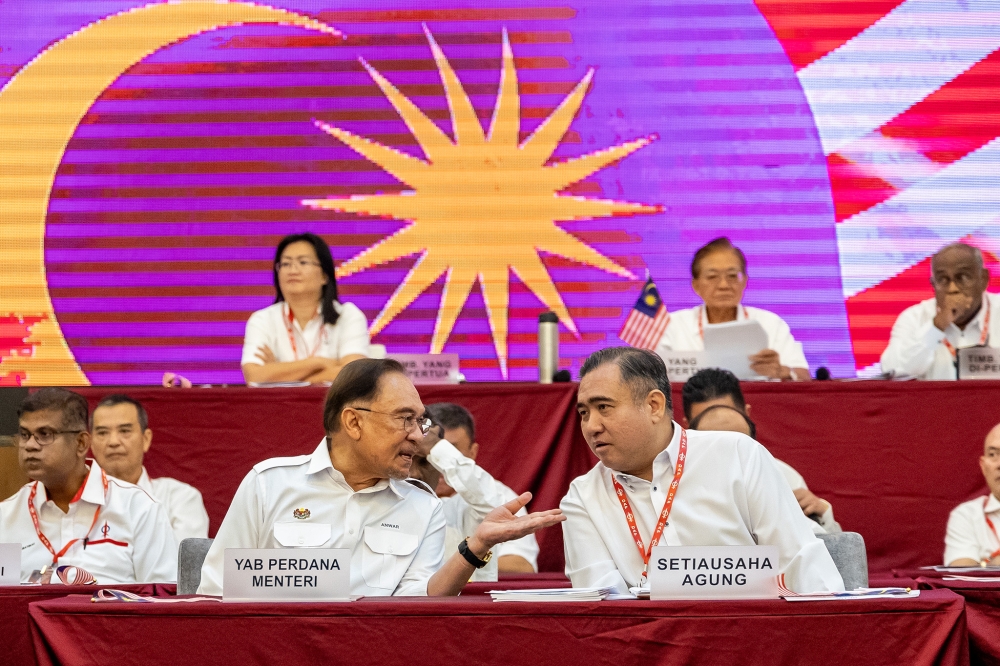
DAP will remain in Prime Minister Datuk Seri Anwar Ibrahim's Pakatan Harapan coalition despite mounting frustrations over the speed of policy reforms, according to Transport Minister Anthony Loke, who framed the party's ongoing participation as a pragmatic acceptance of the constraints that come with exercising executive power.
Loke's statement represents a significant reassurance to the ruling alliance at a moment when the opposition coalition has shown signs of internal strain, particularly within its more reform-minded contingent. The DAP, historically the most vocal proponent of institutional change and anti-corruption measures, has occasionally signalled discontent with the tempo of legislative action since Pakatan took office. By explicitly closing the door on any possibility of withdrawal, Loke effectively signals that the party has resolved its internal calculations in favour of remaining within the governing framework, accepting compromise as the inevitable cost of maintaining coalition stability.
The Transport Minister's comments underscore a fundamental reality of multiparty governance in Malaysia: no single faction can unilaterally dictate the pace or scope of reform without risking the collapse of the entire political arrangement. Pakatan comprises parties with distinct constituencies, ideological priorities, and electoral bases. While DAP draws significant support from urban, educated voters who expect rapid modernisation and stronger transparency measures, other coalition members represent communities with more varied concerns, from rural development to religious and cultural considerations. Reconciling these expectations within a single government necessarily involves postponing certain initiatives that one party might otherwise champion.
The notion that governing entails accepting diluted reform agendas stands in sharp contrast to the relatively unrestricted policy platforms opposition parties can promote. When Pakatan campaigned as an alternative government in previous elections, its rhetoric emphasised comprehensive institutional overhaul and swift anti-corruption action. Upon actually assuming power in 2018, and again after 2022, the coalition encountered the structural, parliamentary, and fiscal realities that constrain executive action. Legislative majorities are narrower than manifesto language might suggest; budget allocations must be negotiated across competing priorities; and certain reforms carry political risks that require careful management across the coalition's constituent parties.
DAP's decision to accept slower progress reflects both pragmatism and strategic calculation. The party recognises that exiting the coalition would place it in opposition but without guaranteeing greater influence over policy outcomes. Remaining in government, even with compromised ambitions, allows DAP to implement partial measures, shape implementation details, and position itself as a responsible steward of administrative continuity. This approach also preserves the party's ability to claim credit for achievements that do materialise during the coalition's tenure, however incremental they may appear to its more idealistic supporters.
The trade-off between idealism and executive responsibility represents a classic dilemma in democratic politics, particularly acute in Southeast Asia's context of institutional fragility and elite-driven coalitional arrangements. Malaysian governance has historically pivoted on behind-the-scenes negotiations among powerful factions rather than transparent, rules-based processes. Pakatan's challenge involves gradually shifting institutional culture while maintaining the political consensus necessary to govern at all. This tension has no neat resolution; the coalition must simultaneously appear reformist to its urban, educated base while remaining accommodating to traditional power structures and rural constituencies that influence parliamentary mathematics.
Loke's framing of reform postponement as an acceptable price of governing reflects how Malaysian coalition politics necessitates constant negotiation between principle and stability. The DAP could maintain rhetorical purity by withdrawing and mounting fierce criticism from the opposition benches, but such a move would likely reduce its actual influence over policy and administration. By choosing to remain and accept incremental progress, the party opts for tangible influence over symbolic consistency—a calculation that many governing parties worldwide must eventually make.
The sustainability of this arrangement depends partly on Pakatan's ability to demonstrate concrete achievements that justify the compromises made. Voters who supported the coalition expecting rapid transformation may grow restless if reform appears stalled indefinitely. Loke's acknowledgment that slower progress is the governing reality, rather than a temporary circumstance, suggests DAP has managed internal expectations within the party, though maintaining rank-and-file morale for an extended period of constrained ambition presents ongoing challenges.
For Malaysia's political landscape more broadly, DAP's commitment to remain in Pakatan provides structural continuity to the ruling coalition at a time when various pressures—economic challenges, internal faction manoeuvring, and electoral uncertainty—test the partnership's cohesion. The statement serves notice that, despite disagreements over reform velocity, the coalition partners recognise that their collective interest in remaining in power outweighs the temptations of pursuing individual agendas through withdrawal and opposition politics. Whether that equilibrium persists as external pressures mount will significantly shape Malaysian politics over the next electoral cycle.

