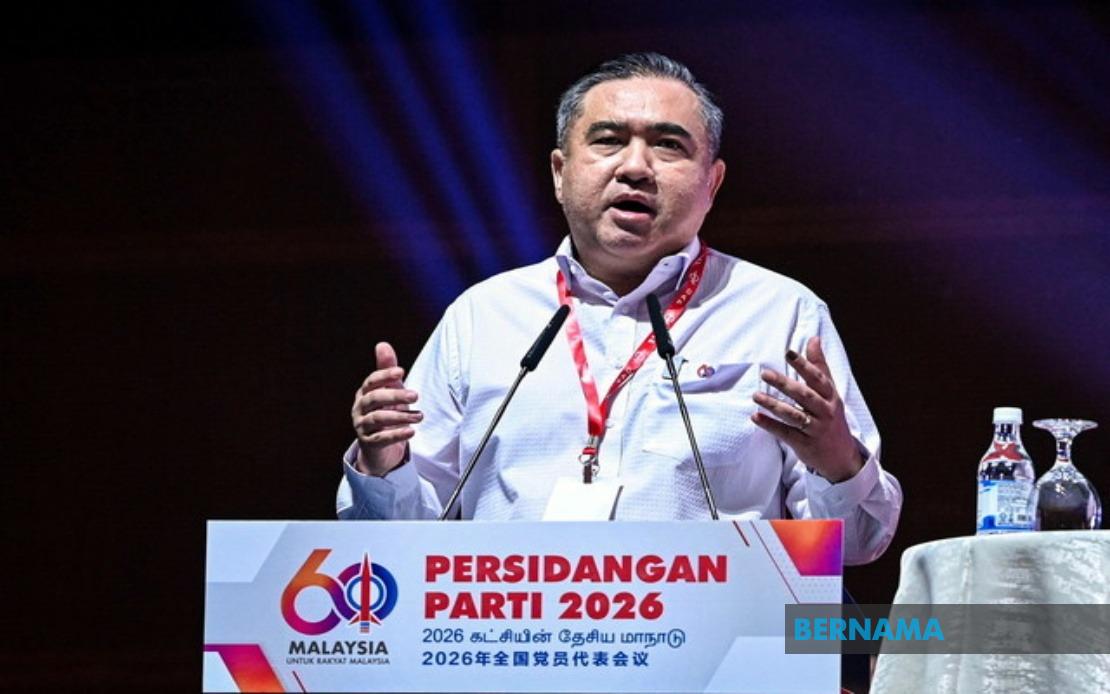
In a significant show of alignment with the government's reform agenda, the Democratic Action Party has endorsed the proposal to repeal the Universities and University Colleges Act, a cornerstone law that has shaped campus governance in Malaysia for over five decades. At the DAP's 2026 National Conference held at the Putrajaya International Convention Centre, secretary-general Anthony Loke framed the position as vindication of the party's long-standing struggle to expand democratic space within higher education institutions.
The timing of this endorsement follows Prime Minister Datuk Seri Anwar Ibrahim's announcement at the PKR 2026 National Congress that the government intends to scrap AUKU entirely, a decision shaped by pressure from student leaders and civil society advocates who argue the law constrains democratic expression and political participation on campus. Loke positioned DAP as a force for substantive change rather than mere incumbency, suggesting that controlling government office must translate into tangible policy victories for party constituents and the broader electorate. This framing reflects DAP's broader political narrative of results-driven governance within the Pakatan Harapan coalition.
The law in question, introduced in 1971 during a more restrictive political era, has become increasingly controversial among younger Malaysians and educators who view it as an anachronism incompatible with democratic norms. Previous iterations of the legislation wielded sweeping power over student behaviour and political expression, though incremental amendments have loosened certain restrictions. The Cabinet is set to formally consider the repeal proposal the following week, indicating serious government intent to move forward with what would be one of the coalition's most symbolically significant education reforms.
Historically, AUKU underwent seven amendments since inception, with the most significant liberalisation occurring in 2012 when students gained permission to engage in political party activities beyond campus boundaries. This change proved instrumental in mobilizing student voters and activists during subsequent election cycles. Further adjustments in 2024 transferred disciplinary authority from vice-chancellors to student-led disciplinary committees, fundamentally altering the power dynamics within campus adjudication systems. Simultaneously, amended provisions governing student representative councils now permit broader fundraising mechanisms, enabling student organizations greater financial autonomy and organisational capacity.
Despite these piecemeal reforms, advocacy groups and student movements have maintained that fundamental structural problems persist. AUKU still restricts certain forms of on-campus political organisation and maintains provisions that critics argue chill free expression. Complete repeal would represent capitulation to longstanding demands rather than incremental compromise. For Loke and DAP, supporting this position aligns the party with a constituency—students and young professionals—that has grown increasingly critical of paternalistic governance frameworks.
The broader context matters for understanding why this moment resonates. Malaysia's student movement, though less visible than counterparts in neighbouring Thailand or Indonesia, has episodically mobilised around education access, institutional autonomy, and freedom of expression. Universities serve not merely as educational institutions but as crucibles for developing civic consciousness and political participation. Restrictions on student political activity are often justified through institutional stability arguments, yet such constraints potentially diminish the pipeline of engaged citizens.
Loke's invocation of broader reform commitments suggests DAP views AUKU repeal as an entry point for more ambitious higher education restructuring. His remarks emphasised commitments to equitable access regardless of racial background, signalling intent to tackle affirmative action policies that remain controversial within opposition-aligned constituencies. Such positioning reflects DAP's delicate balancing act within a coalition government—advancing reformist ideals while managing coalition dynamics with UMNO and other partners holding different views on education equity.
For Malaysian readers, this development carries implications extending beyond campus boundaries. Student movements historically have preceded broader political shifts, from the 1998 Reformasi movement through contemporary youth activism on climate and social justice. Providing greater organisational freedom and democratic space within universities could energise civil society mobilisation around various issues. Conversely, some observers worry about institutional disruption if campus politicisation intensifies without corresponding maturation of student governance frameworks.
The international dimension also warrants consideration. Many regional universities operate under comparable restrictions, with Singapore's National University of Singapore and Thai public institutions facing similar governance constraints. Malaysia's potential pivot toward greater campus freedoms could influence regional conversations about higher education governance and democratic participation. It positions the country as comparatively progressive on student rights, a contrast to the more restrictive models prevalent in neighbouring states.
Implementation will test government sincerity. Repealing legislation requires parliamentary passage, and while the coalition commands a majority, the actual legislative text and its scope remain undetermined. Will repeal be clean elimination, or will new regulatory frameworks emerge to govern student conduct through alternative mechanisms? These questions will determine whether this represents substantive democratic expansion or merely symbolic gesture.
The DAP's full-throated endorsement carries strategic weight. As a Chinese-majority party and historically the coalition's most reform-oriented component, DAP advocacy on education matters carries credibility among urban, educated constituencies. Loke's emphasis on delivery rather than mere office-holding suggests internal pressure to demonstrate concrete achievements to party members and supporters questioning whether coalition participation has diluted the party's transformative agenda.
Looking forward, the AUKU repeal vote in Cabinet represents a crucial test point for the government's reform credentials. If approved, it would substantiate claims that the Pakatan Harapan-UMNO coalition, despite internal tensions, can advance shared reform objectives. Failure or significant delay would undermine coalition legitimacy among reformist constituencies and validate criticisms that governing responsibilities have compromised opposition parties' reform commitments. For students and higher education observers, the coming weeks will reveal whether this announcement translates into genuine institutional change.

