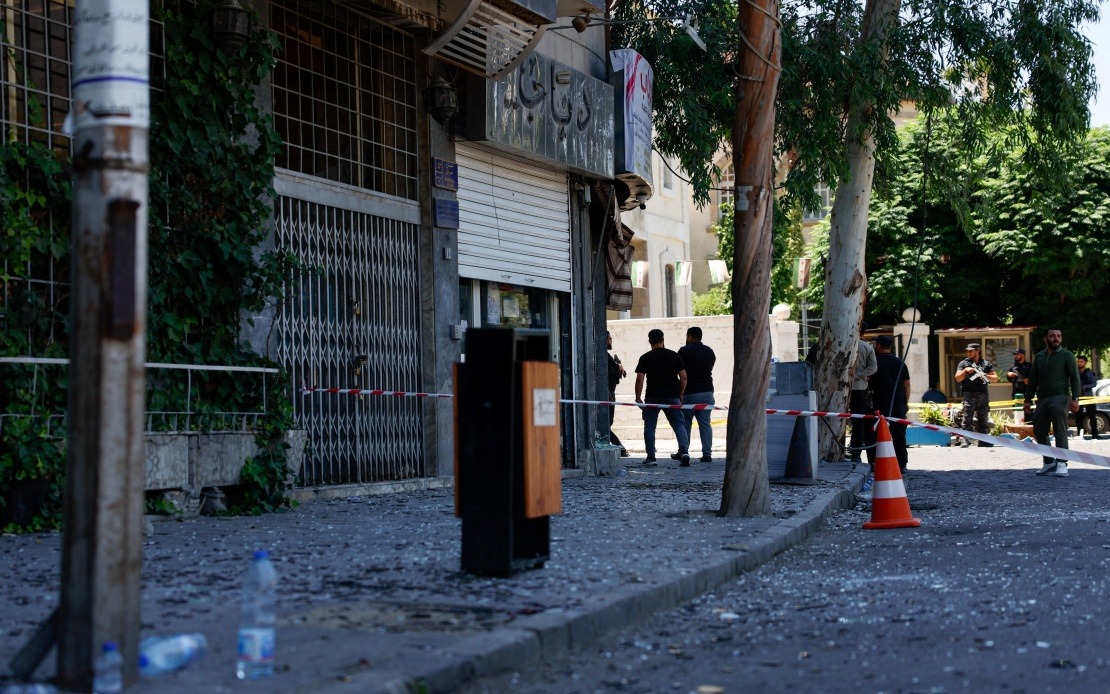
Two improvised explosive devices detonated in Damascus on Tuesday, leaving at least 18 people injured including four police officers, according to Syria's Interior Ministry. The blasts occurred during French President Emmanuel Macron's visit to the country, marking a significant geopolitical moment as the first EU leader to travel to Syria since 2010. The Élysée Palace quickly confirmed that Macron himself remained unharmed during the incident, though the explosions sparked considerable alarm throughout the Syrian capital.
According to the Syrian Observatory for Human Rights, a UK-based monitoring group tracking developments in Syria, the two blasts occurred in rapid succession near the hotel where Macron was reportedly accommodated. The initial explosion was followed within seconds by a more powerful detonation, suggesting a coordinated attack rather than an isolated incident. Emergency services and ambulances mobilised immediately to the scene, while security forces rapidly cordoned off the surrounding area to prevent further casualties and secure the vicinity.
Macron's decision to visit Damascus represents a significant diplomatic overture toward Syria, a nation that has remained largely isolated from Western engagement following years of civil conflict. The French leader arrived on Monday evening and was conducting detailed talks with Syrian delegations at the presidential palace at the time of the explosions. His presence in the country underscores France's shifting approach to Middle Eastern diplomacy and its efforts to re-engage with the Assad administration following regional developments.
For Southeast Asian observers, this incident highlights the ongoing security challenges and volatility that persist in conflict-affected regions, even as political leadership attempts to normalise relations. The timing of the bombings—during such a high-profile diplomatic visit—raises questions about the stability of Syria's security apparatus and the lingering threat posed by extremist elements within the country. Malaysia and other ASEAN nations have long expressed concern about radicalised fighters from the region who travelled to Syria during the conflict and may now pose transnational security risks.
The visit itself carries implications for the broader geopolitical balance in the Middle East. France's engagement with Syria signals a potential shift in Western policy toward the country, particularly as Gulf states have moved toward normalising relations with Damascus. This trajectory contrasts with earlier international isolation and could reshape the diplomatic landscape in ways that affect global security dynamics and international coalition-building efforts in the region.
The incident also underscores the persistent security challenges facing Damascus as the Syrian government seeks to consolidate control and attract international partners. Despite claims of victory in the civil conflict, the capital remains vulnerable to coordinated attacks that can strike even when security forces are mobilised for high-profile occasions. Such incidents complicate the government's narrative of stability and control as it attempts to facilitate the normalisation of relations with international actors.
From a Malaysian perspective, the safety of citizens and the broader question of stability in conflict-affected regions remain pressing concerns. Malaysian nationals living or working in Syria, particularly in diplomatic circles or business sectors, would be affected by such security incidents. The government's ongoing efforts to repatriate Malaysian fighters and their families from Syria, combined with concerns about regional terrorism, make developments in Syrian security directly relevant to national interests.
The explosions also demonstrate how high-level diplomatic engagement in volatile environments carries inherent risks. Security services responsible for protecting visiting dignitaries face tremendous pressure to maintain perimeter security while permitting the kind of movement necessary for substantive political engagement. The incident suggests that despite enhanced precautions, determined actors retain the capability to conduct attacks in sensitive locations, a reality that will likely inform future diplomatic protocols in Syria.
As Syria continues its tentative re-integration into the international community, questions will arise about whether such security incidents reflect the actions of residual extremist cells, organised criminal networks, or other actors opposed to normalisation efforts. The investigation into the bombings will be closely watched by regional and international observers seeking to understand the current threat environment in Syria and the prospects for sustained stability in the country.

