Cuban President Miguel Diaz-Canel has launched a scathing attack on newly imposed US sanctions against his nation, casting the measures as part of a broader ideological offensive against progressive governments worldwide. Speaking through social media on Friday, the Cuban leader drew sharp parallels between current American foreign policy and historical episodes of political persecution, framing the sanctions regime as evidence of Washington's renewed hostility toward leftist movements across the globe.
Diaz-Canel's comparison to McCarthyism carries particular symbolic weight in the Cuban context, invoking the infamous 1950s anti-communist witch hunts in the United States that targeted suspected sympathisers and devastated countless careers. By resurrecting this historical reference, the Cuban president sought to characterize contemporary US policy not as a response to security threats but as ideologically driven persecution dressed in the language of national interest. The president further expanded his critique by invoking Cold War-era Operation Condor, the infamous collaboration between Latin American military regimes that resulted in widespread human rights violations throughout the 1970s and 1980s, suggesting that modern transnational alliances of right-wing actors represent a dangerous echo of that dark period.
In his denunciation, Diaz-Canel alleged that far-right transnational movements are being actively promoted through mechanisms that recall fascist tactics of previous eras. He warned that what he termed the "philosophy of dispossession" guiding transnational rightist movements represents the true threat to global stability, rather than the leftist positions that he argued Western powers have targeted for suppression. This framing presents a fundamental challenge to Western narratives about security and ideology, positioning the Cuban government as a defender against global authoritarianism rather than as a perpetrator of repression.
The Cuban leader extended his criticism beyond the sanctions themselves to encompass a broader catalogue of international grievances. Diaz-Canel attributed responsibility to the United States and its allies for the humanitarian crisis in Gaza, extrajudicial killings in various jurisdictions, the persecution and murder of migrants, military actions against civilian infrastructure including a girls' school in Iran, and the decades-long economic embargo against Cuba itself. By bundling these disparate issues together, he constructed a narrative of systematic Western aggression against vulnerable populations and nations that resist American hegemony, suggesting that sanctions against Cuba represent merely one component of a comprehensive strategy of global domination.
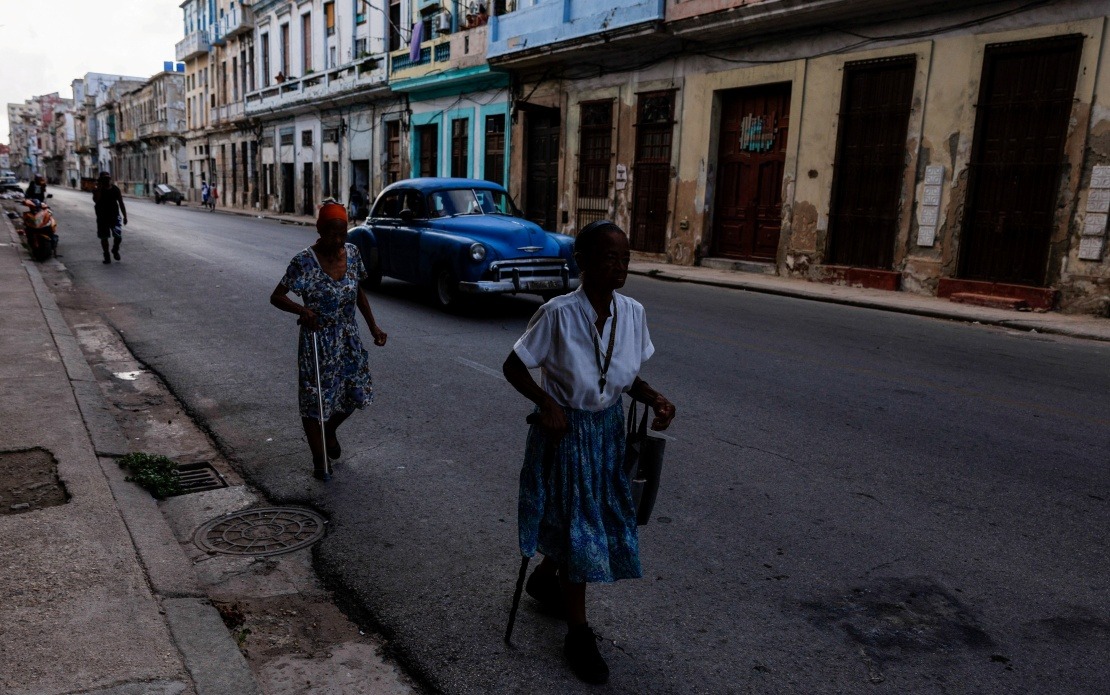
The Cuban economy, meanwhile, faces unprecedented challenges that have intensified public hardship across the island. The nation is enduring its most severe economic contraction in recent decades, marked by acute fuel shortages and cascading infrastructure failures. Official statistics reveal that power outages have become a defining feature of daily life, with the electrical system experiencing average daily blackouts exceeding twenty hours. The electricity sector deficit has reached 1,955 megawatts, reflecting the collapse of generation capacity and the breakdown of the energy infrastructure that sustained the economy throughout previous decades of hardship.
Havana authorities have consistently attributed this economic deterioration to tightened restrictions imposed by Washington, contending that American policy has systematically disrupted crude oil supplies to the island, pressured international corporations to sever business relationships with Cuba, and severed the nation's access to global credit markets and international financing mechanisms. From Havana's perspective, the sanctions regime operates as a comprehensive strategy designed to inflict maximum economic pain on the civilian population, leveraging Washington's global financial dominance to enforce compliance through deprivation. This narrative resonates particularly within non-aligned nations and among developing countries that perceive Western economic statecraft as a tool of imperial coercion.
The Trump administration's renewed aggressive posture toward Cuba crystallized in May when President Donald Trump signed an executive order that intensified sanctions targeting Cuban officials and government entities. The administration justified these measures by citing what it characterized as systematic repression within Cuba and alleged threats to American national security and foreign policy objectives. This formulation reflects a return to more confrontational Cold War rhetoric following the period of thaw that occurred under the Obama administration's 2014 opening to Cuba.
Trump's approach to Cuba extended beyond conventional sanctions in January, when he signed an additional executive order declaring a national emergency and establishing mechanisms to impose punitive tariffs against any nation that supplied or sold oil to Cuba. This extraordinary measure weaponizes American tariff authority to coerce third parties into compliance with the embargo, effectively transforming the bilateral dispute into a test of other nations' willingness to accept American economic dominance. The mechanism represents an escalation in the extraterritorial application of American economic power, creating potential complications for nations seeking to maintain balanced relationships with both Washington and Havana.
For Southeast Asian observers, Cuba's situation illuminates broader questions about the exercise of economic coercion by major powers and the capacity of smaller nations to maintain sovereignty in an increasingly integrated global system. Malaysia's own experience with American sanctions and economic pressure provides a lens through which to understand Havana's grievances, even if Kuala Lumpur's political alignments differ substantially from Cuba's. The Cuban case demonstrates how sustained sanctions regimes can devastate civilian populations while potentially strengthening the resolve of targeted governments to resist external pressure, a dynamic relevant to understanding conflicts throughout Asia and the developing world.

