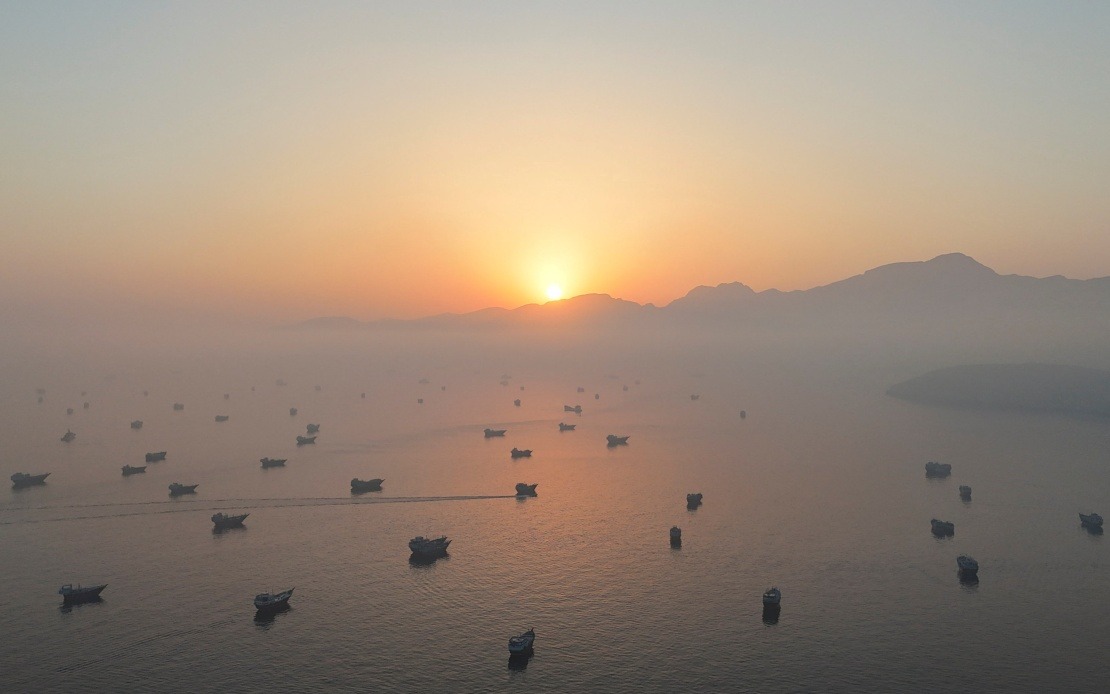
The Comprehensive and Progressive Agreement for Trans-Pacific Partnership, representing one of the world's most significant regional trade blocs, has thrown its weight behind recent diplomatic progress between the United States and Iran. The endorsement came through a joint ministerial statement released after a virtual gathering on Friday, signalling that the 12-member coalition views the agreement and accompanying steps to reopen the Strait of Hormuz as critical to stabilising international commerce and energy markets that have faced severe disruption.
The coalition's formal backing carries considerable economic weight. Together, the member nations—Australia, Brunei, Canada, Chile, Japan, Malaysia, Mexico, New Zealand, Peru, Singapore, the United Kingdom and Vietnam—represent a substantial portion of global trade and energy consumption. Their collective statement underscores that reopening reliable passage through one of the world's most strategically vital waterways matters not as a geopolitical abstraction but as a practical necessity for functioning energy markets and supply chains that touch every corner of the global economy.
The statement places particular emphasis on the range of commodities affected by any disruption to Hormuz shipping. Beyond crude oil and refined petroleum products like diesel, the ministers highlighted the vulnerability of liquefied natural gas flows, petrochemical shipments, and fertiliser exports that depend on uninterrupted maritime transit. For economies across Asia-Pacific and beyond, many of which lack domestic energy reserves, this distinction matters enormously. A closure or restriction of the Strait imperils not only fuel supplies but also the raw materials that underpin agriculture, manufacturing, and chemical industries.
Navigational freedom stands at the philosophical heart of the CPTPP position. The bloc's emphasis on maintaining open sea lanes and ensuring freedom of navigation reflects deeper commitments embedded in international maritime law, particularly the United Nations Convention on the Law of the Sea. By anchoring their statement in UNCLOS principles, the ministers framed their position not as favouring any particular power but as defending the rules-based system that allows smaller and medium-sized trading nations to conduct commerce without harassment or blockade. For Southeast Asian countries like Malaysia, Vietnam, and Singapore that depend critically on unimpeded shipping through multiple chokepoints, this principled stance carries direct relevance.
The agreement also addresses a persistent risk in contemporary global trade: the imposition of restrictions disguised as legitimate policy responses. The ministers explicitly reaffirmed commitments against unjustified trade restrictive measures and called on other nations to observe the same restraint. This language reflects anxiety that energy crises or geopolitical tensions could prompt governments to erect protectionist barriers that fragment markets further. In the context of supply chain fragmentation already triggered by the pandemic and various regional conflicts, such additional restrictions could prove devastating for economies dependent on energy imports and global sourcing networks.
Recognising that stability alone is insufficient, the CPTPP statement also endorsed regional initiatives designed to build resilience into energy systems. The Partnership On Wide Energy and Resources Resilience Asia, or POWERR Asia, represents a deliberate effort to strengthen coordination between energy-producing and consuming nations across the region. This framework acknowledges that while reopening the Strait of Hormuz addresses an immediate crisis, longer-term security requires diversified supply chains, closer producer-consumer dialogue, and mechanisms for rapid response when disruptions occur. For Malaysia and other regional economies, such initiatives offer pathways to reduce vulnerability to single-point failures in energy supply.
Small island developing states received explicit consideration in the statement, reflecting awareness of their particular exposure to energy supply shocks. Pacific nations, in particular, often depend entirely on imported energy and lack alternatives when maritime routes face disruption. The ministers' acknowledgment of this asymmetric vulnerability signals commitment to addressing not just the immediate Hormuz situation but the broader structural inequalities that leave smaller and more isolated economies at greater risk during crises. Trade diversification—expanding sources of supply and routes of delivery—emerges as the practical remedy, though achieving it requires sustained coordination and investment.
The timing of this statement carries significance beyond the immediate Iran-US agreement. Global supply chains remain fractured by multiple shocks: pandemic-related manufacturing disruptions persist in certain sectors, semiconductor shortages continue to constrain automotive and electronics production, and various regional conflicts have interrupted flows of grain, metals, and chemicals. Against this backdrop, the reopening of a major energy corridor represents a genuine opportunity to ease one major pressure point. However, it also underscores how fragile current arrangements remain, dependent as they are on maintaining political stability and freedom of navigation in critical waterways.
For Malaysian policymakers and businesses, the CPTPP statement carries practical implications. Malaysia's economy depends heavily on stable energy prices and reliable shipping through the Strait of Malacca and beyond. The nation's participation in CPTPP positions it within a coalition explicitly committed to rules-based trade and against protectionist measures that could harm open market principles. The endorsement of POWERR Asia also offers Malaysia opportunities to engage in regional energy security frameworks that might reduce long-term vulnerability to supply shocks while potentially creating new trade opportunities in energy services and infrastructure.
The ministers' commitment to collective action to address current supply chain disruptions reflects recognition that no single nation can solve these problems alone. International coordination on energy security, rules-based trade enforcement, and crisis response mechanisms increasingly determines economic outcomes. By maintaining this united front, CPTPP members signal that they intend to resist fragmentation and uphold the institutional frameworks that have underpinned prosperity across the Asia-Pacific region. Whether such coordination can prove durable amid persistent geopolitical tensions remains an open question, but the statement at least establishes a clear marker of intent among major trading powers.

