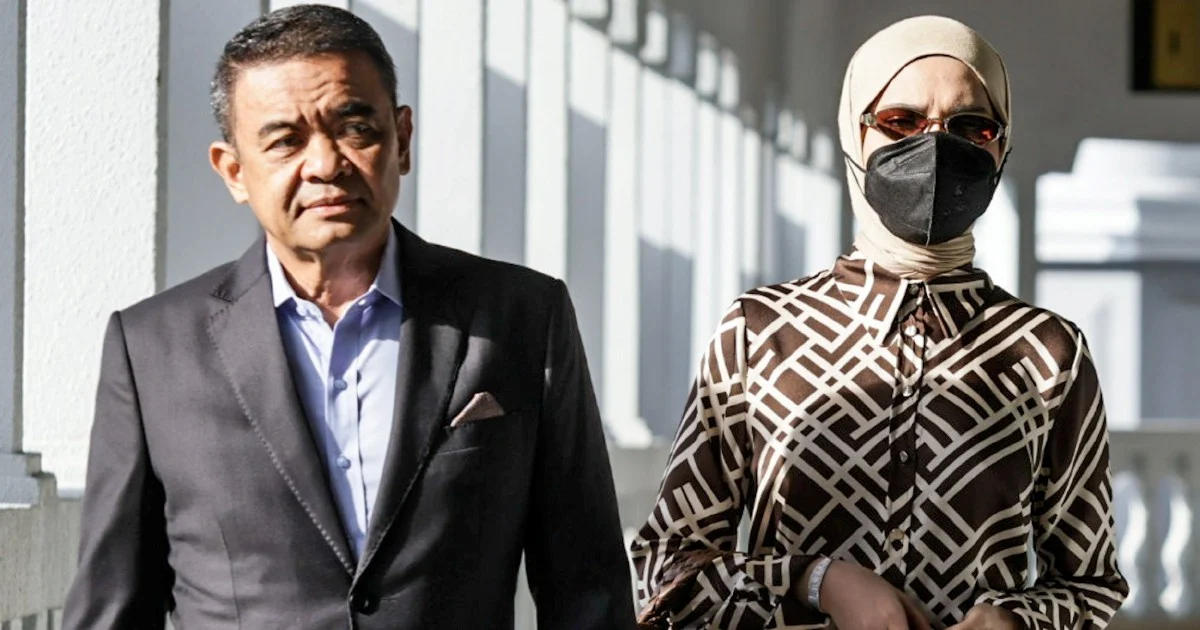
Twenty-three Rolex timepieces and fifteen items of jewellery seized by the Malaysian Anti-Corruption Commission have been handed over to the government following a court order. The assets were confiscated from the sister-in-law of General (Rtd) Tan Sri Muhammad Hafizuddeain Jantan, a former chief of the Malaysian Armed Forces, marking another significant development in what appears to be a broader investigation into potential financial irregularities involving the retired military leader's household.
The forfeiture represents a notable escalation in Malaysia's ongoing crackdown on unexplained wealth, particularly within circles closely connected to senior government and military figures. The MACC's ability to successfully secure a court order affirming the government's right to these assets suggests investigators uncovered sufficient evidence that the items were acquired through illicit means or were proceeds from corruption. Such legal determinations carry substantial weight in Malaysia's anti-corruption framework, where courts increasingly scrutinise the origins of luxury goods held by politically connected individuals.
The specificity of the seized inventory—predominantly high-end Swiss timepieces—underscores a pattern often observed in corruption cases involving upper-echelon bureaucrats. Rolex watches, with price points frequently exceeding RM100,000 for certain models, serve as relatively discreet repositories of wealth compared to property or vehicles. Their portability and international tradability make them particularly attractive for individuals seeking to conceal the origins of questionable funds or move assets across borders with minimal documentary oversight.
For Malaysian readers, this case exemplifies the institutional mechanisms now available to prosecute financial misconduct at the highest levels. The MACC's independence and investigative powers, though historically contentious, have enabled the agency to pursue cases that might previously have remained shrouded in political protection. The successful asset forfeiture indicates that Malaysian courts are willing to enforce such orders when corruption allegations target even retired senior military figures, challenging lingering perceptions that the country's institutional framework extends blanket immunity to powerful former officials.
The geographic and familial nexus of this investigation warrants attention. By targeting the sister-in-law rather than proceeding solely against the former general himself, investigators may have identified a circumvention strategy common in white-collar crime—vesting assets in family members to create distance between the primary suspect and the questionable wealth. This prosecutorial approach reflects increasingly sophisticated anti-corruption methodology, recognising that illicit networks often operate through intimate family connections rather than formal corporate or government structures.
The forfeiture decision also carries implications for Malaysia's regional standing in combating corruption. International monitoring bodies and foreign governments frequently assess anti-corruption commitment partly through the government's willingness to pursue cases affecting military and defence sectors, domains traditionally insulated from public scrutiny throughout Southeast Asia. A successful asset seizure from a retired top military officer demonstrates institutional capacity that distinguishes Malaysia from several neighbours where similar cases would likely be shelved quietly.
Moreover, the case raises questions about the prevalence of unexplained luxury acquisitions within Malaysia's security establishment. The sheer number of Rolex watches in a single seizure suggests either an unusually acquisitive individual or potentially a collection accumulated over decades of service in positions offering multiple opportunities for financial gain. Either interpretation points to systemic vulnerabilities in oversight mechanisms governing military procurement, defence contracts, and discretionary spending—areas where corruption frequently manifests in developing democracies.
The involvement of jewellery alongside timepieces indicates investigators explored the full spectrum of fungible wealth markers. Jewellery—particularly precious metal and gemstone pieces—occupies a particularly opaque niche in asset tracking, with valuations highly subjective and market prices volatile. The inclusion of fifteen distinct pieces alongside the watches suggests a methodical attempt to trace and seize the full scope of questionable acquisitions, not merely the most obvious items.
From a legal perspective, the forfeiture order represents a concrete outcome in what may otherwise be a prolonged investigation. Asset recovery provides tangible evidence of institutional success, offsetting the often frustrating delays that characterise complex corruption prosecutions. The government's acquisition of these items, assuming they are subsequently auctioned or liquidated, generates funds that could theoretically be redirected toward public initiatives or state coffers—though Malaysian citizens would be justified in demanding transparency regarding the final disposition of recovered assets.
The case also underscores the evolving political economy of anti-corruption enforcement in Malaysia. The willingness of courts and the MACC to pursue cases touching senior military figures suggests either genuine institutional independence or political calculation that proceeding against a retired figure carries acceptable political costs. Distinguishing between these motivations requires observing whether similar vigour extends to other domains and whether investigations into active officials receive comparable resources and prosecutorial commitment.
Looking forward, this forfeiture may establish precedent encouraging subsequent investigations into unexplained wealth within Malaysia's security apparatus. If additional cases surface involving other retired military leaders or their family networks, the judiciary's handling of this case will inform judicial reasoning in those proceedings. The court's validation of the forfeiture principle itself—that certain assets may be state property despite being held in private hands—represents a significant assertion of governmental authority in reasserting control over national resources.
Ultimately, the seizure of these twenty-three Rolex watches and fifteen jewellery items from a retired general's sister-in-law constitutes far more than a discrete incident. It reflects institutional attempts to realign Malaysia's governance architecture toward transparency and accountability, even when such efforts touch traditionally protected circles. Whether this represents sustainable institutional reform or a temporary political accommodation remains an open question that Malaysian observers must continue monitoring carefully.

