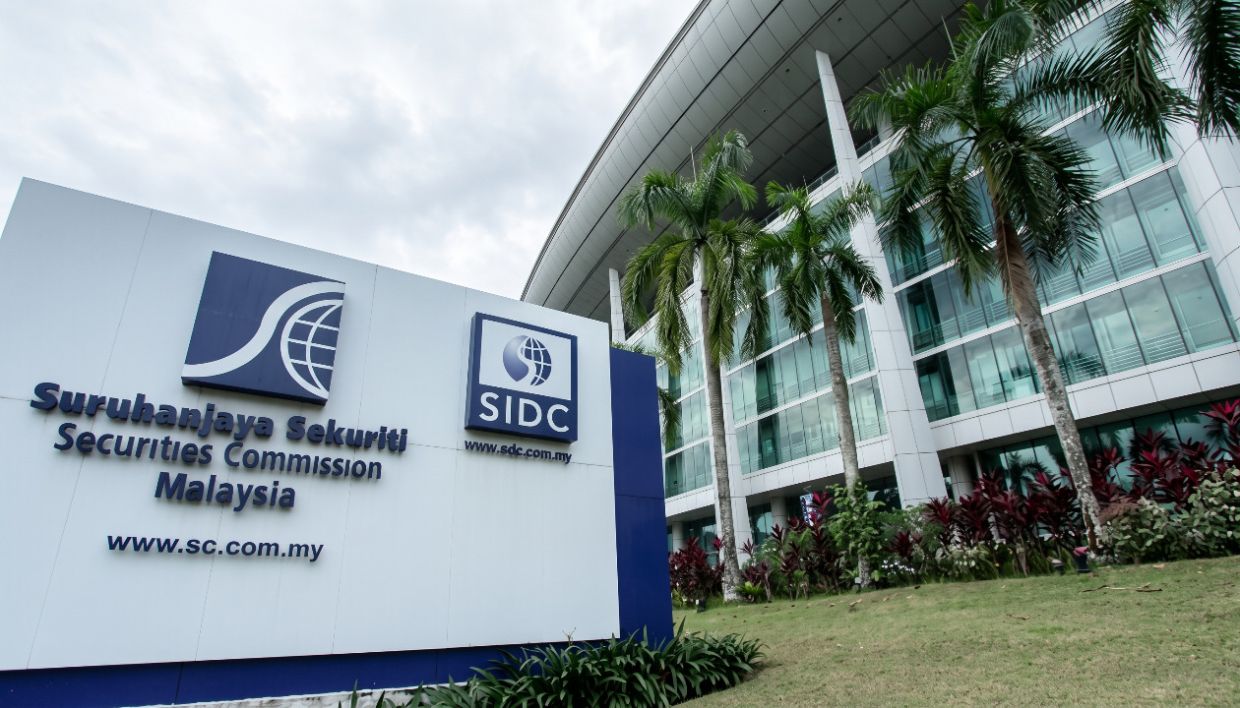
Malaysia's appellate judges have decisively backed the Securities Commission's efforts to restrain a substantial corporate asset base in one of the country's most significant ongoing securities fraud prosecutions. The Court of Appeal on Monday rejected attempts by Wong Shee Kai—known as Ricky Wong—his associate Teh Sew Wan, and their holding company Wong SK Holdings Sdn Bhd to overturn a High Court injunction that has frozen approximately RM169.2mil in assets and properties. The three-judge panel comprising Justices Datuk Ravinthran N. Paramaguru, Datuk Dr Choo Kah Sing and Datuk Leonard David Shim found no grounds to disturb either the original ex parte freezing order issued on May 8, 2020, or the subsequent inter partes injunction granted on April 28, 2022. The appellants were ordered to bear RM200,000 in costs awarded to the regulator, a financial burden that underscores the court's confidence in the SC's legal position.
The dismissal represents a critical juncture in a protracted legal battle that has consumed resources across Malaysia's judicial and regulatory systems since the SC initiated civil proceedings against the defendants in 2020. The core allegations centre on purported contraventions of Section 179 of the Capital Markets and Services Act 2007, which addresses securities fraud matters that strike at the integrity of Malaysia's financial markets. By refusing to set aside the freezing orders, the appellate court has effectively validated the SC's assessment that preservation of these assets remains necessary pending the ultimate determination of substantive claims. This reasoning carries particular weight given that the civil trial remains in an active state and is not scheduled to resume until September 1, 2026, suggesting that final judgment remains years away.
The frozen assets represent a substantial nexus of financial and property interests bound up in the defendants' commercial arrangements. The injunction operates as a comprehensive restraint mechanism, extending beyond the named appellants to capture any third party who might knowingly facilitate transactions involving the restricted holdings. This expansive reach reflects judicial acknowledgment that sophisticated defendants in financial crime cases often employ intermediaries and complex structures to circumvent straightforward asset recovery mechanisms. By casting the net so broadly, the injunction creates practical barriers to asset dissipation while legal proceedings advance through the courts' inherently gradual processes.
A parallel dimension adding urgency to the case involves criminal allegations that have placed Wong beyond the reach of Malaysian law enforcement. The SC has indicated that Wong remains a fugitive, wanted not merely for securities violations but also for offences under the Anti-Money Laundering, Anti-Terrorism Financing and Proceeds of Unlawful Activities Act 2001. This dual-track prosecution—civil and criminal—represents an increasingly sophisticated regulatory approach in Malaysia, where financial crime cases often traverse multiple legal frameworks simultaneously. The intersection of securities regulation and money laundering concerns suggests that investigators identified patterns of fund flows or asset movement that transcended simple market misconduct into territory involving proceeds of crime.
The legal representation arrayed on both sides reflects the case's complexity and stakes. The SC marshalled substantial counsel including its dedicated litigation team of Mohd Hafiz Mohd Yusoff and Loo Kit Ming Keith, supplemented by external specialist Datuk Lim Chee Wee and Kwan Will Sen from Messrs Lim Chee Wee Partnership. Wong engaged Tan Sri Muhammad Shafee Abdullah, a prominent senior counsel with extensive experience in high-stakes commercial and regulatory litigation, while Teh retained Tan Sri Cecil W. M. Abraham, another silk with considerable appellate experience. The calibre of counsel deployed on both sides underscores that neither party viewed the asset freeze as a peripheral matter susceptible to routine dismissal.
From a broader regulatory perspective, the appellate court's decision strengthens the SC's hand in pursuing increasingly aggressive enforcement strategies against alleged securities violators. The regulator has demonstrated willingness to seek asset restraints at early stages of investigation and prosecution, a tactic that requires judicial endorsement at each procedural juncture. By upholding the freeze, the Court of Appeal has signalled that Malaysian jurisprudence recognises the regulatory necessity of preventing defendants from depleting resources that might ultimately satisfy civil judgments or restitution orders. This approach aligns with international best practices in financial regulation, where asset preservation serves both compensatory and deterrent functions.
For Malaysian and regional investors, the case serves as reminder that the SC possesses meaningful enforcement tools and demonstrates willingness to deploy them against alleged wrongdoers regardless of their commercial prominence. Securities fraud cases that result in frozen assets and extended litigation create cautionary narratives within business communities, potentially discouraging others from engaging in similar conduct. The case's visibility and the appellate court's firm stance likely carry deterrent effects across Malaysia's broader financial sector, signalling that regulatory violations carry tangible consequences extending well beyond administrative penalties or public censure.
The extended timeline for trial resolution, stretching toward 2026, reflects the reality that complex financial crime prosecutions demand substantial investigative and evidentiary development. The SC and its legal team must assemble documentary evidence, expert analysis, and witness testimony spanning what may involve numerous transactions across multiple entities and time periods. Defendants conversely require adequate opportunity to mount meaningful challenges to alleged misconduct, examine the SC's evidence, and present their own case. This protracted process, while frustrating to those seeking expedited justice, serves the legitimate interest in ensuring that determinations of securities fraud rest on comprehensive factual records rather than expedited or incomplete proceedings.
The public dimension of Wong's fugitive status introduces elements of extraterritorial complexity. Should Wong be located outside Malaysia, authorities would need to navigate international mutual legal assistance frameworks and extradition treaties to secure his return for criminal prosecution. The SC's public appeal for information regarding his whereabouts reflects acknowledgment that investigative resources, while substantial, may benefit from public cooperation. This transparency approach also serves reputational functions, ensuring that the business community understands that regulatory action against alleged wrongdoers proceeds systematically and with judicial oversight at each stage.
Looking forward, the appellate court's decision establishes several precedential implications for future asset freeze applications in securities cases. Judges reviewing similar SC applications can point to established appellate authority that such restraints serve legitimate regulatory purposes and merit judicial approval even before trial commencement. This jurisprudential foundation may facilitate more efficient expedited hearings on freezing orders in subsequent cases, reducing the procedural burdens that would otherwise attend each new application. The case thus contributes incrementally to a body of regulatory jurisprudence that increasingly recognises sophisticated financial crimes demand correspondingly sophisticated remedial mechanisms including early asset preservation.
For international investors and those considering Malaysian financial market participation, cases such as this demonstrate that the country's regulatory framework, while subject to legitimate debate regarding speed and efficiency, does provide meaningful oversight mechanisms that extend to asset recovery efforts. The SC's pursuit of civil remedies alongside criminal sanctions reflects increasingly integrated approaches to financial crime prosecution. The appellate court's support for these mechanisms suggests that Malaysia's judiciary recognises the modern necessity of aggressive asset preservation in cases involving alleged securities fraud, positioning the country's regulatory environment as reasonably aligned with international standards for financial market integrity protection.

