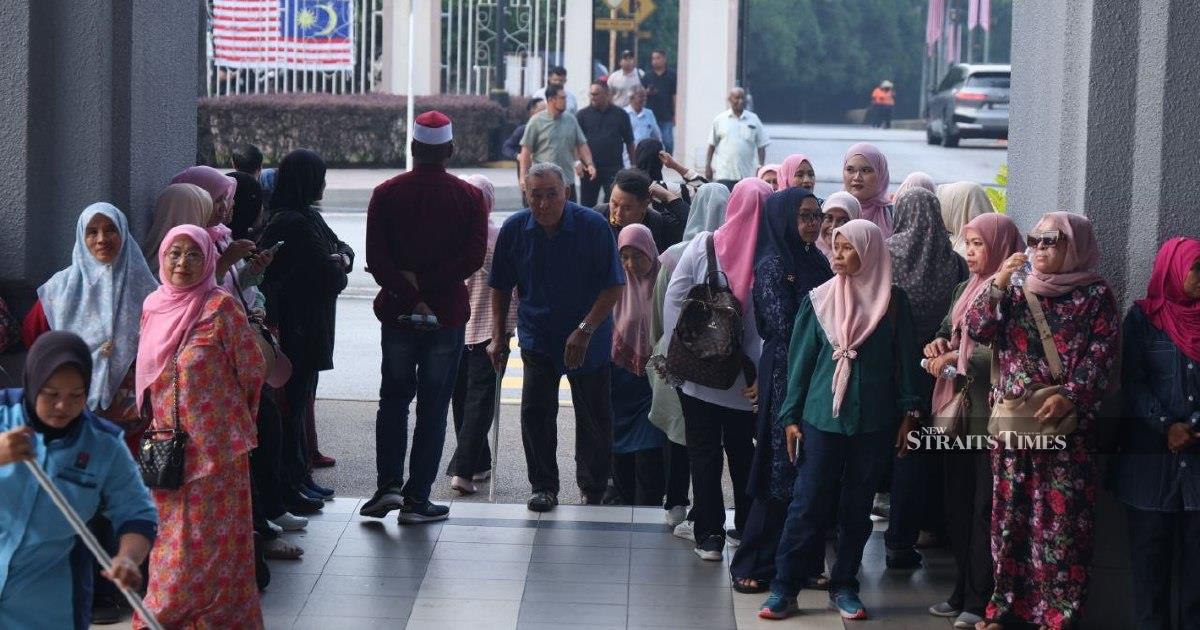
The Kuala Lumpur Court Complex became a focal point of intense media activity today as more than 30 journalists and news crews positioned themselves throughout the lobby in anticipation of former Prime Minister Datuk Seri Ismail Sabri Yaakob's arrival to face formal charges. The substantial turnout of press representatives underscored the significant public and political interest surrounding the proceedings against one of Malaysia's recent leaders, reflecting the high-profile nature of the case.
The gathering of media personnel at the court precinct highlighted the ongoing scrutiny that continues to envelop Malaysia's political establishment, particularly regarding matters that touch upon governance and accountability. The presence of dozens of reporters prepared to document the day's developments demonstrated the continued salience of cases involving high-ranking government figures in the nation's political discourse and public consciousness.
Ismail Sabri's anticipated appearance marked another chapter in a series of legal proceedings that have involved members of the upper echelons of Malaysian politics in recent years. The court complex, a venue that has become increasingly familiar with such high-profile cases, was thoroughly prepared for the media contingent and the formal procedures that would follow the former leader's submission to the charges against him.
The staging of this proceeding carried implications for Malaysia's judicial system and broader governance narrative. Court appearances by sitting or former leaders signal to the public and international observers that Malaysia's legal institutions remain operational and willing to process cases involving political figures regardless of their previous standing. This consistency, many constitutional observers note, forms a crucial element of institutional credibility and democratic health.
For Malaysian citizens and regional observers, the unfolding case against Ismail Sabri represented a test of whether accountability mechanisms function equitably across the social spectrum. The extensive documentation and coverage of such proceedings by the domestic and international media reflected genuine public curiosity about how the nation's courts would handle matters of this magnitude and sensitivity.
The presence of so many journalists also reflected the competitive nature of contemporary news gathering in Malaysia, where media outlets vie for exclusive access and early reporting of significant developments. The court complex served not merely as a venue for legal proceedings but as a theatre where journalists could attempt to secure interviews, capture photographs, and gather reactions from the former prime minister, his legal representatives, and other observers.
Beyond the immediate spectacle of media activity, the case touched upon broader questions about political accountability and the rule of law in Southeast Asia's second-largest economy. Malaysia's trajectory in addressing allegations involving senior political figures had drawn interest from regional and international observers who monitored the nation's commitment to transparent governance and equitable legal processes.
The court's handling of such cases also carried practical implications for Malaysia's political future. The manner in which the judicial system processed charges against former leaders could influence public confidence in institutions and shape broader discussions about governance standards. These considerations extended beyond the courtroom to encompass wider conversations about what Malaysians expected from their leadership and how institutions enforced accountability.
For Ismail Sabri himself, the formal charging process represented a significant moment in his political trajectory. Having previously served as Prime Minister before losing office through electoral defeat in November 2022, he now faced the prospect of defending himself against legal allegations while navigating the complex terrain of Malaysian politics during a period of transition and institutional scrutiny.
The convergence of legal process, media attention, and public interest that materialized at the court complex reflected Malaysia's contemporary political landscape, where accountability questions remained prominent despite changes in government. The presence of so many journalists bore witness to public appetite for transparency and information about how the nation's institutions responded to challenges involving its highest offices.
As proceedings commenced, the court complex remained a venue where procedural formality and public curiosity intersected, with the outcomes potentially carrying consequences for Malaysia's political atmosphere and institutional development in the months and years ahead.

