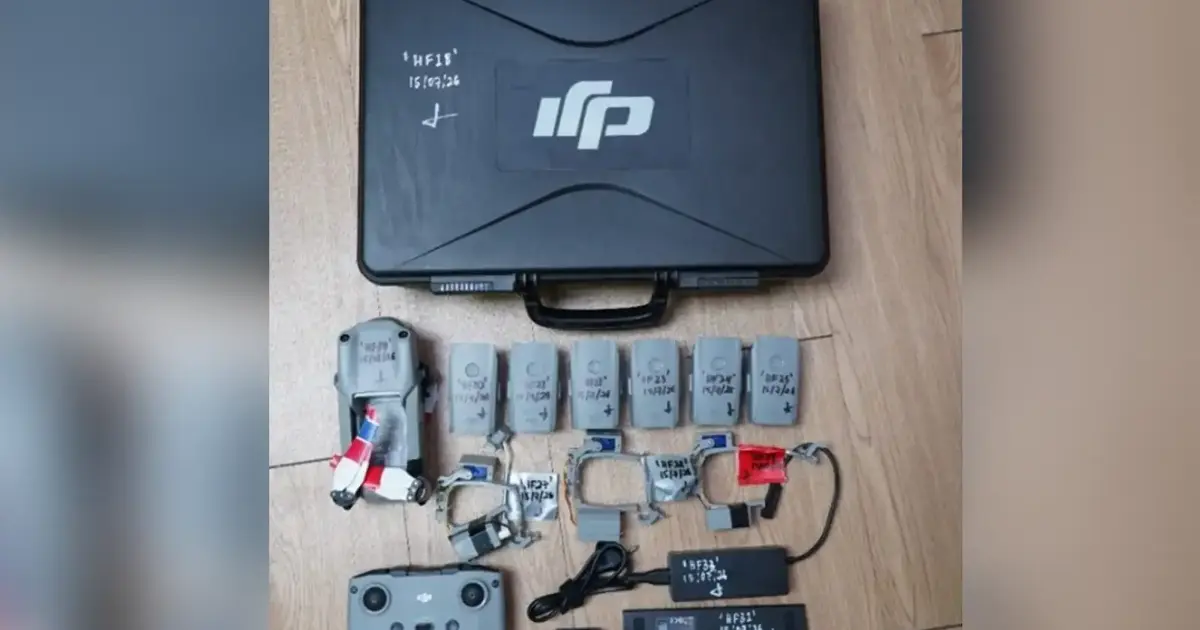
A pair has been taken into custody by Melaka police following an alleged attempt to smuggle tobacco products into a state prison facility using an unmanned aerial vehicle, highlighting evolving challenges faced by correctional authorities in preventing contraband from reaching detainees. The Melaka police chief indicated that investigators believe the operation was orchestrated in coordination with at least one individual currently incarcerated at the facility, suggesting this was not an isolated smuggling effort but rather part of a deliberate scheme involving external accomplices and someone with inside knowledge of prison operations.
The use of drone technology to bypass security measures at correctional institutions represents a growing concern for prison management across Malaysia and the broader region. Unlike traditional methods of contraband smuggling—which rely on visitors, supply deliveries, or corrupt staff members—unmanned aerial systems allow accomplices to operate from a distance, minimizing their direct exposure to detection. The portability and relative affordability of commercial drones have made them an increasingly attractive tool for those seeking to circumvent security infrastructure that was designed primarily to monitor human movement and conventional access points.
Tobacco products have long been among the most commonly smuggled items into prisons throughout Southeast Asia. While cigarettes may seem innocuous compared to narcotics or weapons, they hold significant value within prison economies where inmates' purchasing power is restricted. Tobacco functions as a de facto currency in many correctional facilities, traded for services, protection, or other illicit goods. This internal economy creates powerful financial incentives for individuals outside prisons to organize smuggling operations, as the markup on contraband goods can be substantial when resold within the controlled prison market.
The involvement of someone held within the facility itself underscores a persistent vulnerability in prison security architecture. Inmates maintaining contact with the outside world—through visitors, phone smuggling, or other means—can coordinate the timing and location of drone deliveries. The internal operative can position themselves in a yard, recreation area, or other outdoor location where a drone delivery becomes feasible, then collect the dropped package before authorities respond. This coordination dramatically increases the operational success rate compared to random smuggling attempts.
Malaysian correctional institutions have faced repeated challenges in preventing technological smuggling in recent years. The Melaka incident joins a pattern of drone-based contraband deliveries at prisons throughout Malaysia and neighbouring countries. Each such incident prompts correctional officials to evaluate their perimeter defences, security protocols, and staff training procedures. However, the pace of technological adoption often outstrips the speed at which security systems can be updated and adapted, creating a persistent cat-and-mouse dynamic between inmates' outside networks and prison administrators.
The broader implications of this arrest extend beyond the immediate incident. It demonstrates that organized smuggling operations targeting correctional facilities operate with planning and sophistication. These are not impulsive acts by individuals attempting to deliver personal items to loved ones, but rather calculated criminal enterprises that exploit security gaps for profit. The involvement of multiple parties—both inside and outside the prison—indicates established networks capable of coordinating timing, logistics, and technology to achieve their objectives.
For Malaysian law enforcement and prison authorities, cases like this necessitate a multifaceted response strategy. Enhanced perimeter monitoring, including anti-drone detection systems or jamming technology, represents one approach, though such measures require significant capital investment. Equally important is strengthening intelligence gathering to identify and disrupt the external networks supporting smuggling operations before they reach the execution phase. Investigators must trace how the couple established contact with the inmate, whether money changed hands, and whether they were part of a larger criminal organization engaged in multiple smuggling ventures.
The detention of the couple also raises questions about how extensively prison intelligence units monitor visitor communications and inmate contact with the outside world. Most modern prisons employ systems to track phone calls and written correspondence, yet coordinating a sophisticated drone delivery suggests either a gap in surveillance or the couple's successful evasion of it. Prison management may now face pressure to expand monitoring capabilities, though authorities must balance security imperatives against concerns about inmate privacy rights and access to legal representation.
Regionally, this case illustrates how correctional security challenges transcend individual prison systems. Best practices developed in one jurisdiction can be adapted elsewhere, but so too can criminal methodologies. If drone smuggling proves consistently effective at Malaysian facilities, similar tactics may proliferate across other Southeast Asian countries facing comparable resource constraints. International cooperation among prison authorities to share intelligence about emerging contraband delivery methods becomes increasingly valuable in this context.
The investigation into the couple will likely examine their financial circumstances, prior criminal records, and the extent of their involvement in smuggling networks. Prosecutors will need to establish that they acted knowingly and deliberately, not merely at the request of acquaintances. If the couple is convicted, sentencing will send an important message about the consequences of attempting to introduce contraband into correctional facilities—a deterrent effect aimed at both potential future smugglers and the outside networks that recruit them for such operations.

