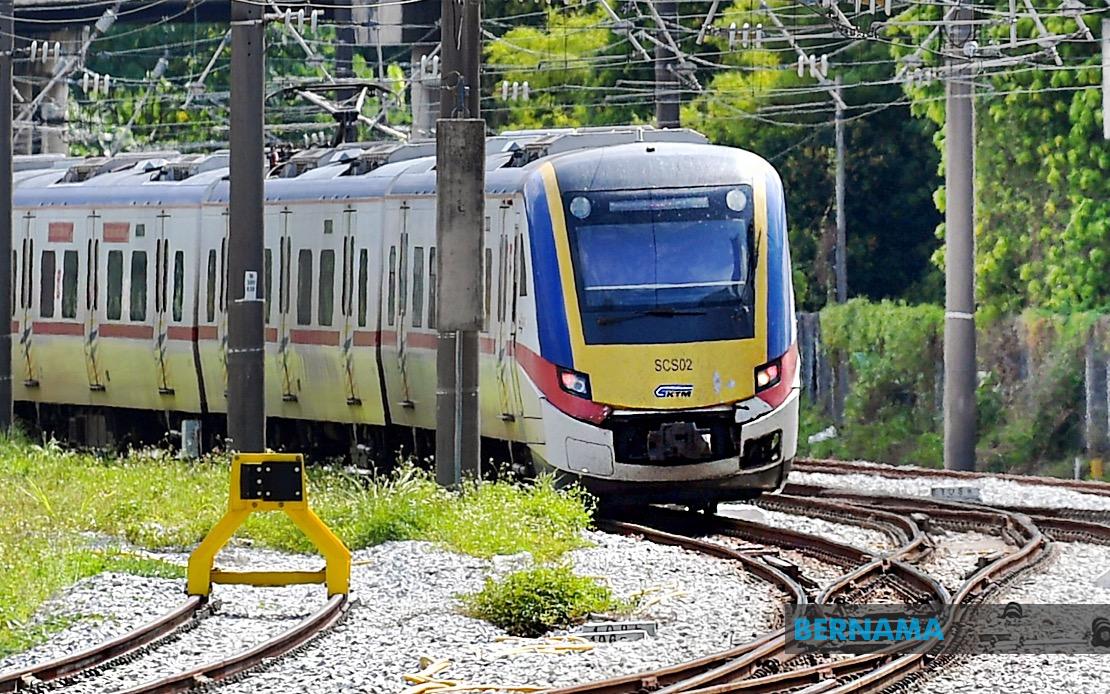
Malaysia's vital commuter rail network experienced significant disruptions on July 23 when a wooden structure from an unauthorised construction site fell onto railway tracks near Batang Benar, crippling the overhead electrical system that powers both KTM Komuter and Electric Train Service trains in the region. The incident, caused by negligence at a Public Works Department-contracted wayleave project, forced railway operator Keretapi Tanah Melayu Berhad to suspend services across multiple stations and deploy emergency shuttle buses to accommodate stranded passengers.
The impact of the collapse reverberated through the rail network within minutes of the structure striking the overhead line system between Batang Benar and Labu stations. The damage to the electrical infrastructure immediately cut power to the tracks, forcing operators to halt all train movements in the affected corridor. This cascading failure left commuters at stations from Bangi southward to Seremban without direct rail connectivity, creating traffic chaos across one of Malaysia's busiest transportation routes during peak travel hours.
KTM Komuter services heading towards KL Sentral from the southern end of the line now terminate at Seremban Station, whilst northbound services to KL Sentral or Batu Caves operate only from Bangi Station onwards. The suspension of all regular services between Bangi and Seremban stations eliminated direct rail access for residents and workers in crucial intermediate areas including Labu, Batang Benar, and Tiroi. This forced commuters to seek alternative transportation or abandon their journeys entirely, undermining one of the country's key transit arteries for economic and social connectivity.
To mitigate the crisis, KTMB mobilised substantial emergency resources. Three shuttle buses were deployed to operate a replacement service loop connecting Seremban, Tiroi, Batang Benar, Labu and Bangi stations, though the effectiveness of bus-based alternatives to rail capacity remains limited given the scale of disruption. The operator simultaneously arranged seven additional shuttle buses stationed at KL Sentral, Bandar Tasik Selatan, Kajang and Seremban to serve ETS passengers, recognising that intercity rail users face particular challenges finding substitute transport for longer journeys. Significantly, ETS passengers were offered full refunds for uncompleted journeys, reflecting the severity of the service failure and the operator's acknowledgment of passenger losses.
Investigations by KTMB's technical teams revealed fundamental safety violations by the JKR contractor executing the wayleave project. The contractor failed to submit a comprehensive work schedule detailing construction activities, and more critically, neglected to inform KTMB of the actual timing when the bridge work would proceed on the day of the incident. These communication breakdowns proved catastrophic, as they prevented the railway operator from implementing mandatory safety protocols established under the Site Entry Permit Standard Operating Procedure.
Standard safety requirements mandate that three KTMB technical representatives—drawn from the Regional Engineer, Signalling and Communications, and Electrification departments—must be present on-site to provide continuous monitoring once a project receives final approval and all required documentation is submitted. The contractor's failure to notify KTMB meant these safeguards were bypassed, leaving the railway infrastructure unmonitored during critical construction work. This represents a systemic breakdown in inter-agency coordination between public works contractors and rail operators, highlighting vulnerabilities in construction safety oversight that extend beyond this single incident.
The incident exposes persistent challenges in Malaysia's infrastructure management, particularly regarding third-party activities conducted near critical transport assets. Railway corridors frequently intersect with other development projects, yet the coordination mechanisms appear insufficient to prevent hazardous situations. The wayleave arrangement—wherein third parties conduct work near railway property—requires robust contractual enforcement and real-time monitoring to function safely. The contractor's apparent indifference to notification requirements suggests either inadequate contractual penalties or insufficient supervision by the Public Works Department.
For Malaysian rail commuters and the broader travelling public, the disruption underscores the fragility of transport systems dependent on aging infrastructure vulnerable to external shocks. The Klang Valley and southern corridors support hundreds of thousands of daily journeys; their suspension creates economic ripples across businesses, industries, and government operations relying on predictable commute patterns. Such incidents erode public confidence in rail transport reliability, potentially driving commuters toward private vehicles and worsening traffic congestion rather than advancing the nation's public transport aspirations.
KTMB's technical teams immediately commenced repairs to the damaged overhead line system, though no specific timeline for full service restoration was disclosed. The operator acknowledged the incident as unforeseen and expressed regret for passenger inconvenience whilst reiterating that safety and operational reliability remain paramount priorities. However, the incident was clearly foreseeable had proper coordination mechanisms functioned—suggesting that future prevention depends less on accident management and more on enforcement of existing safety standards.
Looking forward, this disruption should prompt a comprehensive review of how Malaysia regulates third-party construction activities proximate to critical rail infrastructure. Penalties for contractors failing notification requirements must be stringent enough to deter negligence, whilst monitoring obligations for supervising agencies like the Public Works Department require clarification and audit trails. The incident also reinforces the broader need for Malaysia's transport operators and infrastructure agencies to develop more integrated planning and communication frameworks that treat the rail network as a shared national asset requiring collective protection rather than a liability compartmentalised within individual organisations.
Commuters are encouraged to monitor KTMB's official social media channels and consult station staff for real-time service updates as repairs progress. The temporary shuttle bus arrangement, while providing some relief, remains a poor substitute for rail's capacity and efficiency, serving as a stark reminder of why protecting the integrity of the transport network benefits everyone relying on Malaysia's increasingly congested transport corridors.

