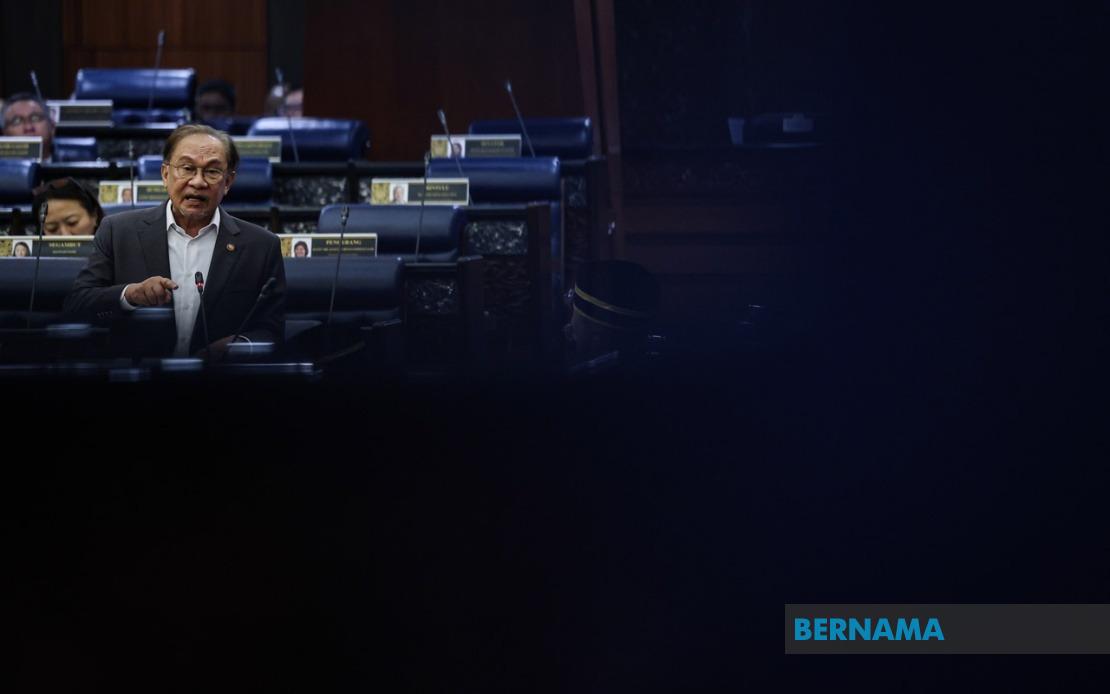
Prime Minister Datuk Seri Anwar Ibrahim has introduced a significant procedural safeguard for journalists, declaring that complaints against media practitioners will no longer trigger automatic government investigations or prosecution. Instead, all complaints must first pass through review by the Malaysian Media Council (MMM), establishing a filtering mechanism intended to shield journalists from arbitrary legal action. The announcement, made during parliamentary question time on July 7, signals the government's attempt to balance press accountability with protection against overreach by state agencies.
The new framework represents a structural shift in how Malaysia handles journalist complaints, moving away from a system where government departments could directly initiate investigations based on grievances. Under this revised approach, the MMM serves as an independent gatekeeper, conducting preliminary assessment before matters proceed to formal investigation or prosecution. Anwar emphasised that this safeguard prevents journalists from facing legal jeopardy simply because they have attracted criticism from government officials or state institutions dissatisfied with coverage.
Anwar acknowledged during parliamentary proceedings that no democratic system grants absolute press freedom, noting that both government leaders and journalists operate within legal constraints. However, he argued that the burden of complaint should not automatically translate into legal vulnerability for media practitioners. His comments directly responded to concerns about Malaysia's legal framework, which permits prosecution of journalists under the Sedition Act 1948 and the Official Secrets Act 1972—statutes that international press freedom advocates have long criticised as instruments for suppressing legitimate journalism and political commentary.
The Malaysian Media Council's new gatekeeping role carries significant implications for press regulation in Southeast Asia's third-largest economy. By requiring complaints to undergo preliminary scrutiny before formal legal machinery engages, the mechanism theoretically creates space for alternative dispute resolution and allows the council to distinguish between legitimate misconduct allegations and politically motivated complaints. This approach reflects growing recognition that direct government prosecution of journalists chills reporting on sensitive topics, particularly coverage affecting ministers, policies, or state institutions.
For Malaysia's journalism landscape, the MMM's expanded responsibility represents a test of institutional independence. The council's credibility depends on demonstrating that its review process is genuinely impartial and not simply a staging ground for predetermined enforcement decisions. If the MMM functions as a token filter while government agencies continue pursuing predetermined prosecutions, the mechanism would provide only superficial protection. Conversely, if the council conducts substantive independent review and occasionally blocks referrals to prosecution, it could meaningfully reduce harassment of journalists through legal instruments.
The backdrop to Anwar's announcement includes longstanding tension between Malaysia's regulatory framework and international press freedom standards. Organisations such as Reporters Without Borders and the Committee to Protect Journalists have repeatedly flagged both the Sedition Act and Official Secrets Act as threats to investigative journalism. These laws contain provisions sufficiently broad that prosecutors can characterise legitimate political reporting as seditious or as unauthorised disclosure of state information. Journalists covering government corruption, military affairs, or contentious policy debates have faced legal threats under these statutes, creating self-censorship incentives across the industry.
Anwar's statement reflects the current government's positioning as relatively more permissive toward press scrutiny compared to its predecessor administration, which pursued aggressive prosecutions of critical journalists and online commentators. The emphasis on procedural fairness and independent review aligns with the government's broader reform narrative, though implementation remains crucial. Malaysia has experienced numerous instances where formally established safeguards or review mechanisms functioned ineffectively in practice, their independence undermined by political pressure or institutional weakness.
The Malaysian Media Council itself faces questions about its capacity and willingness to fulfill this expanded role. As a self-regulatory body comprising industry representatives, the MMC possesses neither law enforcement authority nor prosecutorial power. Its assessments carry weight only if government agencies commit to respecting its determinations. Should the Attorney-General's Chambers or other enforcement bodies ignore the council's recommendations, the entire protective framework collapses. This dependence on executive cooperation means the system's effectiveness ultimately rests on institutional restraint and political commitment rather than structural design.
For Malaysian media organisations, the new framework offers modest protection against prosecutorial harassment whilst creating procedural predictability. Journalists and editors can reference the MMM review requirement when facing threats of legal action, potentially gaining time to challenge complaints through the council rather than in court. However, the system does not fundamentally alter the legal landscape—the Sedition Act and Official Secrets Act remain available tools for governments determined to suppress journalism. The framework merely requires an additional procedural step before those tools engage, without preventing their eventual deployment.
Regionally, Malaysia's approach may influence how other Southeast Asian democracies balance press regulation with freedom concerns. Countries including Thailand, the Philippines, and Indonesia grapple with similar tensions between protecting journalists and maintaining government accountability. Malaysia's experience implementing the MMM review mechanism could either demonstrate that intermediate institutional oversight effectively protects press freedom or expose how such mechanisms become performative when political will to restrict journalism remains strong. The council's decisions in coming months will signal whether Malaysia is meaningfully protecting journalist independence or merely adding procedural formality to enforcement processes.
Anwar's emphasis on preventing journalists from being "easily dragged into cases" addresses real grievances within Malaysia's media community, where the threat of prosecution has occasionally functioned as a tool for intimidating critical reporting. By establishing the MMM as a mandatory review stage, the government theoretically raises the barrier to prosecuting journalists, requiring demonstrable misconduct rather than mere political irritation. Yet this protection depends entirely on the council's institutional independence and the government's genuine commitment to respecting its determinations—commitments that remain subject to verification through real-world enforcement patterns over coming years.

