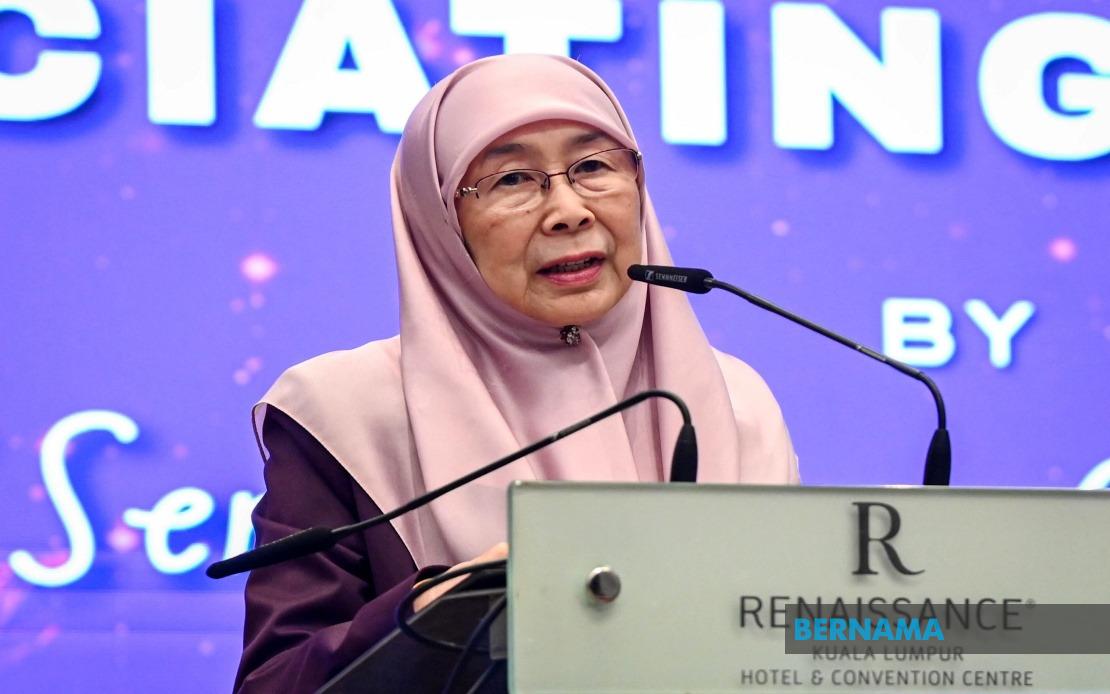
Maternal healthcare systems must place human compassion at their core, even as medical innovation accelerates, according to Datuk Seri Dr Wan Azizah Wan Ismail, who believes that the technological advances reshaping obstetrics must never overshadow the emotional and psychological needs of expectant mothers and their families. Speaking at the launch of the 16th Malaysian Obstetric Anaesthesiology Symposium (MyOASym) 2026 in Kuala Lumpur, the Prime Minister's wife articulated a vision for healthcare delivery that balances clinical precision with human dignity, suggesting that excellence in maternal care cannot be reduced to laboratory results and instrumental outcomes alone.
The challenge facing modern obstetrics has become increasingly multifaceted. Healthcare systems across Malaysia and the region are confronting a rising tide of complex maternal cases—pregnancies involving women of advanced maternal age, patients with obesity-related complications, those carrying severe cardiac conditions, and cases presenting with life-threatening obstetric haemorrhage. These scenarios demand not merely individual technical expertise but a coordinated, seamless response from teams comprising anaesthesiologists, obstetricians, neonatologists and support staff working in concert. Wan Azizah's intervention underscores a critical tension in contemporary healthcare: the risk that siloed specialisations, each practising excellence in isolation, may fail to deliver the integrated care that complex cases require.
Central to Wan Azizah's message is her assertion that clinical outcomes represent only one dimension of maternal healthcare excellence. The dignity and respect afforded to mothers during pregnancy and childbirth, the emotional support extended to families navigating this vulnerable period, and the quality of communication between healthcare providers and patients constitute equally vital measures of success. This perspective challenges a healthcare culture sometimes dominated by metrics that capture mortality and morbidity rates while leaving invisible the experiences of women whose lives are saved but whose emotional trauma remains unaddressed, or whose physical recovery is successful yet accompanied by feelings of violation or neglect.
To address the integration challenge, Wan Azizah called for systematic implementation of multidisciplinary simulation training across Malaysian medical institutions. These exercises would bring together specialists from different fields to rehearse high-risk scenarios, building muscle memory for crisis situations and, critically, establishing the communication patterns and mutual trust necessary for seamless teamwork under pressure. Such simulations, she argued, transform abstract knowledge of protocols into embodied team competence, ensuring that when genuine emergencies arise, the response is automatic rather than ad hoc. The emphasis on simulation reflects international best practice, where hospitals using structured drills have demonstrably improved outcomes in obstetric emergencies.
Wan Azizah also stressed the importance of institutional systems that detect deterioration early. Early warning systems—protocols that identify subtle changes in a patient's condition before they become critical—can provide crucial windows for intervention. Combined with workplace cultures that encourage clear, non-hierarchical communication, where junior staff feel empowered to voice concerns and senior clinicians listen receptively, these systems can transform potential disasters into recoveries. Her observation that Malaysian healthcare sometimes operates in silos touches a nerve in many institutions, where departmental boundaries and professional hierarchies can impede the fluid information exchange that complex cases demand.
For the younger generation entering obstetric and anaesthetic practice, Wan Azizah offered guidance grounded in both technical and interpersonal development. Curiosity and commitment to lifelong learning are foundational, she suggested, but these must be paired with humility—the willingness to ask questions, to seek mentorship, and to learn from each clinical experience. Equally crucial is the cultivation of empathy alongside technical skill. A junior anaesthesiologist may execute a spinal block with mechanical precision, but if that same practitioner cannot recognise and address a mother's anxiety about the procedure, the care remains incomplete. This advice implicitly critiques medical education systems that sometimes privilege technical mastery over the relational competencies that define excellent clinical practice.
The 16th iteration of MyOASym drew healthcare professionals from across Malaysia as well as international participants from Singapore, Hong Kong and Pakistan, reflecting the symposium's emergence as a regional forum for obstetric anaesthesia. This geographical diversity matters; it signals that the challenges Wan Azizah identified—managing complex pregnancies, integrating multidisciplinary teams, balancing innovation with compassion—transcend national boundaries. Southeast Asian healthcare systems share similar demographic pressures, including rising rates of maternal obesity and advanced maternal age, and similar structural challenges in coordinating care across multiple specialties. The gathering thus provides an opportunity for knowledge exchange and the emergence of shared regional standards.
Malaysia's maternal mortality ratio, while lower than many neighbouring countries, remains higher than ideal for an upper-middle-income nation. Advanced maternal age and pre-existing medical conditions account for a growing proportion of maternal deaths, underscoring that clinical complexity is not merely an abstract professional concern but a lived reality in Malaysian obstetric units. The emphasis on multidisciplinary teamwork and early warning systems directly addresses these demographic shifts. A woman aged 42 with gestational diabetes and mild hypertension may proceed through pregnancy uneventfully, but her case file demands heightened vigilance and coordinated oversight. Systems that ensure such vigilance, and teams trained to respond rapidly if warning signs emerge, represent tangible improvements in safety.
Wan Azizah's framing of compassion as inseparable from innovation also carries implicit critique of healthcare cultures where cost pressures and efficiency metrics dominate decision-making. While resource constraints are real and efficiency important, a system optimised solely for throughput or cost-minimisation risks treating pregnancy and childbirth as mechanical processes rather than profoundly human experiences. The compassion she emphasises is not sentimental but operationally consequential: mothers who feel respected and supported experience better psychological outcomes, are more likely to comply with medical advice, and recover more readily from trauma. Compassion, properly understood, is clinically effective.
Looking forward, Wan Azizah's message suggests several priorities for Malaysian healthcare policy. First, investment in multidisciplinary training infrastructure, including simulation centres equipped to rehearse obstetric emergencies. Second, systematic implementation of early warning protocols across maternity units. Third, cultural change within medical institutions that breaks down silos and encourages integration. Fourth, reframing excellence in maternal healthcare to encompass emotional and relational dimensions alongside clinical outcomes. These are not novel ideas globally, but their articulation at a national symposium by a high-profile government figure signals renewed commitment to maternal healthcare as a policy priority.

