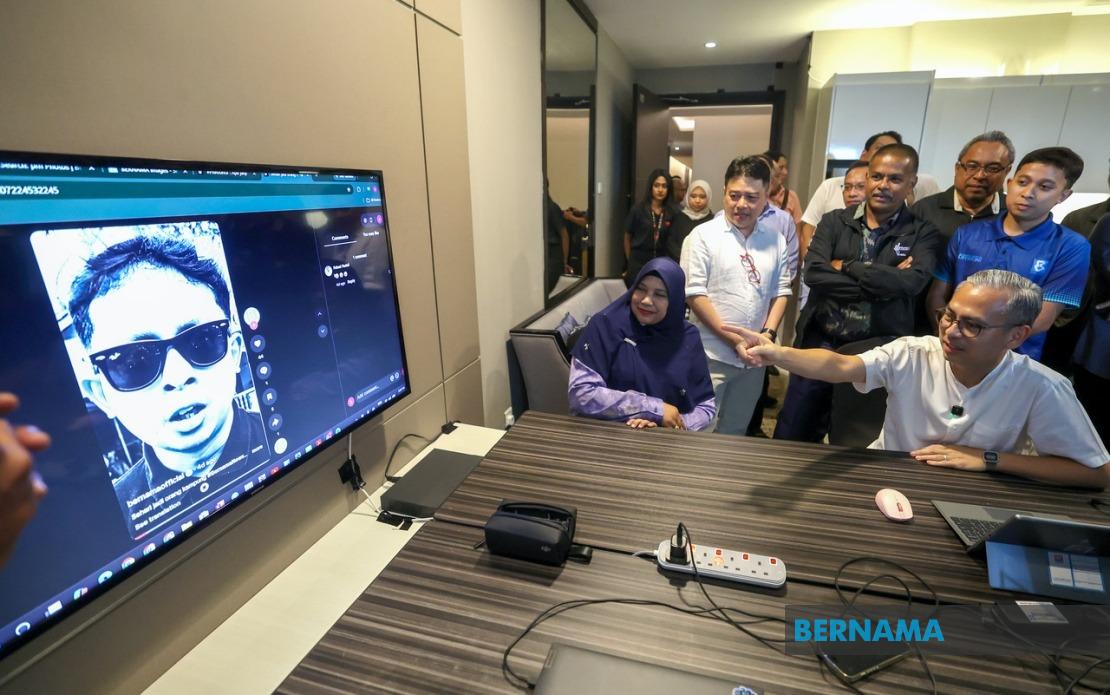
Communications Minister Datuk Fahmi Fadzil has commended the Malaysian National News Agency (Bernama) for demonstrating exceptional commitment during the Johor state election, underscoring the critical role that state media infrastructure plays in ensuring Malaysians receive timely and accurate electoral information. During a visit to Bernama's Operations Centre in Johor Bahru on July 7, Fahmi highlighted how the agency's dedicated workforce and well-organised logistics enabled seamless reporting across the sprawling state, from the southernmost reaches of Tanjung Surat to the northern borderlands near Endau.
The minister's inspection revealed a lean yet efficient operation underpinning one of Malaysia's most significant recent electoral contests. Bernama deployed 44 personnel comprising journalists, cameramen, and photographers to blanket all 56 state constituencies simultaneously. Such comprehensive coverage demanded sophisticated coordination and resource management, particularly given Johor's vast geographic expanse and the logistical complexity of tracking multiple voting locations, candidate movements, and emerging political developments in real time. Fahmi's visit lasted over an hour, during which he examined the technical infrastructure, newsroom setups, and editorial workflows that orchestrated this coverage operation.
The infrastructure supporting this election reporting demonstrates how Malaysia's national news agency maintains institutional capacity to serve as an information backbone during critical democratic moments. The Operations Centre functioned as a nerve centre where journalists, sub-editors, editors, and television production staff coordinated coverage while processing feeds from field teams across the state. This centralised model allows real-time editorial decision-making, quality control, and the rapid dissemination of verified information to news consumers, a particularly important function when electoral misinformation and unverified claims proliferate through social media channels.
Fahmi's recognition of Bernama's operational readiness carries significance beyond mere administrative appreciation. In contemporary Southeast Asia, where media independence and state media's role in elections remain contentious topics, the minister's public endorsement of the agency's professionalism and resource allocation sends a message about the government's commitment to enabling comprehensive election coverage. This transparency approach contrasts with some regional countries where electoral reporting faces tighter constraints, positioning Malaysia as maintaining relatively open media access to polling processes.
The Johor election itself represented a substantial democratic exercise, with 172 candidates competing for the 56 legislative seats. Polling occurred on July 11, following early voting on the same day the minister visited the Operations Centre. Such a large candidate field across numerous constituencies typically generates complex campaign narratives, competing claims, and fast-moving developments that challenge even well-resourced news organisations. Bernama's distributed team structure, stationing journalists across the state rather than concentrating coverage in urban centres, reflected a deliberate strategy to capture electoral dynamics in all constituencies regardless of their political competitiveness or media profile.
Fahmi's specific mention of Bernama Chief Executive Officer Datin Paduka Nur-ul Afida Kamaludin and Editor-in-Chief Arul Rajoo Durar Raj highlighted the management framework orchestrating this coverage. Their preparation and coordination responsibilities extended beyond immediate election logistics to encompassing longer-term institutional planning, staff training, editorial standards, and resource allocation decisions made months in advance. The minister's commendation of their preparations acknowledges how election coverage quality ultimately reflects leadership decisions about investment, priorities, and editorial independence.
The accessibility of accurate election information to Malaysian voters depends significantly on news agency infrastructure like Bernama's. While commercial media outlets and online news platforms certainly contribute to electoral reporting, the national news agency's privileged position as an information source of record—relied upon by other media organisations, educational institutions, and government agencies—gives its coverage particular weight. Comprehensive, on-the-ground reporting from all constituencies ensures that electoral dynamics in less-prominent areas receive documentation rather than being overlooked in favour of more dramatic contests in major urban centres.
Bernama's operational deployment also illustrates how democratic institutions function interdependently in Malaysia's political system. Election Commissions, political parties, government agencies, and media organisations must coordinate sufficient logistics and access to enable voters to make informed choices. The news agency's capacity to deploy 44 personnel simultaneously across multiple constituencies presumes access agreements, transport arrangements, security coordination, and communication infrastructure that require institutional cooperation. These unglamorous operational requirements often determine whether democratic processes achieve their informational objectives.
The minister's public appreciation also functions as implicit recognition that Bernama, despite its government ownership, maintains sufficient editorial autonomy and professional standards to justify such commendation. This distinction matters in Malaysia's media environment, where questions periodically arise about state media independence and whether official news agencies serve primarily propaganda functions or pursue journalism standards. By highlighting specific operational achievements—facilities quality, staff deployment scale, geographic coverage comprehensiveness—rather than political messaging, Fahmi's remarks emphasise performance metrics that neutral observers can evaluate.
For Malaysian readers following Johor politics or interested in how democratic institutions operate, Bernama's election coverage represented a test case of institutional capacity. The agency's willingness to deploy significant resources to ensure all constituencies received coverage, regardless of their political outcomes or media prominence, demonstrates a commitment to comprehensive rather than selective reporting. Journalists stationed in remoter constituencies, covering less-publicised races, perform crucial functions that consumers might not directly observe but that support a democratic information ecosystem.
The operational sophistication visible in Bernama's election coverage centre reflects decades of institutional development in Malaysia's media infrastructure. The agency emerged in 1968 as Malaysia's official news agency, accumulating organisational knowledge, technical capacity, and editorial structures through multiple election cycles, natural disasters, and national crises. This institutional memory and professional capability enable rapid mobilisation during time-sensitive events like elections, where coordination failures or technical breakdowns directly undermine information access.
Fahmi's visit also underscored how state officials increasingly recognise that election integrity depends not solely on voting procedures but on information quality. Voters making informed choices require accurate, comprehensive, timely reporting about candidates, platforms, and campaign developments. Government recognition of this linkage—expressed through ministerial visits acknowledging media preparation—suggests Malaysian policymakers understand that democratic legitimacy requires functional information systems, not merely procedural correctness at polling stations.

