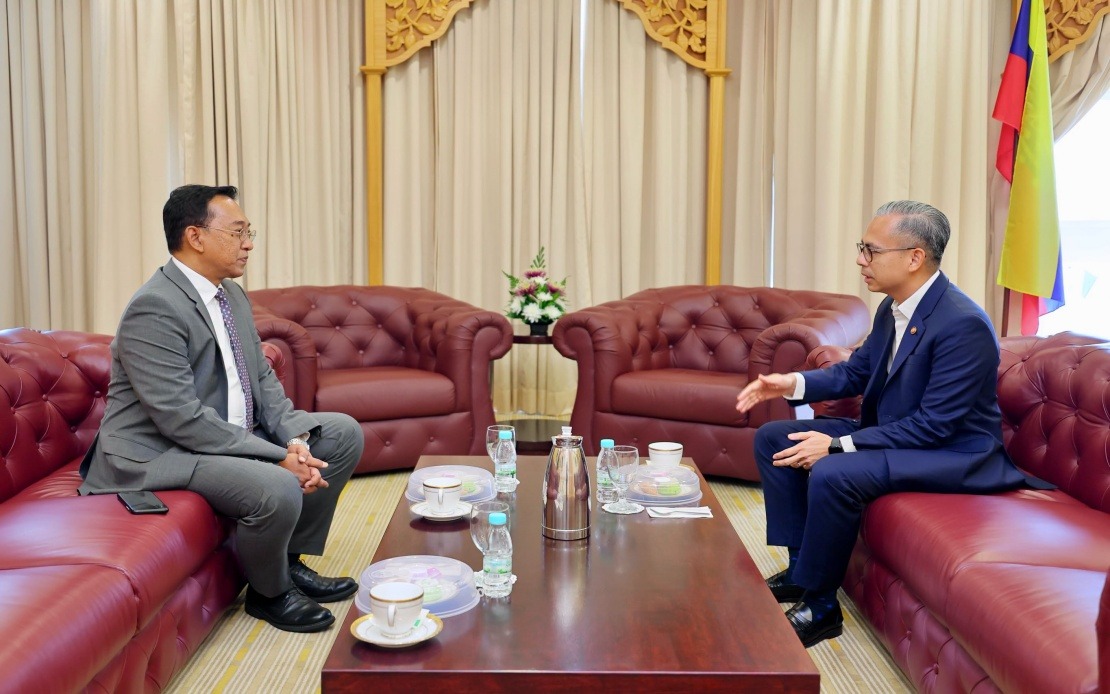
Communications Minister Datuk Fahmi Fadzil recently hosted Malaysia's Ambassador to Lebanon, Anwar Udzir, for a courtesy meeting aimed at deepening the working relationship between the ministry and the diplomatic mission. The encounter underscores the ongoing emphasis within Malaysia's government apparatus on maintaining robust channels of communication with envoys posted across key international locations, particularly in regions where Malaysia maintains significant strategic and economic interests.
During their discussion, Fahmi highlighted the importance of fostering stronger working ties and using the occasion to exchange perspectives on contemporary developments that bear upon Malaysia's standing and objectives on the world stage. Such diplomatic exchanges between senior government officials and ambassadors serve a practical function beyond ceremonial courtesy—they establish clear lines of communication, align policy expectations, and ensure ambassadors are briefed directly on the government's priorities and concerns relevant to their postings.
Anwar Udzir formally received his letter of appointment as Malaysia's Ambassador to Lebanon from His Majesty Sultan Ibrahim, King of Malaysia, on May 18, 2026, making this meeting part of the standard induction process for newly assigned diplomatic personnel. The timing of Fahmi's engagement with the ambassador reflects the ministry's commitment to ensuring fresh envoys understand the current political and communications landscape before they assume their full responsibilities abroad.
Fahmi expressed confidence in Anwar's capacity to discharge his ambassadorial duties effectively, extending warm wishes for success in representing Malaysian interests in Lebanon. This endorsement from a senior minister carries particular weight, as it signals cabinet-level support for the ambassador's mission and demonstrates the interconnected nature of Malaysia's diplomatic, communications, and foreign policy apparatus.
The two officials share a prior working relationship that traces back to Malaysia's hosting of the Asia-Pacific Telecommunity Ministerial Meeting in Tokyo, Japan, the previous year. During that event, Anwar and his team rendered logistical and organizational support, which provided Fahmi with firsthand exposure to the ambassador's professional capabilities and collaborative approach. This existing familiarity likely facilitated a more substantive discussion than typical inaugural courtesy calls, allowing them to transition swiftly from pleasantries into substantive matters of mutual concern.
Lebanon occupies a complex position within Malaysia's regional diplomacy. As a nation straddling multiple geopolitical fault lines in the Middle East, Malaysian representation there serves important functions: monitoring regional stability, protecting Malaysian nationals and interests, and maintaining Malaysia's diplomatic presence in a strategically significant corner of the world. The appointment of experienced diplomats to such positions reflects Kuala Lumpur's recognition of Lebanon's importance despite—or perhaps because of—the significant challenges the country faces.
The ministry's proactive engagement with its ambassadors aligns with broader governmental recognition that communications strategies must extend beyond domestic audiences to shape Malaysia's international image and messaging. A communications minister's direct involvement in ambassador relations signals that the government regards diplomatic communication as integral to its overall communications architecture, not merely the domain of the Foreign Ministry alone.
For Malaysia's diplomatic corps, such high-level receptions validate their roles and reinforce that their work in distant capitals forms part of a coherent, whole-of-government endeavor. When senior ministers take time to meet with ambassadors, it communicates that the government values their perspectives gathered from their posts and regards their contributions as essential to advancing national interests.
Looking forward, Anwar's tenure in Beirut will unfold amid Lebanon's continuing economic and political turbulence, making his role as Malaysia's representative particularly demanding. The direct encouragement from Fahmi and the establishment of this working relationship provide the ambassador with institutional backing as he navigates complex local conditions while advancing Malaysian objectives, whether related to bilateral economic cooperation, protection of Malaysian citizens, or broader Middle Eastern stability concerns.

