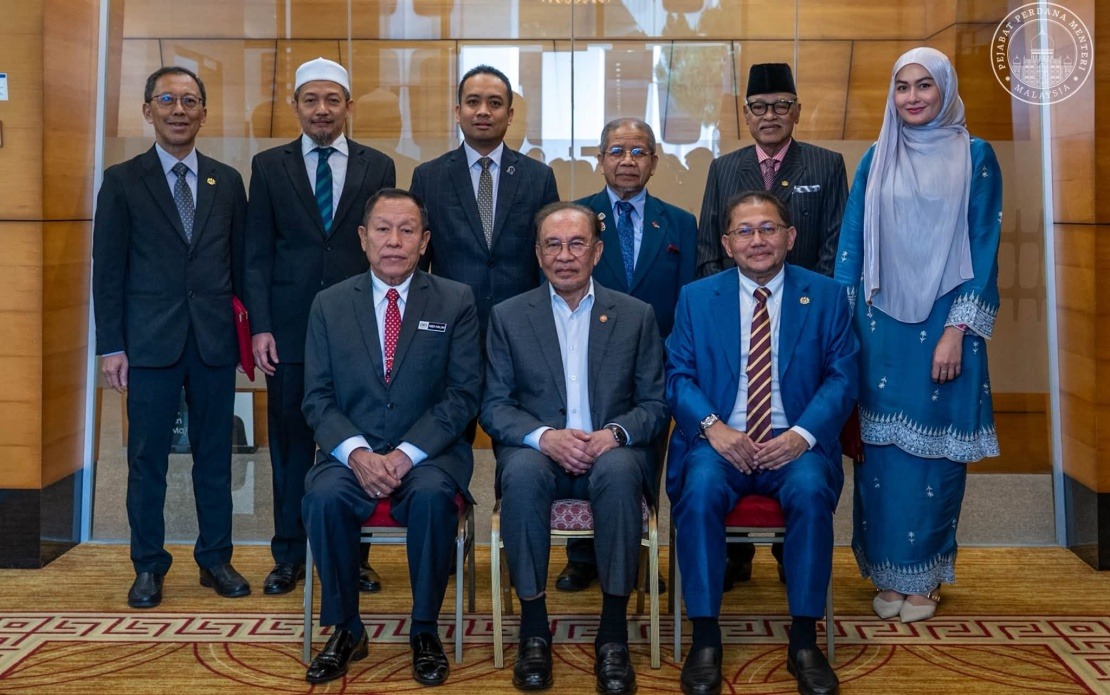
Prime Minister Datuk Seri Anwar Ibrahim has underscored the necessity of a comprehensive, multi-stakeholder approach to addressing corruption, asserting that no single agency can effectively combat the problem in isolation. Speaking at Parliament on June 30, the Prime Minister delivered this message while presenting appointment instruments to new members of two key oversight bodies, signalling the government's commitment to strengthening institutional checks on graft and malfeasance at all levels of the Malaysian system.
The Prime Minister's remarks reflect a strategic recognition that corruption permeates complex institutional structures and requires involvement from diverse actors working in concert. He specifically highlighted the role of enforcement bodies, advisory institutions, both chambers of Parliament, government ministries and agencies, businesses, and grassroots civil society organisations in creating an integrated defence against dishonest practices. This holistic framing acknowledges that sporadic enforcement actions or isolated institutional reforms prove insufficient when corruption enjoys enabling ecosystems of complicity, weak accountability mechanisms, or cultural acceptance across multiple sectors.
Two bodies occupy central positions in Malaysia's anti-corruption architecture: the Special Committee on Corruption (JKMR) and the Anti-Corruption Advisory Board (LPPR). Anwar emphasised that these institutions function as crucial counterbalances within the system, offering independent perspectives and critical assessments that enhance the rigour and effectiveness of anti-corruption campaigns. Rather than operating as ceremonial bodies, their oversight capacity depends on genuine autonomy from political pressure and genuine commitment to candid evaluation of systemic vulnerabilities.
The JKMR, established under Section 14 of the Malaysian Anti-Corruption Commission Act 2009 (Act 694), comprises representatives drawn from both the government coalition and opposition parties within Parliament's upper and lower chambers. This deliberate bipartisan composition aims to ensure that anti-corruption oversight transcends partisan divisions and receives endorsement across the political spectrum. By requiring King's consent and drawing from both parliamentary chambers, the structure seeks to prevent any single political faction from dominating the committee's agenda or conclusions.
The LPPR, operating under Section 13 of the same legislative framework, draws its membership from individuals of demonstrated integrity who have distinguished themselves through exemplary public service or recognised excellence within their professions. This approach prioritises merit and reputation over political affiliation, theoretically insulating the advisory board from electoral cycles and party political considerations. The appointment process, requiring royal consent, adds constitutional weight to the selections and signals their importance beyond ordinary administrative decision-making.
Anwar addressed the newly appointed committee and board members directly, urging them to strengthen their dedication to the anti-corruption agenda despite their diverse professional, educational, and sectoral backgrounds. This emphasis on renewed commitment signals the Prime Minister's view that institutional positions carry moral obligations beyond formal responsibilities. The appointment of fresh cohorts suggests a deliberate strategy to inject new perspectives, maintain vigilance against institutional capture, and signal to the broader public that anti-corruption work receives sustained political priority and resource commitment.
The significance of these appointments extends beyond ceremonial appointment ceremonies. Malaysia's anti-corruption environment remains contested terrain, with persistent questions about whether enforcement actions target particular political opponents selectively, whether powerful individuals enjoy immunity through patronage networks, and whether institutional independence receives genuine protection. Appointments to JKMR and LPPR thus become proxies for assessing whether the government views these bodies as meaningful accountability mechanisms or as public relations exercises designed to project commitment while preserving power structures.
From a Southeast Asian perspective, Malaysia's approach to institutionalising anti-corruption oversight reflects regional patterns of emphasising multi-agency coordination, though with varying degrees of actual independence and effectiveness. Neighbouring jurisdictions pursue comparable strategies through independent commissions, parliamentary committees, and advisory bodies, yet results remain decidedly mixed across the region. The region's experience suggests that institutional design matters far less than factors including prosecutorial independence, political will to pursue cases regardless of target identity, adequate resource allocation, and cultural shifts that elevate integrity as a valued criterion for leadership selection.
The Prime Minister's emphasis on private sector and civil society participation acknowledges that government corruption often intertwines with business malfeasance, corporate bribery, procurement fraud, and kickback schemes. Without active engagement from corporate compliance officers, business associations, non-governmental organisations, media scrutineers, and whistleblowers within companies, enforcement agencies inevitably lack visibility into schemes that involve both public officials and private interests. This reality makes business and civil society participation genuinely essential rather than merely symbolic.
Public sector participation in anti-corruption efforts requires that government ministries and agencies themselves demonstrate commitment through internal accountability mechanisms, conflict-of-interest protocols, asset declaration schemes, and transparent procurement processes. When the public sector operates with apparent impunity from its own anti-corruption standards, broader efforts lose credibility and public cooperation diminishes. The Prime Minister's invocation of public sector involvement thus implicitly acknowledges that government institutions themselves require self-reform alongside external oversight.
For Malaysia specifically, anti-corruption efforts carry particular weight given historical concerns about governance standards, ongoing prosecutions of prominent political figures, and public scepticism regarding whether enforcement remains consistent or selective. The appointment of fresh committee members, framed as reflecting renewed commitment, must demonstrate tangible outcomes through increased prosecution cases, higher conviction rates, and visible consequences for malefactors across all income brackets and political affiliations. Without observable results translating commitment into accountability, public scepticism will likely intensify despite institutional rhetoric.
The constitutional framework requiring Yang di-Pertuan Agong's consent for appointments adds protective dimensions, theoretically preventing any administration from unilaterally stacking these bodies with friendly figures while simultaneously distancing the Ruler from partisan politics. This arrangement reflects Malaysia's constitutional monarchy system, where the Crown serves as an arbiter of institutional independence and guardian of constitutional processes. Whether this safeguard functions effectively depends on whether the Ruler's role receives genuine respect and whether constitutional conventions remain binding on political actors.
Moving forward, the effectiveness of these newly constituted bodies will depend substantially on whether they receive adequate funding, staff support, and operational autonomy from government influence. Malaysian civil society and opposition parties will likely scrutinise their activities and recommendations, assessing whether they represent genuine independent voices or become instruments of government control. The multi-stakeholder approach Anwar articulates remains theoretically sound, but its practical success requires sustained commitment beyond this appointment ceremony and resistance to institutional capture as political circumstances shift.

