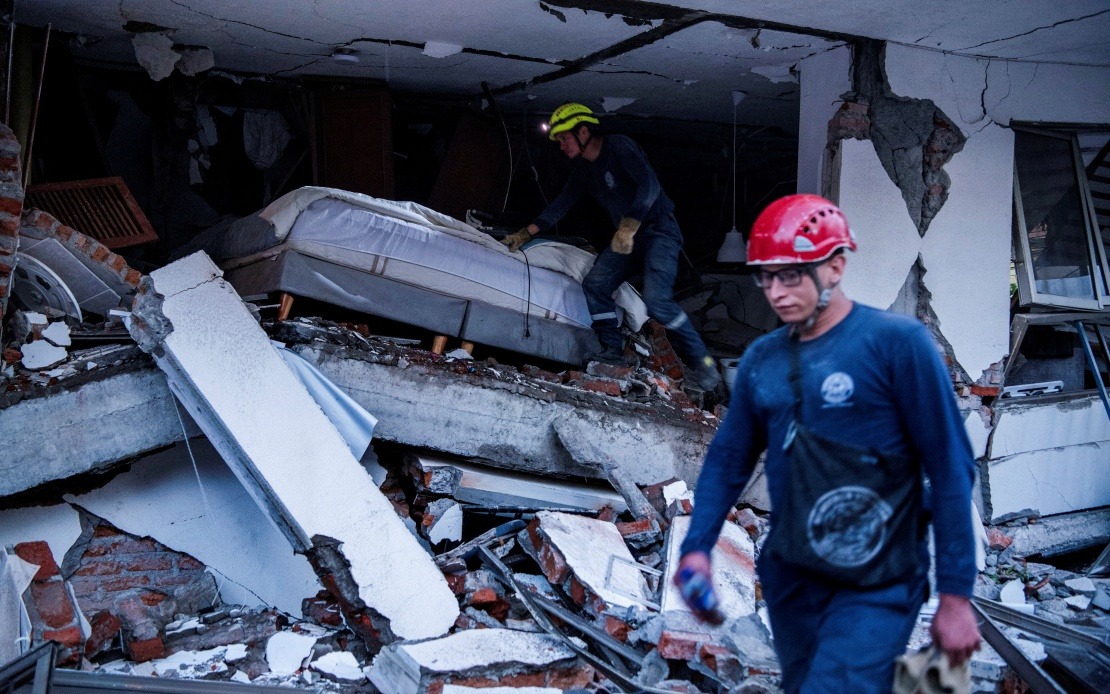
Western Colombia faces a humanitarian crisis following a devastating earthquake that claimed at least 132 lives and left over 570 people wounded, according to the latest government assessment. The 7.4 magnitude tremor, which struck early Monday morning, has triggered one of the country's most significant natural disaster responses in recent years, prompting President Abelardo de la Espriella to declare a nationwide disaster emergency to mobilize relief resources and coordinate rescue operations across affected regions.
The seismic event, centered near San Jose del Palmar in Choco department at a depth of 96 kilometres, unleashed widespread destruction across a vast geographic area. Preliminary surveys indicate that 32 municipalities across the country sustained serious damage, though the impact concentrated heavily in five departmental capitals that remain under red alert status: Pereira, Cali, Quibdo, Manizales, and Armenia. This broad geographic footprint underscores the earthquake's significant magnitude and the extensive infrastructure damage requiring coordinated national attention.
Pereira emerged as the hardest-hit city, accounting for nearly half of all confirmed deaths with 60 fatalities recorded so far. The Pacific coastal city of Cali reported 15 deaths, while Quibdo and Manizales suffered eight and four deaths respectively. These casualties reflect the varying degrees of structural vulnerability across Colombia's urban centers, with older construction standards in some regions proving less resistant to seismic forces. The continuing search-and-rescue operations in collapsed structures suggest that casualty figures may yet rise as emergency workers clear rubble in the coming days.
Physical destruction has been considerable and far-reaching. Structural engineers and emergency coordinators have documented at least 86 building collapses throughout the affected zones, with significant numbers of additional structures sustaining damage that renders them uninhabitable or potentially dangerous. Beyond immediate casualties and displacement, the structural devastation carries long-term implications for housing, commerce, and service delivery in these regions. The need for careful assessment of standing structures to prevent secondary collapses has slowed rescue operations and complicated estimates of total property damage.
Critical national infrastructure has been significantly disrupted. Seven airports across Colombia have suspended operations due to earthquake-related damage and safety concerns, hampering both emergency response logistics and general civilian mobility. The disruption to air transport compounds challenges for relief organizations attempting to deliver medical supplies, food, and emergency personnel to remote or isolated affected communities. Restoration of airport operations has become a priority for authorities seeking to maintain supply chains and facilitate the movement of medical teams to areas with high casualty concentrations.
The earthquake struck at 7:34 am local time, a timing that likely contributed to the relatively high death toll by catching residents and workers in occupied buildings during the morning hours. Had the tremor occurred at night, casualties might have been somewhat lower since many people would have been in single-story homes rather than multi-story buildings. Conversely, the daylight timing may have expedited initial rescue responses as emergency services could mobilize quickly without darkness complicating operations.
International observers and regional partners have begun monitoring the humanitarian situation closely. The Chinese Embassy in Colombia immediately activated emergency protocols to assess the welfare of Chinese nationals throughout the country. While the embassy reported that no Chinese citizens had been killed or injured in the initial aftermath, ongoing assessments continue as rescue operations extend into affected areas. This international dimension reflects how natural disasters in one country can have diaspora-related implications requiring coordinated diplomatic responses.
For Southeast Asian observers, the Colombian earthquake underscores ongoing vulnerabilities across the Pacific Ring of Fire and other seismically active zones worldwide. While the region faces different geological hazards—with Indonesia, the Philippines, and Malaysia having varying earthquake risks—the Colombian experience demonstrates the importance of building codes, early warning systems, and rapid emergency response protocols. The incident provides instructive lessons regarding how nations with significant seismic exposure must maintain preparedness standards and ensure that infrastructure development prioritizes resilience against natural hazards.
The Colombian government's declaration of national disaster status triggered automatic activation of emergency management frameworks designed to coordinate federal, regional, and municipal resources. This administrative mechanism enables rapid deployment of medical personnel, establishment of field hospitals, procurement of emergency supplies, and mobilization of military assets for search-and-rescue missions. The speed and scale of response will substantially influence casualty outcomes and the pace of recovery in coming weeks.
Reconstruction efforts will extend far beyond immediate rescue operations. Colombia faces the complex challenge of simultaneously managing ongoing emergency response while beginning rapid assessment of structural damage, clearing debris, and planning for displaced persons requiring temporary and permanent housing solutions. The economic costs will extend across multiple sectors including construction, tourism, and commerce as businesses in affected cities attempt to resume operations amid infrastructure damage and reduced consumer activity.

