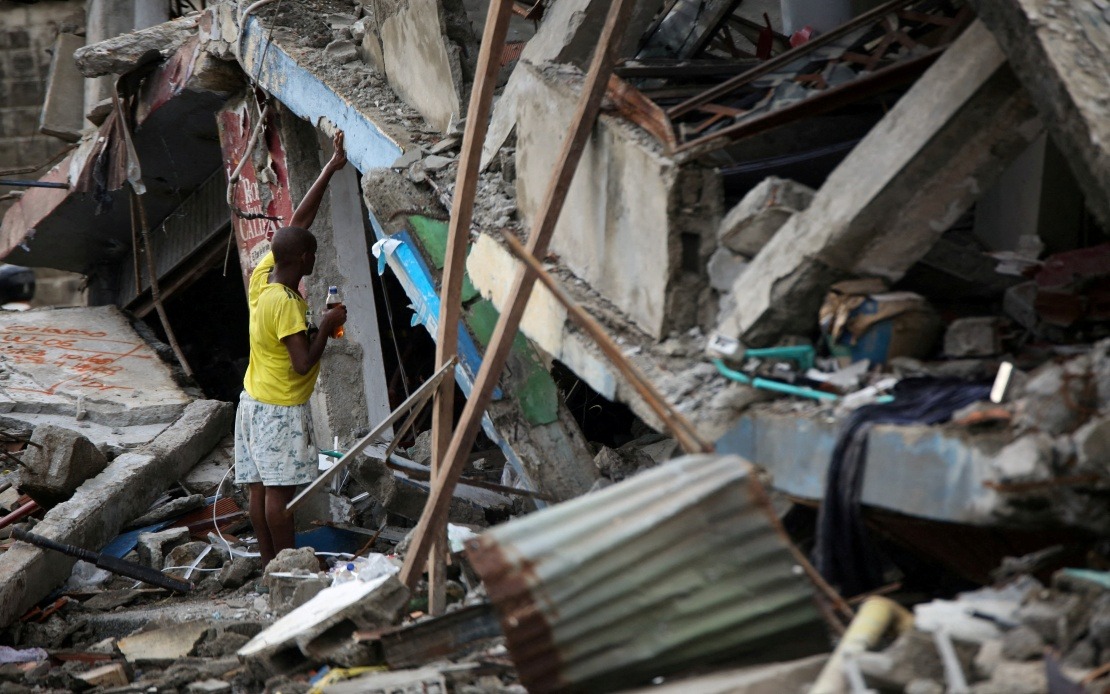
Colombia is grappling with an extraordinarily complex disaster scenario as rapidly spreading wildfires sweep across the nation just days after a powerful earthquake devastated swathes of the country. The convergence of these two major natural catastrophes has stretched emergency services to their absolute limits, creating a situation where authorities must divide already-strained resources between competing crises. The timing could hardly be more calamitous for a nation still reeling from the 7.4 magnitude earthquake that struck on August 10, killing 288 people and destroying over 12,500 homes across multiple regions.
The wildfire emergency has escalated with alarming speed. The Institute of Hydrology, Meteorology and Environmental Studies (IDEAM) reported that 344 municipalities were placed under red alert for wildfire threats in a single day—a staggering 93 per cent surge that underscores the severity and pace of the crisis. The National Unit for Disaster Risk Management confirmed that dozens of active fires are concentrated in critical agricultural and populated departments including Tolima, Cesar, Norte de Santander, Antioquia, Narino and Santander. These regions represent some of Colombia's most productive agricultural areas, meaning the fires threaten not only immediate safety but also long-term food security and rural livelihoods.
The scale of destruction from the wildfires alone is already immense. Authorities report that more than 11,000 hectares have been consumed across affected municipalities, encompassing destroyed vegetation, agricultural crops and residential structures. This represents an unprecedented loss of natural resources and agricultural productivity in a single incident. The fires have forced the deployment of firefighting crews, military personnel, emergency responders and aerial support assets in a desperate attempt to contain the blazes before they advance further. However, officials have acknowledged critical shortages in staffing, with firefighting teams from departments including Risaralda—itself impacted by the recent earthquake—being diverted to fight the fires at the expense of their own recovery efforts.
The earthquake that preceded this wildfire catastrophe left behind a sobering toll of human suffering and infrastructure damage. Beyond the 288 deaths, over 4,000 people sustained injuries. The destruction extended to more than 80,000 structures experiencing damage of varying severity, with 12,504 homes completely destroyed. The earthquake's impact devastated communities across multiple departments, displacing families and destroying critical infrastructure including hospitals, schools and government facilities. Recovery operations were already consuming enormous quantities of resources, manpower and operational capacity when the wildfire emergency suddenly erupted.
Environmental and climatic factors are amplifying the disaster. IDEAM's meteorological forecasts present an alarming outlook: there is a 90 per cent probability that the El Niño phenomenon will persist through early 2027, bringing sustained heat anomalies across the region. These temperature anomalies are expected to intensify toward the end of the calendar year, suggesting that Colombia faces not merely a short-term fire crisis but potentially months of elevated fire risk. The current severe heat and arid conditions that have triggered the explosive wildfire growth will likely persist and worsen, complicating both containment efforts and the possibility of natural fire suppression through precipitation.
Adding another dimension to this multi-layered emergency is heightened volcanic activity. Authorities are simultaneously monitoring escalated activity at the Purace volcano in the southern department of Cauca, requiring them to maintain vigilance and preparedness for a potential third major natural disaster. This volcanic threat adds to the psychological burden facing emergency managers and forces them to allocate additional monitoring and response resources to yet another potential crisis point. The convergence of seismic activity, wildfires and volcanic unrest creates an extraordinarily complex operational environment for disaster response coordination.
For Malaysia and the broader Southeast Asian region, the Colombian situation offers critical lessons about disaster preparedness and inter-agency coordination during compound emergencies. While Southeast Asia's disaster profile differs—characterised more frequently by flooding and tropical cyclones—the principle remains relevant: natural disasters often cluster and compound, overwhelming standard response protocols. Malaysia's own experience with simultaneous flooding and landslide events during monsoon seasons parallels Colombia's current challenge of managing multiple simultaneous crises.
The resource allocation dilemma facing Colombian authorities is particularly instructive. In normal circumstances, earthquake recovery consumes a nation's full emergency response capacity for weeks or months. The sudden eruption of a massive wildfire emergency forces impossible choices: should limited helicopter assets support earthquake rescue operations or wildfire suppression? Should already-mobilised military units remain focused on earthquake debris clearance or redeploy to fire containment? These are questions for which there are no good answers, only tragic trade-offs. The Colombian government must essentially choose which victims receive priority attention and which regions must accept delayed recovery assistance.
The economic implications extend far beyond immediate disaster response costs. Agricultural damage from the wildfires will impact commodity prices and rural employment across Colombia's farming sectors. The destruction of crops during harvest season represents not merely current loss but disruption of the entire agricultural marketing chain. Rural communities dependent on coffee, livestock and other agricultural production face compounded economic devastation on top of earthquake impacts. Reconstruction costs for both disaster categories will strain national finances and likely necessitate international humanitarian assistance.
The psychological and social toll on affected populations should not be underestimated. Communities that have just experienced earthquake trauma must now evacuate before advancing wildfires or endure smoke inhalation, property destruction and displacement. First responders and emergency workers face unprecedented mental and physical exhaustion. Schools that might have reopened following the earthquake closure face new evacuations. The cumulative stress on the population creates secondary health crises including respiratory illness, trauma disorders and disrupted access to medical care.
Colombia's crisis underscores how climate change amplifies natural disaster risks beyond traditional individual hazards. The projected persistence of El Niño conditions through 2027 suggests this is not an isolated event but potentially a harbinger of sustained elevated fire risk. Adaptation strategies, including landscape management, forest protection initiatives and community evacuation protocols, will become increasingly critical for Colombian regional governments.

