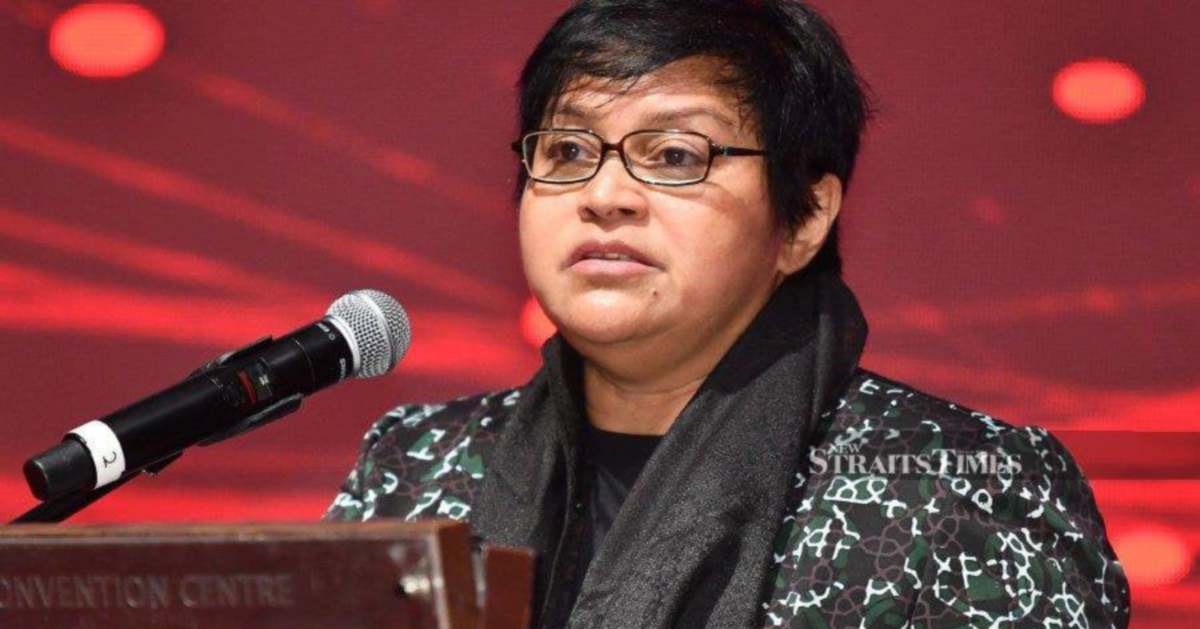
Datuk Seri Azalina Othman Said, the information chief of the United Malays National Organisation (Umno), has drawn a clear boundary around pre-election political negotiations in Johor, asserting that substantive talks about coalition arrangements or unity government formations must be deferred until after electoral results are declared. The statement, made in Putrajaya, reflects a broader cautionary stance within the party leadership as speculation continues to swirl about potential political realignments in Malaysia's southern state.
Her position underscores a growing tension within Malaysian politics between maintaining electoral integrity and the practical realities of coalition-building in a multi-party system. For Malaysian observers, Azalina's comments signal that Umno intends to project itself as a disciplined political force that refuses to prejudge voters through backroom dealings conducted before votes are counted. This messaging is particularly significant for a party that has historically dominated Johor politics and seeks to maintain its electoral credibility with voters who view pre-election coalition talk with scepticism.
The Johor context carries particular weight in Malaysian politics. As the second-largest state by population and a critical economic region, the composition of Johor's state government carries implications beyond state-level politics, often influencing the dynamics and balance at the federal level. Any coalition arrangement in Johor therefore attracts scrutiny not only from local stakeholders but also from national political observers monitoring shifts in the broader political landscape. Azalina's intervention suggests that Umno recognises this importance and wants to ensure that its positioning in Johor reflects genuine electoral strength rather than appearance of predetermined agreements.
This stance also reflects a response to circulating rumours and media speculation that have become routine before state elections in Malaysia. Political analysts suggest that early disavowals of coalition negotiations can serve multiple strategic purposes: they allow parties to maintain a posture of transparency and voter-focused commitment while creating space for negotiations to occur rapidly after results are known. By establishing this temporal boundary, Azalina effectively signalled that Umno will remain open to coalition options post-election while refusing to validate advance speculation that might undermine the party's electoral message.
For the broader Southeast Asian context, Malaysia's approach to coalition formation presents an interesting counterpoint to neighbouring countries with different constitutional arrangements. Unlike systems where coalition agreements are explicitly negotiated before elections and presented to voters, the Malaysian model typically reserves such discussions for the post-election phase. This creates both risks and opportunities: voters lack clarity on who might govern them after they vote, yet political parties retain flexibility to negotiate based on actual electoral outcomes rather than pre-conceived arrangements.
Azalina's comments also carry implications for smaller political parties and independent candidates in Johor who might otherwise bank on pre-election commitments from larger coalition partners. By insisting that coalition discussions must follow the election, Umno is essentially stating that no political entity should treat pre-electoral promises from the party as binding. This approach, while appearing democratic on the surface, can also consolidate power within larger established parties that have greater capacity to negotiate post-election arrangements.
The Johor situation intersects with longstanding questions about the relationship between peninsular Malaysia's two largest states, Johor and Selangor. While Selangor has seen more fluid and competitive politics in recent years with shifting coalitions, Johor has remained more traditionally aligned with Umno and Barisan Nasional structures. Any significant shift in Johor's political composition could ripple through national calculations, making it important for major parties to carefully manage their narratives about potential cooperation.
Azalina's intervention also reflects awareness that early coalition talk can generate unintended consequences. Premature public discussions about potential unity governments or coalition arrangements might depress turnout among supporters who believe outcomes are already predetermined, or conversely, mobilise opposition voters who view such discussions as anti-democratic. By establishing her timeline, Azalina positioned Umno as protecting the electoral process from such distortions.
The practical effect of this position is that Johor voters will proceed to polling stations without official clarity about which coalitions or government formations are on offer, a situation familiar to Malaysian voters but that differs from systems with explicit pre-election coalition agreements. This system places significant reliance on voter familiarity with party positions and expected partnership patterns, which in Umno's case has historically involved cooperation with component parties of Barisan Nasional and, in more recent years, potential openness to Perikatan Nasional arrangements depending on local political circumstances.
Moving forward, Azalina's statement is likely to become a reference point if other parties or analysts attempt to raise coalition discussions before Johor voters vote. It establishes a clear position from a senior Umno figure that frames such discussions as premature and potentially inappropriate. For Malaysian politics observers, the statement provides insight into how Umno intends to manage the post-election period should results provide multiple coalition options, with the party apparently wanting to preserve maximum flexibility while maintaining an appearance of electoral propriety.
The broader implication for Malaysian and Southeast Asian politics is that questions about coalition formation and unity governments remain central to how countries with multi-party systems and Westminster-influenced constitutions actually function in practice. Azalina's comments remind voters and observers that Malaysia's electoral system does not settle government formation definitively on election day; rather, it initiates a negotiation period whose outcomes depend on multiple factors beyond the immediate election results.

