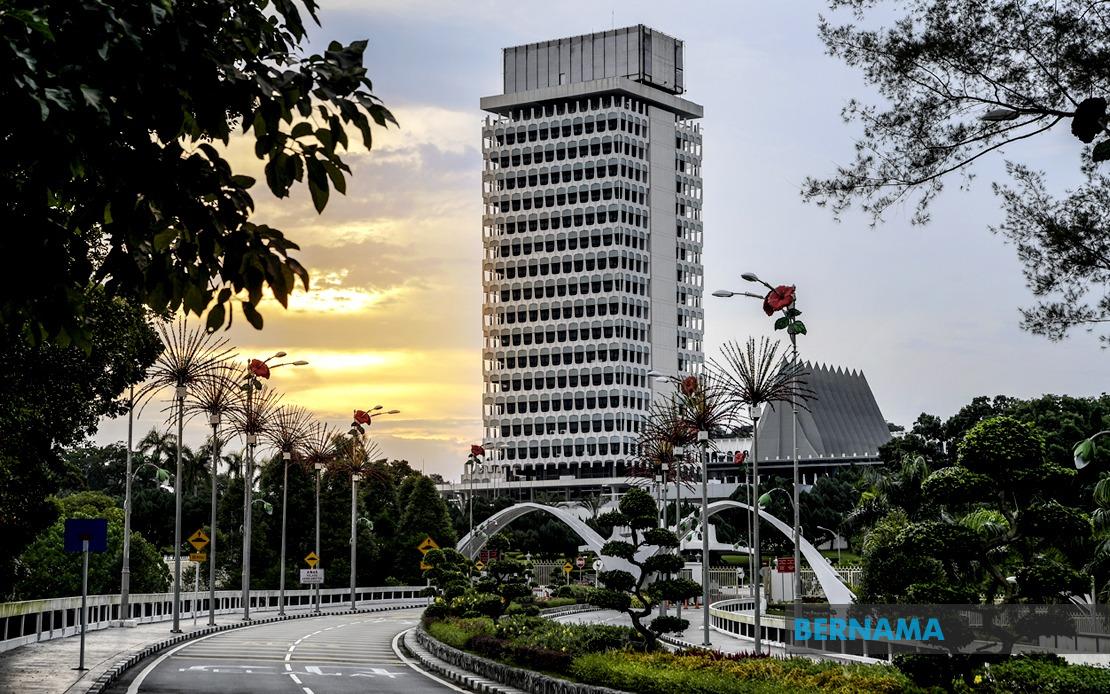
A broad coalition of civil society organisations and individuals has issued a clarion call for Malaysia's parliament to complete its full five-year term, projecting stability that would allow the government to implement sweeping democratic and institutional reforms. The 44 NGOs and 25 signatories, representing diverse constituencies from religious groups to anti-corruption advocates, argue that parliamentary continuity until December 18, 2027 is essential for advancing governance improvements that would benefit all future administrations regardless of political complexion.
The intervention reflects growing concern within Malaysia's civic space about the cycle of early parliamentary dissolutions that have characterised recent Malaysian politics. Instability at the national level has repeatedly disrupted legislative agendas and prevented systematic institutional change. By anchoring the current parliament to its constitutional conclusion, these organisations believe Malaysia can finally create space for the deliberative work that institutional reform demands. The statement explicitly conditions this support on a singular qualifier: the government should retain majority confidence in the legislature, acknowledging the democratic principle that no parliament can operate in fundamental opposition to parliamentary will.
The reform agenda articulated in the joint statement addresses multiple dimensions of Malaysia's democratic architecture, beginning with constitutional architecture itself. The civil society groups propose separating the offices of Attorney General and Public Prosecutor, a structural change intended to insulate prosecution decisions from executive political influence. Equally significant is the proposed 10-year limit on prime ministerial tenure, a measure designed to prevent indefinite executive consolidation of power while creating predictable leadership transitions. These constitutional amendments represent fundamental recalibration of institutional checks and balances that have eroded or remained underdeveloped since independence.
Legislative processes themselves require overhaul according to the joint statement, with particular emphasis on strengthening parliamentary committee structures and streamlining budget deliberation procedures. The coalition advocates enabling private members' bills to be tabled, debated, and enacted with meaningful parliamentary time allocation, currently a marginalised feature of the legislative calendar. These procedural reforms would democratise parliament beyond government control, allowing backbench and opposition legislators genuine legislative agency. For Malaysia's parliament to evolve into an effective institutional check on executive power, such procedural modernisation is foundational.
Transparency and equity in resource distribution emerge as another critical reform dimension. The NGOs call for constituency development allocations to be distributed uniformly among all Members of Parliament regardless of party affiliation, eliminating the current system where government coalition legislators typically receive disproportionate allocations. This change would fundamentally rebalance local governance relationships and reduce incentives for purely instrumental party switching. The proposal extends to state level, urging all 13 state governments to legislate similar equity requirements, creating systemic consistency across Malaysia's federal structure.
Electoral reform proposals acknowledge that procedural fairness extends beyond parliament to voting mechanisms themselves. Expanding postal and absentee voting for overseas Malaysians and those temporarily outside home constituencies responds to demographic realities of a globalised Malaysian population. Simultaneously, the coalition proposes revising the Election Offences Act 1954, presumably to address mechanisms through which electoral conduct has been circumscribed in recent years. These changes would modernise Malaysia's electoral framework within the existing first-past-the-post system while improving inclusivity for geographically dispersed voters.
Moreover, the state-level electoral system itself warrants fundamental restructuring according to the statement. The proposal to introduce party-list proportional representation for state assemblymen alongside traditional single-member constituencies would transform state politics and improve representation of marginalised communities. This mixed-member system could significantly increase women's representation, youth participation, and voices of Orang Asli and minority ethnic groups currently disadvantaged under pure plurality voting. Such systemic change represents perhaps the most ambitious institutional reform among the proposals, with potential to reshape state political culture.
The creation of new institutional safeguards completes the reform architecture. An Ombudsman Act would establish independent complaint mechanisms against government administrative action, while a Freedom of Information Act would mandate transparency in government decision-making and document access. These accountability mechanisms recognise that democratic governance requires institutional capacity to investigate and publicise governmental failures. Malaysia's absence of comprehensive freedom of information legislation particularly constrains civil society oversight capacity and limits journalists' ability to investigate bureaucratic dysfunction.
Prime Minister Datuk Seri Anwar Ibrahim receives specific direction to convene a cross-party leaders' summit encompassing government and opposition parties, suggesting that meaningful institutional reform requires consensus building beyond the current coalition. This summit proposal acknowledges political reality: constitutional amendments and electoral law changes require parliamentary supermajorities that only inclusive cross-party negotiation can achieve. The implicit message is that institutional reform transcends narrow coalition interest, benefiting future governments regardless of composition.
The timing and composition of this initiative carry significant meaning for Malaysian politics. Emerging just past the midpoint of the parliamentary term, this statement signals that civil society actors believe sufficient time remains for substantive legislative work, yet pressure is mounting as parliamentary dissolution becomes conceivable. The signatory organisations span Malaysia's civic spectrum—from religious youth movements like ABIM to secular governance reformers like IDEAS, from establishment bodies like the Chinese Assembly Hall to newer anti-corruption voices like C4 Center. This breadth suggests genuine cross-communal consensus around institutional reform, transcending the sectarian and ideological divisions that often fracture Malaysian civil society.
For Southeast Asian observers, Malaysia's institutional reform conversation carries regional significance. As the region grapples with democratic backsliding and executive consolidation across multiple jurisdictions, Malaysia's potential pathway of legislative-driven institutional reform offers instructive lessons. The emphasis on procedural democracy, transparency mechanisms, and representation expansion reflects contemporary democratic thinking that emphasises inclusivity and accountability. Whether Malaysia's government and opposition can convert this civil society agenda into legislative reality will test whether the region's largest English-speaking democracy can still generate institutional innovation despite profound political fragmentation.

