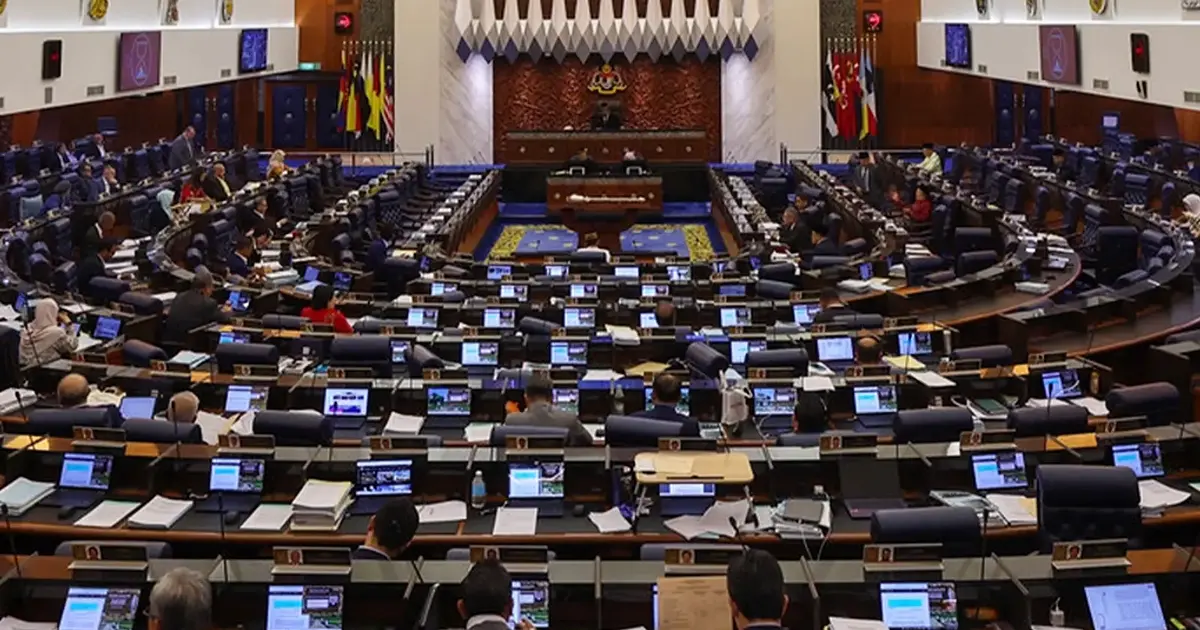
Malaysian non-governmental organisations have made a formal appeal to the country's political leadership to preserve parliamentary stability while simultaneously pursuing institutional reforms that enjoy bipartisan support. The groups are advocating for Prime Minister Datuk Seri Anwar Ibrahim to convene a high-level gathering bringing together key figures from both the ruling coalition and opposition benches, with the explicit goal of drafting and implementing a shared reform agenda before the nation heads to general elections.
The initiative reflects growing concern within the civil society sector that Malaysia's political cycle has become increasingly volatile and fractious, with frequent calls for snap elections and parliamentary dissolution creating uncertainty that undermines long-term planning and governance effectiveness. By encouraging the completion of the current parliamentary term, NGOs are essentially asking all major political actors to resist the temptation of seeking electoral advantage through early dissolution, a pattern that has characterised Malaysian politics over recent years and contributed to policy discontinuity.
The proposed summit represents an attempt to transcend the traditional adversarial nature of government-opposition relations by identifying areas of genuine consensus where meaningful institutional change could occur. Rather than allowing partisan divisions to prevent progress on substantive matters, the NGO proposal envisions a situation where both ruling and opposition parties recognise mutual benefit in delivering reforms that enhance democratic governance, transparency, and accountability before the electoral playing field resets.
Such cross-party reform initiatives have precedent in other democracies, where governments and opposition have occasionally cooperated on constitutional amendments, electoral system improvements, or anti-corruption measures deemed essential to strengthening the democratic fabric. In Malaysia's context, this approach would signal a maturation of political discourse beyond zero-sum competition, acknowledging that certain institutional improvements serve the broader national interest rather than the narrow electoral fortunes of particular coalitions.
The timing of this appeal carries significance given Malaysia's recent political turbulence, including shifts in parliamentary coalitions, debates over the statutory ceiling for elected officials, and ongoing tensions between federal and state governments. Civil society actors clearly view the current juncture as an opportunity to reset political norms and establish collaborative frameworks before electoral pressures intensify and make consensus-building more difficult. The call essentially asks politicians to invest political capital in systemic improvements rather than immediate electoral positioning.
For the government led by Anwar, such a summit would require demonstrating confidence in its parliamentary majority while simultaneously showing willingness to incorporate opposition input into the reform agenda. This posture could enhance the administration's legitimacy by framing reforms as products of genuine consultation rather than imposed measures. Simultaneously, opposition parties would face pressure to demonstrate constructive rather than merely obstructive engagement, a positioning that could strengthen their standing among voters seeking substantive alternatives.
The NGO position implicitly critiques the pattern of shorter parliamentary cycles that have become routine in Malaysian politics, where dissolution and snap elections are deployed as tactical maneuvers rather than responses to genuine parliamentary dysfunction. Allowing the current parliament to run its natural course would break this cycle and restore predictability to Malaysia's political calendar, benefiting businesses, civil servants, and the broader public who operate in an environment of chronic electoral uncertainty.
The proposed reform agenda would likely encompass several domains. Electoral system improvements, including redistricting and boundary commission independence, feature prominently in Malaysian civil society discussions. Anti-corruption measures strengthening independent institutions, enhancing parliamentary oversight mechanisms, and improving budget transparency would logically form part of any comprehensive reform package enjoying genuine cross-party endorsement. Additionally, reforms addressing federal-state relations and clarifying the institutional roles of various constitutional bodies could reduce friction points that have periodically destabilised governance.
For Malaysia's regional standing and international relations, demonstrating the capacity for collaborative governance on substantive reforms would project an image of institutional maturity. Neighbouring countries in Southeast Asia, many struggling with polarisation and democratic backsliding, might view Malaysia's experiment with constructive opposition participation as a positive model. Similarly, foreign investors and international organisations often value political stability and evidence of consensual governance over partisan confrontation.
The NGO initiative also reflects broader global trends where civil society actors seek to elevate political discourse beyond electoral competition toward governance quality and institutional robustness. This positioning reflects sophisticated understanding that democratic legitimacy ultimately depends not merely on election outcomes but on the functionality, integrity, and responsiveness of institutions between elections. By mobilising around this agenda, Malaysian NGOs are attempting to create political space for reform-minded actors across party lines.
Implementing such a cross-party pact would require extraordinary political will, as it demands that parties potentially sacrifice short-term advantages for longer-term institutional gains. The government must demonstrate sufficient security in its parliamentary position to risk opposition input into reform design, while opposition parties must credibly commit to engagement rather than opportunistic obstruction. Whether Malaysia's current political leadership possesses the strategic vision and institutional confidence to embrace such an approach remains uncertain, but the NGO appeal represents an important signal that constituencies beyond electoral politics are demanding higher standards of political conduct and governance.
The success of this initiative would ultimately indicate whether Malaysian democracy has evolved sufficiently to move beyond perpetual electoral competition toward deeper questions of institutional quality, governmental effectiveness, and collective problem-solving capacity.

