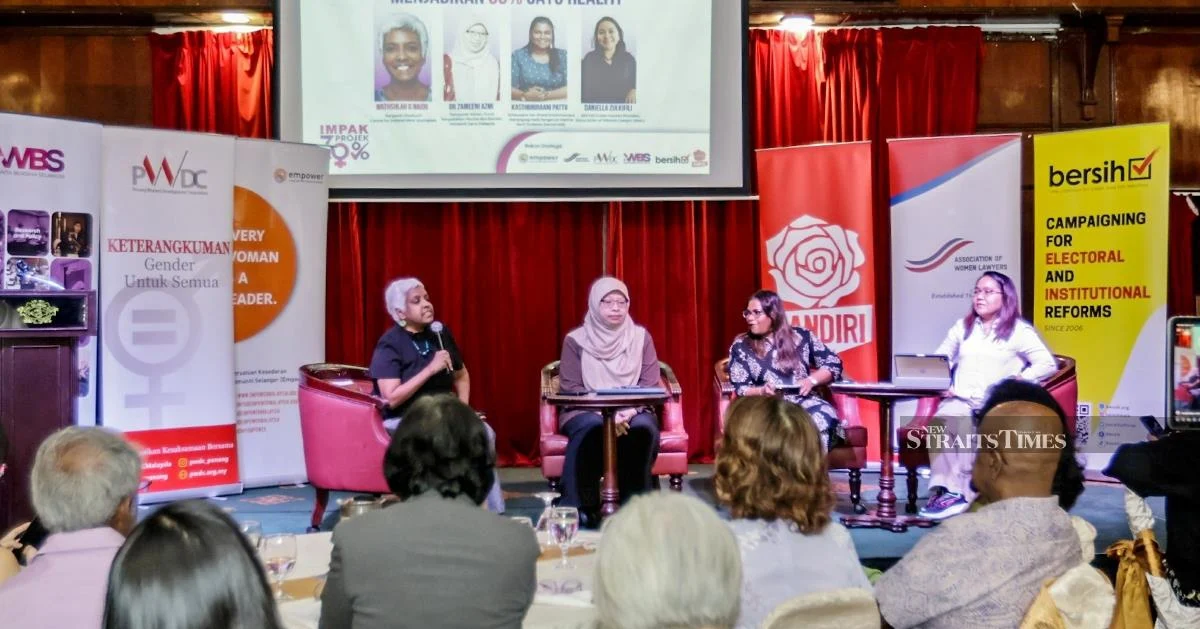
A broad coalition of civil society organisations has formally presented the government with a memorandum and draft legislation aimed at significantly improving the representation of women in electoral politics. The submission, delivered in Kuala Lumpur, seeks to mandate that all political parties nominate a minimum of 30 per cent women candidates for the upcoming general election, representing an ambitious effort to reshape Malaysia's political landscape ahead of what analysts anticipate could be a pivotal electoral contest.
The initiative underscores mounting pressure from activist networks and advocacy groups to address persistent gender imbalances in Malaysian politics. Women have historically constituted a minority of parliamentary candidates across the major political coalitions, with their representation in elected office remaining substantially below parity levels. This disparity has prompted sustained campaigns by civil society to embed gender equity measures directly into electoral regulations, seeking to move beyond voluntary commitments that have produced limited results over successive election cycles.
The proposed legislation would establish a binding framework rather than relying on party-level goodwill or internal guidelines. By codifying the 30 per cent threshold into law, the drafters argue that such a mechanism would create enforceable obligations that apply uniformly across all registered political parties, eliminating the inconsistencies that have characterised voluntary approaches. This legal architecture reflects international best practices documented across numerous democracies that have adopted quota systems as a pathway toward gender balance in political candidature.
The 30 per cent target, while ambitious by Malaysian standards, sits below full parity and represents what advocates characterise as a pragmatic stepping stone toward eventual equality. Research cited by gender advocacy organisations demonstrates that incremental increases in women's candidature tend to normalise female participation in electoral competition, gradually shifting voter perceptions and party recruitment practices. Several Southeast Asian neighbours, including Thailand and Indonesia, have experimented with candidate quota mechanisms, providing instructive models regarding implementation challenges and effectiveness.
The timing of this submission carries strategic significance. As Malaysia approaches what political observers suggest could be a consequential general election, the coalition's push capitalises on heightened public discourse around democratic renewal and institutional reform. The submission provides policymakers with concrete legislative text rather than merely conceptual demands, potentially lowering barriers to serious government consideration. Civil society actors have calculated that framing the initiative as foundational democratic improvement—rather than narrowly as a women's issue—may broaden political acceptance among parliamentary stakeholders.
Implementation of such legislation would necessarily involve clarifying several procedural questions. The draft presumably addresses whether the quota applies universally across all electoral constituencies or permits certain exemptions, how compliance would be monitored and enforced, and what sanctions might attach to violations. These technical dimensions frequently prove decisive in determining whether quota systems achieve their stated objectives or become subject to creative workarounds that preserve the formal appearance of compliance whilst circumventing substantive intent.
Political parties themselves occupy contradictory positions regarding this proposal. Many have publicly endorsed gender equity in principle, yet face internal resistance from entrenched power structures that benefit from existing candidate selection processes. Party leaderships must weigh rhetorical commitments to women's empowerment against practical concerns regarding nomination contests, regional power dynamics, and incumbent protection. The legal mandate would eliminate discretion precisely where such discretion has historically permitted marginalisation of potential women candidates.
The Malaysian electorate has demonstrated increasing receptiveness to women candidates in recent elections, with voters demonstrating preferences based on qualification and performance rather than exhibiting systematic bias against female representatives. However, the disparity between voter openness and candidate nomination patterns reveals that supply-side constraints—relating to party gatekeeping rather than demand-side voter resistance—constitute the primary obstacle to women's political participation. Legal quota mechanisms directly target this gatekeeping problem.
Regional context matters considerably for understanding this initiative's potential impact. Throughout Southeast Asia, women remain significantly underrepresented in national legislatures despite substantial educational attainment and workforce participation. Malaysia's score on relevant international indices of gender parity consistently lags behind several regional counterparts, reflecting both cultural factors and institutional arrangements that lack explicit equity safeguards. This submission positions Malaysia as potentially joining a growing trend of Asian democracies incorporating candidate quotas into electoral frameworks.
The government's response to this proposal remains uncertain. While successive administrations have rhetorically supported women's empowerment, translating such commitments into legislative action has historically proceeded slowly and incrementally. The coalition's strategy of providing detailed draft legislation may circumvent common obstacles relating to legislative drafting capacity or political uncertainty, placing responsibility squarely on government decision-makers to either accept or explicitly reject a fully-formed proposal.
Successful passage of such legislation would establish Malaysia as a regional leader in institutionalising gender equity within electoral processes. However, the real determinant of effectiveness would lie in implementation rigour and political commitment to ensuring meaningful compliance across diverse party structures operating within Malaysia's complex federal-state political architecture. The submission therefore represents both a beginning and an invitation for sustained engagement throughout the legislative process.