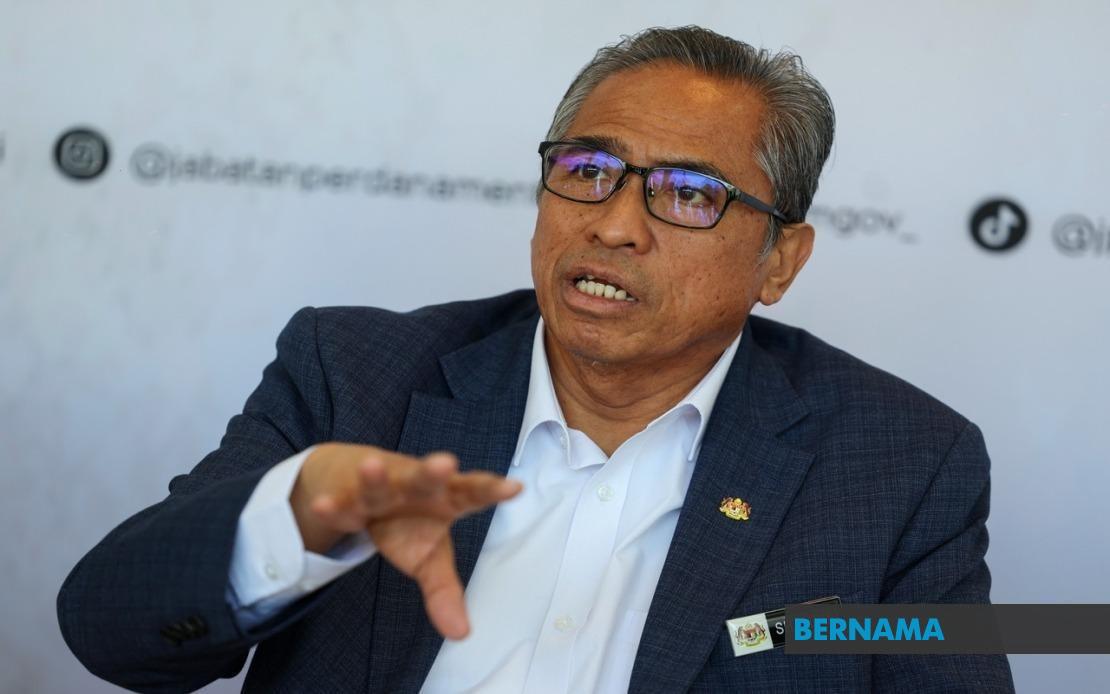
The machinery of Malaysia's public service must act as an effective instrument for converting diplomatic breakthroughs into tangible national prosperity, Tan Sri Shamsul Azri Abu Bakar, the Chief Secretary to the Government, said on June 24. Speaking in Kuala Lumpur, he stressed that the bureaucracy cannot simply celebrate the country's improved geopolitical positioning but must instead channel its efforts toward realizing the economic and investment opportunities that have been secured through diplomatic channels.
Prime Minister Datuk Seri Anwar Ibrahim's recent working visits to Russia and Turkmenium have positioned Malaysia more favourably within global trade and investment networks, according to the Chief Secretary. These engagements represent more than symbolic achievements in foreign policy; they form the foundation for expanded market access and deepened cooperation with both new and established trading partners. However, Shamsul Azri made clear that unless the domestic bureaucracy mobilizes quickly and effectively, these diplomatic gains risk remaining unrealized opportunities rather than sources of national benefit.
The Chief Secretary's remarks underscore a critical tension in Malaysia's development strategy. While the country's diplomatic corps and political leadership have successfully enhanced the nation's international standing, the public service apparatus responsible for implementing trade agreements, facilitating investment, and managing regulatory frameworks must itself undergo a transformation. Officials in economic ministries and trade-related agencies must demonstrate heightened preparedness to move swiftly when opportunities arise, abandoning bureaucratic sluggishness in favour of agile decision-making that matches the pace of contemporary global commerce.
Shamsul Azri emphasized that government officials require not merely technical competence but a fundamentally altered mindset. Public servants must cultivate what he termed a "global perspective," enabling them to comprehend the structural shifts occurring in the international economic order. This intellectual reorientation matters because Malaysia faces genuine risk of falling behind competitors if its bureaucracy continues operating according to conventional frameworks unsuited to the complexity of modern geopolitical and commercial dynamics. Southeast Asian nations including Vietnam and Indonesia have made aggressive moves to attract foreign investment; Malaysia's civil service must match their agility.
The Chief Secretary specifically highlighted the importance of the "Ease of Doing Business" initiatives, positioning these not as administrative conveniences but as strategic tools for competitive advantage. When international companies evaluate potential investment destinations, they assess not only policy environments but the practical efficiency with which governments implement those policies. A business-friendly legal framework means little if permit processes require months and inter-agency coordination proves cumbersome. Malaysia must demonstrate that it can translate investor-friendly policies into frictionless execution.
Crucially, Shamsul Azri linked these operational improvements to the government's broader MADANI Diplomacy framework and the "Whole-of-Government" approach championed by the current administration. These represent not merely rhetorical constructs but operational imperatives requiring that all government agencies, from the trade ministry to local authorities, coordinate seamlessly around shared national objectives. The chief diplomatic initiatives lose their power if fragmentation within the government creates confusion or delays for investors attempting to navigate multiple agencies.
The emphasis on the "internationalisation" enabler within Malaysia's Public Service Reform Agenda (ARPA) signals an institutional recognition that the civil service itself requires structural modernization. Building a high-capacity public service responsive to international-standard expectations demands investment in training, systems modernization, and cultural change within government organizations. This is not an optional enhancement but a prerequisite for Malaysia to fulfill its diplomatic ambitions and capitalize on the relationships Prime Minister Anwar Ibrahim has carefully cultivated.
From the perspective of Malaysian workers and communities, the significance of these reforms extends beyond abstract discussions of bureaucratic efficiency. When diplomatic channels secure new market access or attract foreign investment, the practical benefits materialize through job creation, wage growth, and expanded economic opportunities. The Chief Secretary specifically noted that the civil service must ensure the creation of "high-income job opportunities for locals," recognizing that diplomatic success divorced from domestic prosperity gains fails to serve the national interest. This framing transforms the efficiency debate from one of mere administrative competence into a question of whether government can deliver on its implicit social contract.
The Chief Secretary's remarks also implicitly acknowledge Malaysia's vulnerability within competitive regional dynamics. As ASEAN nations compete for foreign direct investment and global supply chain integration, the nation that combines attractive policies with responsive bureaucratic implementation gains advantage. Vietnam's success in attracting electronics manufacturing has depended partly on a government apparatus capable of moving swiftly on investor requests. Malaysia possesses superior infrastructure and established advantages, but only if these assets are paired with a modernized civil service.
Shamsul Azri's call for strategic cooperation networks extending "beyond conventional boundaries" suggests recognition that Malaysia's bureaucracy has historically operated within somewhat insular frameworks. Breaking these patterns requires deliberate effort to build relationships with international counterparts, understand foreign regulatory environments, and position Malaysian officials as credible international partners. When foreign investors and trading partners deal with Malaysian government representatives, they must encounter professionals capable of discussing complex trade arrangements and investment structures with sophistication.
The commodity supply security concerns mentioned by the Chief Secretary reflect Malaysia's ongoing economic vulnerabilities, particularly regarding critical raw materials and energy sources. Strengthening diplomatic relationships with Russia and Central Asian nations partly addresses these strategic concerns, but again requires the domestic machinery to operationalize these relationships through effective procurement and supply chain management. The public service thus becomes instrumental not merely in economic advancement but in national resilience and resource security.
Ultimately, the Chief Secretary's intervention signals that Malaysia's political leadership recognizes a critical bottleneck in national development strategy. The gap between diplomatic achievement and economic realization often reflects not policy failure but implementation failure. Closing this gap demands that the public service embrace international-standard practices, abandon risk-averse bureaucratic cultures, and align itself explicitly with the government's geopolitical ambitions. For Malaysia, the challenge ahead involves ensuring that the nation's improved global standing translates into the concrete prosperity that justifies the diplomatic effort invested.