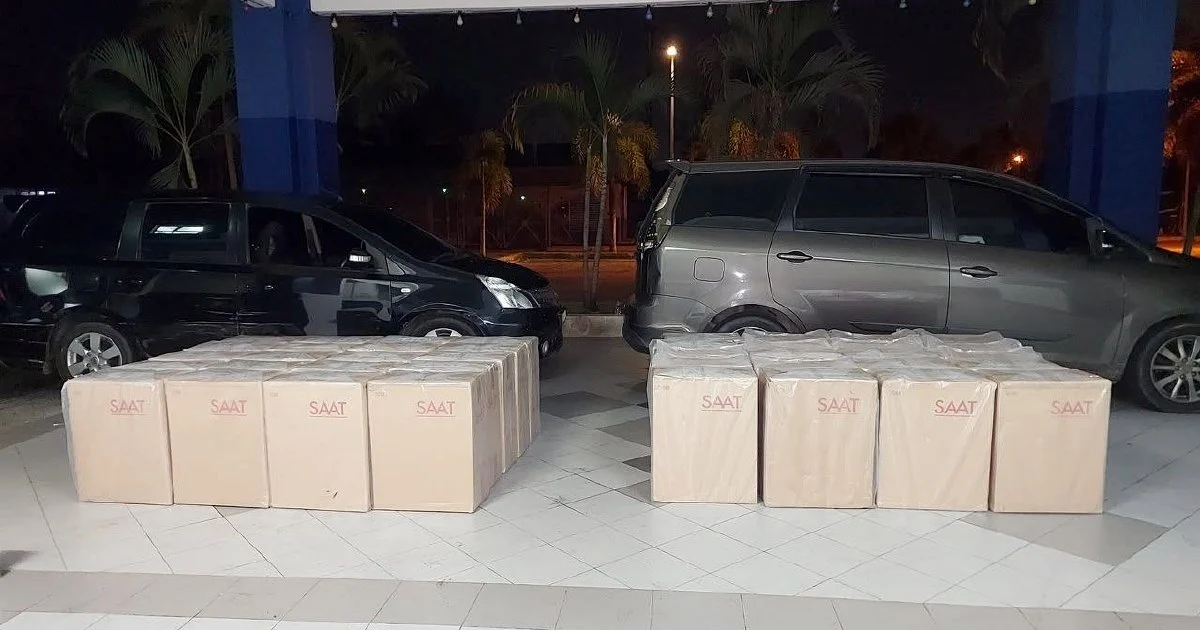
Authorities in Kelantan have arrested a 29-year-old man suspected of smuggling cigarettes worth RM813,000 following an intense vehicle chase through Kampung Pulau Panjang near Kota Baru. The operation, conducted by the General Operations Force, recovered approximately 400,000 sticks of contraband cigarettes during the intercept, marking another significant seizure in the ongoing battle against illicit tobacco trafficking in the region.
The pursuit unfolded after enforcement officers identified a suspicious vehicle operating in the locality during evening hours. Rather than comply with stop signals, the driver accelerated and attempted to evade authorities through the residential area, prompting officers to give chase. The suspect eventually abandoned the vehicle and fled on foot before being apprehended nearby, allowing enforcement teams to secure the cargo intact. This evasive maneuver is typical of organised smuggling operations that employ rapid-response tactics to avoid detection and loss of merchandise.
Cigarette smuggling remains a persistent challenge across Malaysia, particularly in states like Kelantan that border major trafficking routes. The illegal trade undermines government tax revenue, which relies substantially on excise duties imposed on tobacco products. When illicit supplies flood the market, legitimate retailers suffer reduced sales volumes, while tax coffers experience measurable losses that could otherwise fund public services. The scale of this particular seizure underscores how organised networks operate systematic distribution chains rather than sporadic operations.
The estimated value of RM813,000 reflects current market pricing for contraband cigarettes, though the actual black-market price may vary depending on brand, quantity sold, and buyer location. Smuggled cigarettes typically originate from neighbouring countries or are sourced through transnational supply networks that exploit regulatory differences and enforcement gaps. The prevalence of counterfeit and illicit brands in Malaysian markets suggests these operations involve multiple stages of distribution, from initial import through regional wholesaling and retail placement.
Kelantan's geographic position makes it particularly vulnerable to smuggling activity. The state's proximity to trafficking corridors and porous enforcement perimeters create opportunities for contraband to enter and circulate throughout the peninsula. Local law enforcement agencies have intensified operations in recent years, collaborating with federal authorities to intercept shipments and dismantle supply networks. Each successful bust sends deterrent signals to would-be smugglers, though the high profit margins continue to attract organised criminal involvement.
For Malaysian consumers, the proliferation of smuggled cigarettes distorts market dynamics and introduces health and quality risks. Counterfeit products may contain harmful additives and lack proper regulation, creating public health concerns beyond tax evasion issues. The pricing advantage of illicit cigarettes makes them attractive to price-sensitive consumers, which in turn generates demand that sustains smuggling networks. This creates a cycle where enforcement efforts must continuously scale up to address supply that replenishes quickly following disruptions.
The General Operations Force's role in this interception reflects the broader inter-agency approach to combating smuggling. Unlike customs authorities who focus on border crossings, the GOF operates within domestic territory to identify and intercept contraband in distribution networks. Their involvement in nighttime operations and vehicle pursuits demonstrates the tactical intensity required to apprehend suspects who actively resist law enforcement. Training and resources allocated to such operations are substantial, reflecting government commitment to the issue.
The suspect now faces charges related to smuggling and evasion of excise duties, offences that carry significant penalties under Malaysian law. Conviction could result in imprisonment and substantial fines, though sentences and outcomes depend on prosecutorial decisions and court determinations. The swift arrest and investigation process aims to gather evidence for prosecution while simultaneously disrupting the supply chain associated with the suspect's operations.
International cooperation remains essential for addressing cigarette smuggling comprehensively. Neighbouring countries, particularly Thailand, remain major source points for contraband tobacco entering Malaysia. Cross-border intelligence sharing, joint operations, and harmonised regulatory approaches could improve interdiction rates. Regional frameworks focusing on supply-chain transparency and verification mechanisms might reduce opportunities for illicit products to enter legitimate distribution channels.
Looking forward, this seizure represents one of numerous enforcement actions occurring across Malaysia monthly. The consistency of such operations indicates that smuggling networks continue functioning despite enforcement pressure, suggesting demand remains robust enough to justify operational risks. Government policymakers face ongoing decisions about taxation levels, penalties, and enforcement resource allocation, each influencing the relative profitability and viability of smuggling ventures. Balancing revenue generation through taxation against competitive pricing that discourages illegal alternatives presents ongoing policy challenges for economic management.

