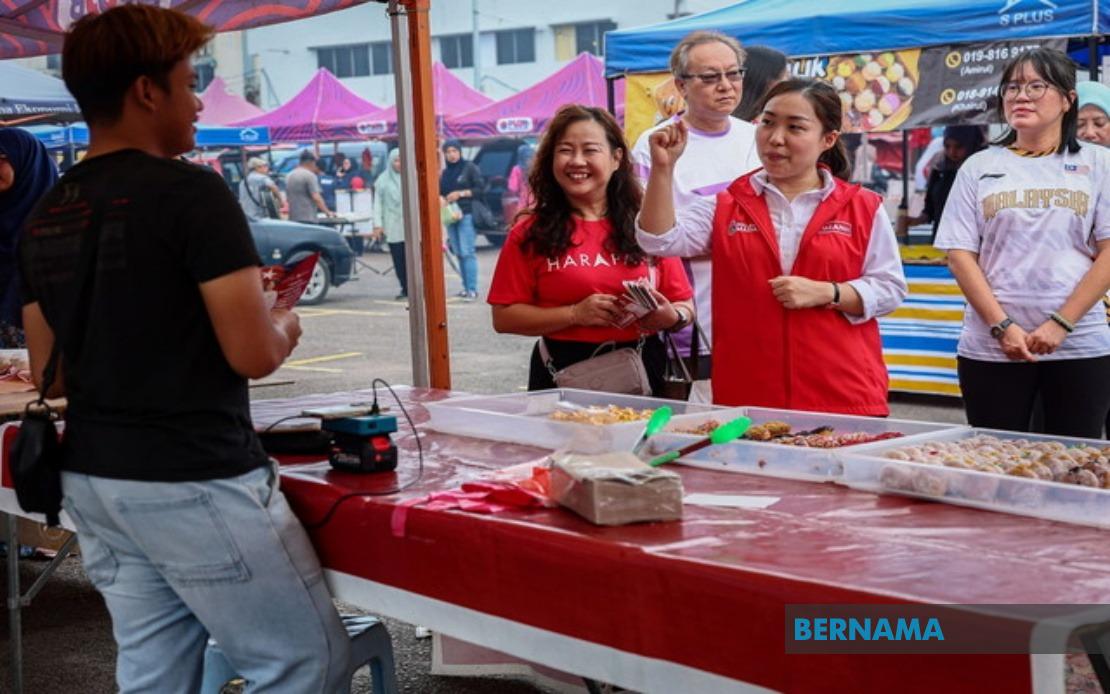
Lawyer and Pakatan Harapan candidate Chu Poh Yee is mounting an ambitious campaign for the Mengkibol state seat in Johor, framing her election pitch around three interconnected policy areas designed to address the immediate concerns of residents while laying groundwork for longer-term prosperity. Speaking during the lead-up to the July 11 polling day, Chu outlined a vision that places physical infrastructure improvements, economic diversification, and targeted social support at the heart of her platform, positioning herself as an alternative to Barisan Nasional's Yap Zhi Peng in this closely watched contest.
At the foundation of Chu's agenda lies a commitment to revitalising Kluang's physical infrastructure. She has identified road quality as a critical priority, recognising that deteriorating transport networks create bottlenecks for commerce, slow emergency response times, and diminish residents' quality of life. Beyond conventional road maintenance, her campaign emphasises the broader modernisation of community facilities. This infrastructure focus resonates in Kluang, where decades of development patterns have concentrated resources in neighbouring urban centres, leaving peripheral areas with ageing public assets. Chu's emphasis on this portfolio reflects a calculated understanding that infrastructure deficits drive both business relocation and population emigration, two dynamics that have characterised rural Johor over recent years.
Crucially, Chu has woven urban agriculture initiatives into her infrastructure platform, proposing community farming projects designed to inject economic activity into residential neighbourhoods whilst addressing food security concerns. This represents a deliberate pivot away from treating agriculture as a declining sector requiring subsidy, instead positioning it as a vehicle for entrepreneurship and household resilience. Urban farming models have gained traction across Southeast Asia as municipalities grapple with land scarcity and supply chain vulnerabilities, and Kluang's relatively compact geography makes it a viable laboratory for such initiatives.
On the economic development front, Chu's analysis centres on Kluang's underexploited potential rather than systemic failure. She acknowledges that the local economy possesses foundational strengths but argues that these require deliberate nurturing through policy interventions that lower barriers to entry for small entrepreneurs and improve employment quality. Her reference to the Kluang Rail Festival exemplifies this approach—she views tourism and cultural events not as standalone entertainments but as catalysts for sustained commercial expansion that can ripple through hospitality, retail, and transport sectors. This recognition that creative economy initiatives generate multiplier effects reveals a more sophisticated economic vision than traditional infrastructure-only campaigns offer.
Youth migration represents a pressing underlying concern animating Chu's economic proposals. Rural constituencies across Malaysia experience persistent brain drain as young people, particularly graduates, relocate to Kuala Lumpur and other major hubs in search of professional opportunities and higher earnings. By explicitly targeting the creation of quality employment pathways in Kluang, Chu is addressing a demographic crisis that erodes local tax bases, weakens community institutions, and concentrates human capital in already-congested urban areas. Her emphasis on entrepreneurship platforms suggests recognition that traditional employment in manufacturing or agriculture cannot alone retain talent in the digital age.
A distinctive element of Chu's platform concerns gender equity in the workplace, an issue that resonates particularly with Malaysia's growing population of educated women navigating career progression amid family obligations. She advocates for workplace environments that accommodate dual responsibilities without requiring women to sacrifice either professional advancement or family involvement. This represents a shift from treating women's workforce participation as a numbers game toward acknowledging the structural tensions that force impossible choices between career and caregiving.
Central to Chu's gender-focused proposals is a commitment to establishing well-resourced childcare facilities that meet both safety and developmental standards. Malaysian women frequently cite childcare availability and quality as significant barriers to workforce participation or career advancement, particularly in smaller towns where formal childcare options remain sparse or prohibitively expensive. By identifying this as a priority area, Chu is effectively advocating for public infrastructure investment that enables private economic participation—a multiplier effect that benefits individual families, local businesses seeking workers, and municipal revenues.
Chu's campaign has encountered resistance including vandalism of campaign materials, an experience shared by opposition candidates across Malaysia during election periods. Rather than retreating from such provocations, she has framed them as evidence of her team's commitment and the stakes involved in the contest. This rhetorical move transforms campaign disruption into a demonstration of resolve, attempting to recast incidents that might ordinarily discourage supporters into proof of the candidate's determination to challenge incumbent structures.
The Mengkibol contest represents one of 14 straight fights in this Johor election, a configuration that reflects the state's continuing political competitiveness despite Barisan Nasional's traditional dominance. The broader Johor election involves 172 candidates competing for 56 seats, with early voting scheduled for July 7 preceding the main polling day. This multicandidate landscape means that even consolidated opposition support faces fragmentation risks, and Chu's campaign must navigate questions of candidate viability and coalition coherence alongside substantive policy messaging.
For Malaysian observers, the Mengkibol race exemplifies broader tensions in contemporary Malaysian politics between development models emphasising hyperurbanisation and those seeking to revitalise secondary towns through targeted investment and inclusive governance. Chu's platform suggests a middle path: maintaining Kluang's character whilst introducing selective modernisation, entrepreneurial culture, and family-friendly infrastructure. Whether such platforms translate into electoral success remains uncertain, but they reflect evolving voter expectations around local governance that extend beyond partisan loyalty into questions of concrete service delivery and equitable opportunity creation.

