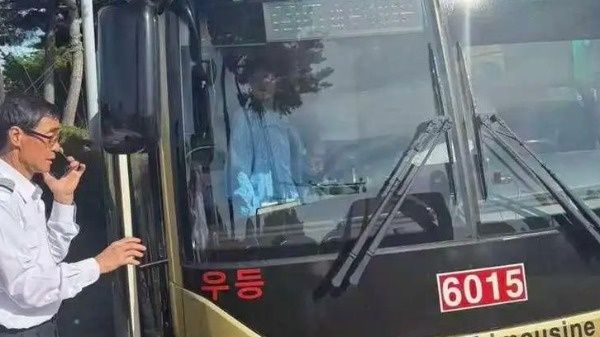
A group of Chinese tourists has won widespread acclaim across East Asia after demonstrating remarkable composure and quick reflexes to prevent disaster when an airport bus driver suddenly lost consciousness on a Seoul highway. The dramatic incident unfolded on Saturday afternoon aboard a No 6015 airport shuttle travelling from central Seoul to Incheon International Airport, and serves as a compelling reminder of how ordinary travellers can rise to extraordinary circumstances when lives hang in the balance.
The bus was carrying more than 20 passengers, predominantly Chinese visitors, when the driver abruptly collapsed at the wheel. As the vehicle began to swerve dangerously, scraping against roadside guardrails, Sun Qian, a woman in her late thirties from Nanjing in Jiangsu province, acted instinctively. Positioned in the second row directly behind the driver's seat, Sun immediately rushed forward and gripped the steering wheel to stabilise the lurching vehicle. Working in tandem with her decisive intervention, another female passenger frantically located the emergency brake mechanism while additional travellers mobilised to find the handbrake control. Within seconds, the team effort brought the 15-tonne coach under control, transforming a potentially lethal crisis into a managed emergency.
Sun later recounted her split-second decision-making to China Daily, explaining that she initially suspected the driver might have simply fallen asleep before realising the situation was far more serious. Although she possesses a valid driving licence, the experience of grappling with the massive steering wheel of a full-sized coach proved extraordinarily nerve-wracking. Yet despite her anxiety, she managed to maintain her grip and help steady the vehicle's trajectory. The intervention proved crucial; had the bus continued unchecked at speed, the consequences for the crowded passenger cabin could have been catastrophic, particularly given the highway setting with limited space for emergency manoeuvres.
Sitting immediately beside Sun was her close friend Du He, aged 33, also from Nanjing. While Sun battled with the steering mechanism, Du attempted a traditional first-aid technique, pinching the driver's philtrum in an effort to stimulate consciousness. However, she quickly recognised that far more severe intervention was necessary. The driver showed no response, his complexion turning an alarming purple hue, and Du realised he had stopped breathing entirely. This realisation shifted the emergency into critical life-support territory, demanding immediate cardiopulmonary resuscitation.
The passengers rapidly organised themselves into an emergency response unit, with several taking turns performing chest compressions on the incapacitated driver. Sun, who speaks fluent Korean fluently despite being a foreign visitor, seized the driver's mobile phone and immediately contacted emergency services using the local language—a crucial action that ensured rapid professional medical response. She provided clear information about their location and the driver's grave condition while other passengers continued their resuscitation efforts, refusing to abandon their attempt to restore vital functions. The coordination between these untrained rescuers demonstrated a degree of collective clarity that typically requires professional emergency training.
Despite their desperate efforts, the situation proved beyond salvage. According to South Korea's Yonhap News Agency, emergency personnel discovered the driver was in full cardiac arrest when they reached the scene. Medical teams rushed him to a nearby hospital where he received approximately two hours of intensive emergency treatment, but he ultimately succumbed to his condition. Police subsequently initiated an investigation into the precise medical cause, though initial assessments suggested the driver may have experienced a severe heart attack whilst at the wheel.
Du emphasised that the outcome could have been substantially worse had circumstances aligned differently. The timing proved fortuitous; the highway was relatively quiet at that moment, meaning no secondary collisions or multi-vehicle pileups occurred as a consequence of the bus's brief loss of control. Remarkably, the group of tourists regrouped rapidly after emergency services took over, flagging down another airport shuttle to continue toward Incheon International Airport and their scheduled departures. The passengers treated their unexpected ordeal as an interruption rather than a reason to abandon their travel plans.
When reflecting on their experience afterward, both women acknowledged that the psychological weight of the incident did not fully register until much later. Du described how immediate adrenaline and crisis-mode thinking shielded her from the full horror of what had unfolded, but once she reached the airport terminal, profound fear and shock washed over her. Sun similarly noted how, in the moment, she operated on pure instinct without time for deliberation, only to experience significant anxiety in retrospect. Both recognised they had participated in something that resembled a television drama rather than an experience befitting ordinary tourists on a holiday excursion.
The rescue generated substantial enthusiasm across both Chinese and South Korean social media platforms, with observers from both nations praising the women's courage and composure. When asked about the flood of online adulation, Du responded with characteristic modesty, suggesting that her actions represented nothing extraordinary—merely what any capable person would naturally do when confronted with such circumstances. She reflected on the cultural values she associates with her compatriots, emphasising the collective instinct to support one another and assist in crisis situations as fundamental characteristics of Chinese society.
Sun reinforced this emphasis on collective effort, stressing that the successful intervention was never the work of isolated individuals but rather a genuine team accomplishment. She highlighted how different passengers contributed essential elements—one secured the brake, multiple participants performed resuscitation, and everyone present cooperated spontaneously without formal coordination or assignment of roles. For Sun, the episode underscored the profound comfort of mutual support among compatriots in foreign settings, where shared language and cultural background can provide reassurance during moments of extreme stress. The emotional bonds that materialised among strangers during those crucial minutes revealed how shared humanity transcends careful planning.
Observers from South Korea commented online about the remarkable nature of maintaining such calm and responding with such speed despite operating in a foreign country, navigating language barriers, and lacking formal emergency training. The incident resonated particularly with South Korean audiences given it unfolded on local roads, demonstrating that international cooperation and selflessness transcend national borders. Chinese social media platform Xiaohongshu became a focal point for celebration of the story, with users sharing admiration for the women's actions and reflecting on what the episode revealed about human nature under extreme pressure. The story has since evolved into a powerful cross-cultural moment, reminding viewers that crisis situations can strip away social conventions and reveal the instinctive compassion underlying human relationships.

