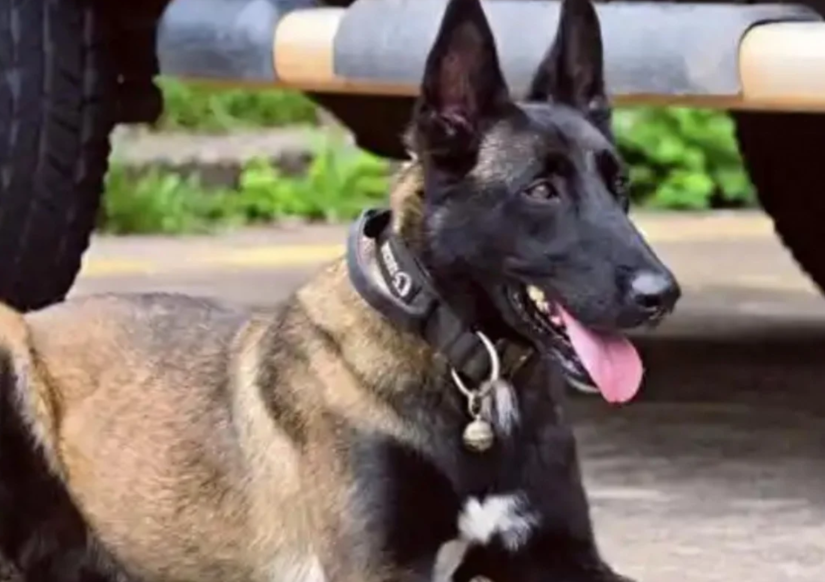
A police dog in Yunnan province has become an internet sensation across mainland China after its steadfast devotion to an injured handler sparked an outpouring of emotion online. The four-year-old German shepherd, named Bulu, gained widespread attention following a video of its reunion with Awei, the narcotics detection officer it had served alongside. The footage has accumulated over 10 million views and more than 580,000 likes on social media platforms, resonating with audiences far beyond law enforcement circles and raising broader questions about the bonds between human handlers and working animals.
Bulu's story began in November of last year during a specialized operation in an abandoned building in Chuxiong, where police were pursuing drug-related suspects. The dog's training in detecting narcotics and responding to complex operational environments proved invaluable as it quickly picked up sounds of fleeing perpetrators. In the ensuing chase through a debris-strewn corridor dimly lit by emergency lighting, Awei missteppped while pursuing the suspects and fell from the second storey. First responders who arrived at the scene found him in critical condition, convulsing and vomiting blood as he drifted between consciousness and unconsciousness. Witness accounts from officers present captured the moment one colleague urged him to hold on, remarking that they still had battles to fight together—a poignant reference to the work that lay ahead.
Awei's injuries proved severe enough to warrant immediate hospitalization. Medical staff diagnosed him with multiple fractures affecting his head and chest, conditions serious enough to place him in a medically induced coma. He remained unconscious for five days before gradually regaining awareness and beginning his long recovery process. Meanwhile, Bulu was transferred to a police training base, where handlers grappled with the challenge of managing a traumatized animal separated from its primary handler and accustomed partner.
The separation that followed lasted approximately six months, during which Bulu's behavioral changes became increasingly evident to those caring for him. The dog effectively ceased performing its regular work duties and grew noticeably restless. More tellingly, it developed what observers described as a loss of appetite, consuming minimal food and water—a serious concern for handlers responsible for maintaining the animal's health and conditioning. Surveillance footage documented Bulu's repetitive attempts to locate its missing handler, the dog returning again and again to places where Awei might logically reappear: the dormitory they shared, the base gates through which he would normally pass, and the training routes they had regularly traversed together.
One particularly poignant moment captured on camera showed Bulu rushing excitedly toward an arriving police vehicle, only to be informed that the officer was not returning from that journey. The dog's behavior reflected not merely habit but genuine emotional distress—a testament to the depth of partnership that develops between working dogs and their handlers during years of intensive training and operational deployment.
When Awei finally returned to active duty following his recovery, officials coordinated a carefully planned reunion. Bulu was brought forward to meet him, and the moment of their encounter proved as emotionally charged as observers might have anticipated. The dog barked urgently and sprinted toward its handler, who immediately dropped his luggage and knelt to embrace the animal. The video capturing this reunion crystallized something profound about the relationship between law enforcement personnel and their canine partners—a bond that transcends the purely professional and speaks to genuine attachment and mutual dependence.
While the reunion commanded public attention, the broader context of the original operation deserves recognition. During Awei's extended recovery period, his colleagues pressed forward with the investigation, ultimately apprehending 11 suspects connected to the drug operation. Officers recovered 4.4 kilograms of narcotics and seized more than 500,000 yuan—approximately US$75,000—in illicit funds. These seizures brought closure to the case and represented significant progress in the region's drug enforcement efforts.
The viral nature of Bulu's story has catalyzed broader public interest in China's police dog programs. Online commentary has emphasized not merely the emotional appeal of the reunion but the deeper philosophical dimensions of the human-animal partnership. One widely cited social media comment reflected this sentiment, noting that Bulu had been waiting not simply for its handler but for a comrade-in-arms, suggesting that the bond transcends species and reflects a shared commitment to duty. This perspective aligns with how military and law enforcement organizations worldwide understand working animal partnerships—as relationships grounded in mutual respect and shared purpose rather than mere utility.
China maintains an extensive police dog program that, according to CCTV News reporting, included more than 29,000 active canines as of 2024. These animals typically serve an average of eight years in operational roles, though the demands placed upon them take a physical toll. Extended high-intensity deployment frequently results in joint and spinal injuries that curtail active service. The welfare of retired police dogs has become an increasingly important consideration within Chinese law enforcement agencies. Most retired animals remain with their original units under the care of their handlers, preserving the partnerships forged through years of work together. Some departments have begun exploring public adoption programs, allowing retired dogs to transition to civilian life while maintaining continuity of care.
Bulu's story carries implications that resonate throughout Southeast Asia, where similar police dog programs operate in Malaysia, Singapore, and Thailand. The emphasis on handler welfare and animal wellbeing reflects broader professionalization trends within regional law enforcement. For Malaysian readers particularly, the narrative highlights how working dog programs depend not merely on institutional support but on the individual relationships that handlers develop with their animals. The six-month separation and Bulu's behavioral response demonstrate that police dogs should be understood as sentient beings with emotional lives, not simply as tools to be deployed and retrieved. This recognition has practical implications for operational planning, handler training, and post-retirement care protocols throughout the region.
The story's resonance online also reflects broader societal shifts in how people perceive and value human-animal relationships in professional contexts. What began as a routine drug enforcement operation became a meditation on loyalty, resilience, and the bonds that unite people and animals in service of a common purpose. For law enforcement agencies across Asia, Bulu's vigil offers a gentle reminder that the animals they deploy deserve recognition as partners in genuine partnerships, not mere instruments of enforcement.

